
Post Impressionist Paintings: 8 Artworks Defining the Movement
Post Impressionist paintings emerged as a reaction against the limitations of Impressionism. This movement, spanning the late 19th century, emphasized emotional depth and symbolic content, moving beyond the focus on light and color. Artists like Vincent van Gogh and Paul Gauguin explored bold colors and expressive brushwork, creating artworks that connect with viewers to this day. Discover eight defining pieces from this transformative period, each available for free high-resolution download on FineArtFree.
Characteristics of Post Impressionism
The Post Impressionist movement, active from the 1880s to the early 20th century, is characterized by its departure from the naturalism of Impressionism. Artists sought to infuse their works with greater emotional depth, using vivid colors, thick application of paint, and symbolic content. This period saw a focus on personal expression, with each artist developing a unique style. The movement's key ideas include a strong emphasis on structure, form, and the subjective experience of the artist.
Starry Night by Vincent van Gogh
Starry Night, painted by Vincent van Gogh in 1889, is a quintessential example of Post Impressionist art. The painting features a swirling night sky filled with stars above a serene village. Van Gogh's use of deep blues and bright yellows creates a striking contrast, while bold brush strokes convey a sense of movement. This artwork exemplifies the emotional intensity and vibrant color palette characteristic of the movement. Explore more of Van Gogh's works in the Post-Impressionism style.
Self-portrait with a Bandaged Ear and Pipe

In this 1889 self-portrait, an unidentified artist captures Vincent van Gogh's intense gaze and emotional turmoil. The bandaged ear draws attention to his personal struggles, while the swirling background of blues and greens contrasts with the calm flesh tones. The pipe held in his hand suggests moments of contemplation. This painting highlights the personal expression central to Post Impressionist paintings.
A Sunday on La Grande Jatte by Georges Seurat
Georges Seurat's A Sunday on La Grande Jatte — 1884 is a major work of pointillism, a technique developed during the Post Impressionist era. Completed between 1884 and 1886, the painting depicts a tranquil scene by the Seine. Seurat's meticulous placement of color dots creates a vibrant sense of movement and light. This work illustrates the Post Impressionist focus on structure and the exploration of new techniques.
View of the Alpilles by Vincent van Gogh
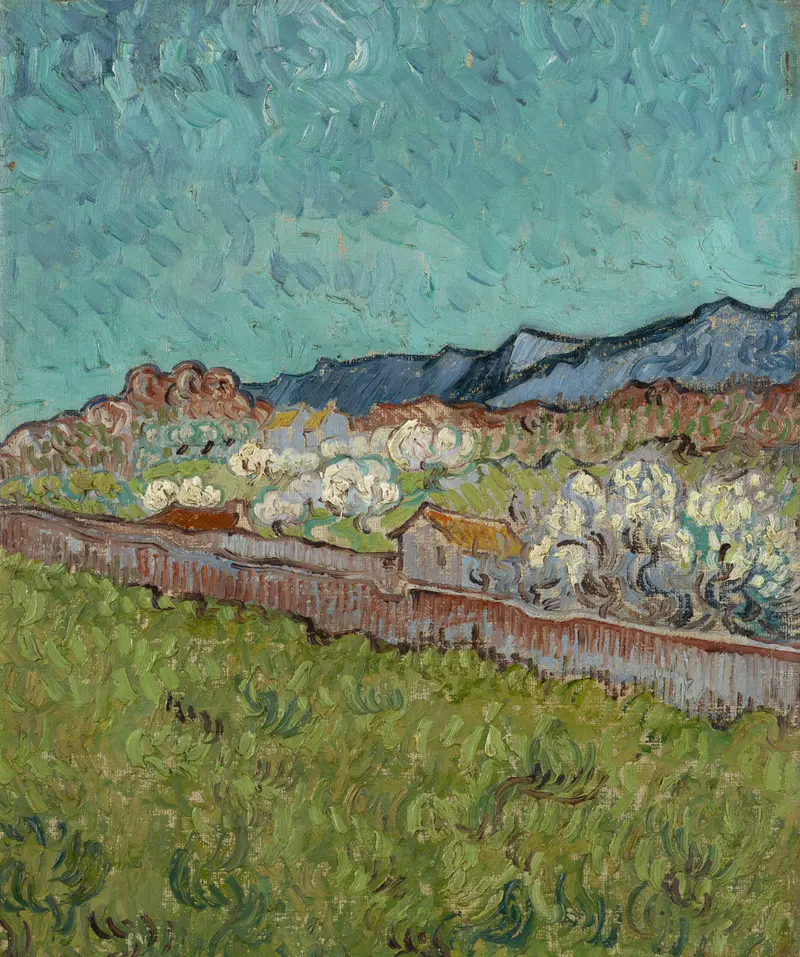
Painted in 1890, View of the Alpilles showcases Van Gogh's fascination with the Provencal landscape during his time at the asylum in Saint-Rémy. The painting captures the rugged beauty of the Alpilles hills with expressive brushwork and a vivid color palette. This piece exemplifies Van Gogh's ability to convey emotion through landscape, a hallmark of Post Impressionist art.
Snowy Landscape with Arles in the Background
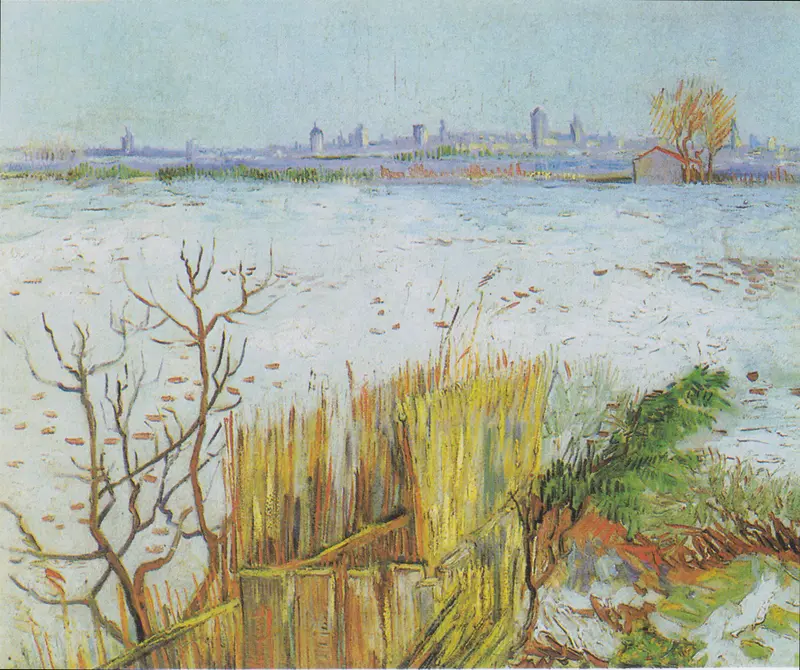
Created in 1888, Snowy Landscape with Arles in the Background marks a turning point in Van Gogh's career. The unexpected snowfall in Arles inspired this tranquil scene. Van Gogh captures the serene transformation of the landscape with a pale lemon sky and white fields. This painting highlights the artist's innovative use of color and his ability to evoke mood through natural settings.
Madame Cézanne by Paul Cézanne
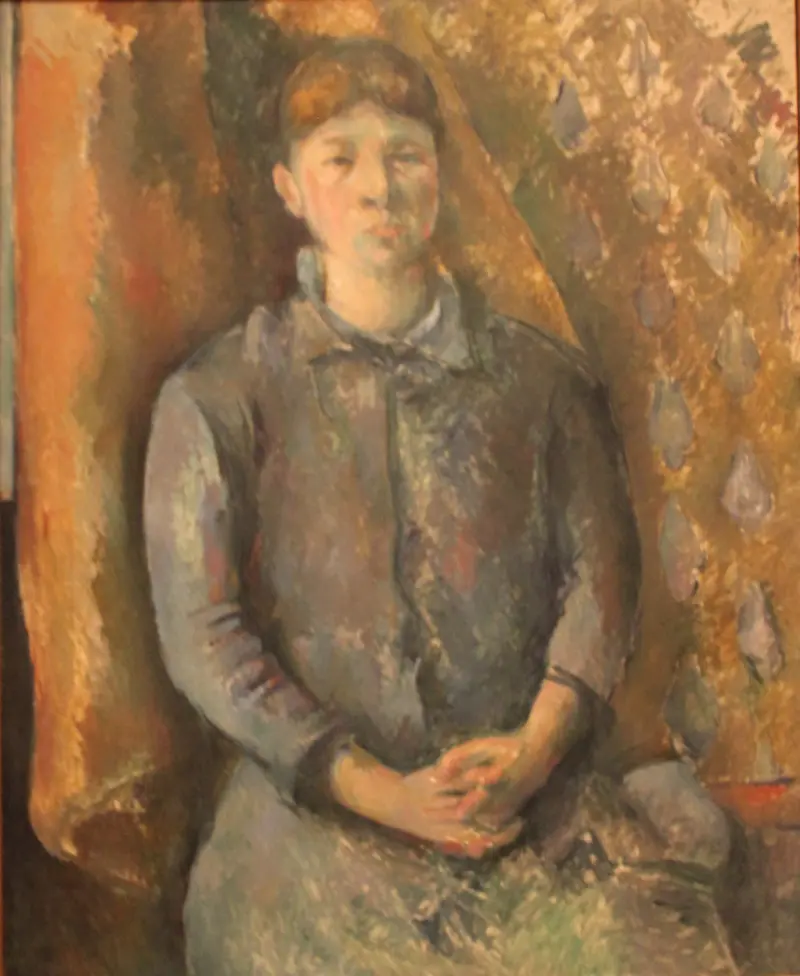
Paul Cézanne's Madame Cézanne, painted in the 1890s, depicts his wife in a calm, introspective pose. The muted background and soft brushstrokes create depth and focus on her expression. Cézanne's technique of layering colors and creating volume through brushwork is a defining feature of Post Impressionist paintings. This portrait exemplifies the movement's emphasis on personal expression and structure.
Fatata te Miti (By the Sea) by Paul Gauguin

In Fatata te Miti (By the Sea), painted around 1892, Paul Gauguin captures a vibrant beach scene in Tahiti. The use of bold colors and expressive brushwork creates a lively atmosphere, typical of Gauguin's Post Impressionist style. This painting reflects the movement's exploration of exotic themes and the artist's fascination with the natural world.
These eight Post Impressionist paintings illustrate the movement's diversity and depth. From Van Gogh's emotional landscapes to Gauguin's vibrant Tahitian scenes, each artwork offers a unique glimpse into the artists' visions. Download these works in high resolution for free on FineArtFree and explore the rich world of Post Impressionism.