
Wanderer above the Sea of Fog: Unveiling Friedrich's Iconic Landscape
Caspar David Friedrich's Wanderer above the Sea of Fog remains one of the most iconic works of Romanticism. Painted in 1818, this artwork captures the solitary contemplation of a figure standing atop a cliff, gazing out over a mysterious sea of fog. As a defining piece of the Romantic era, it invites viewers to explore themes of nature, isolation, and introspection. Join us as we look into the story, meaning, and legacy of this remarkable painting.
The Story Behind the Work
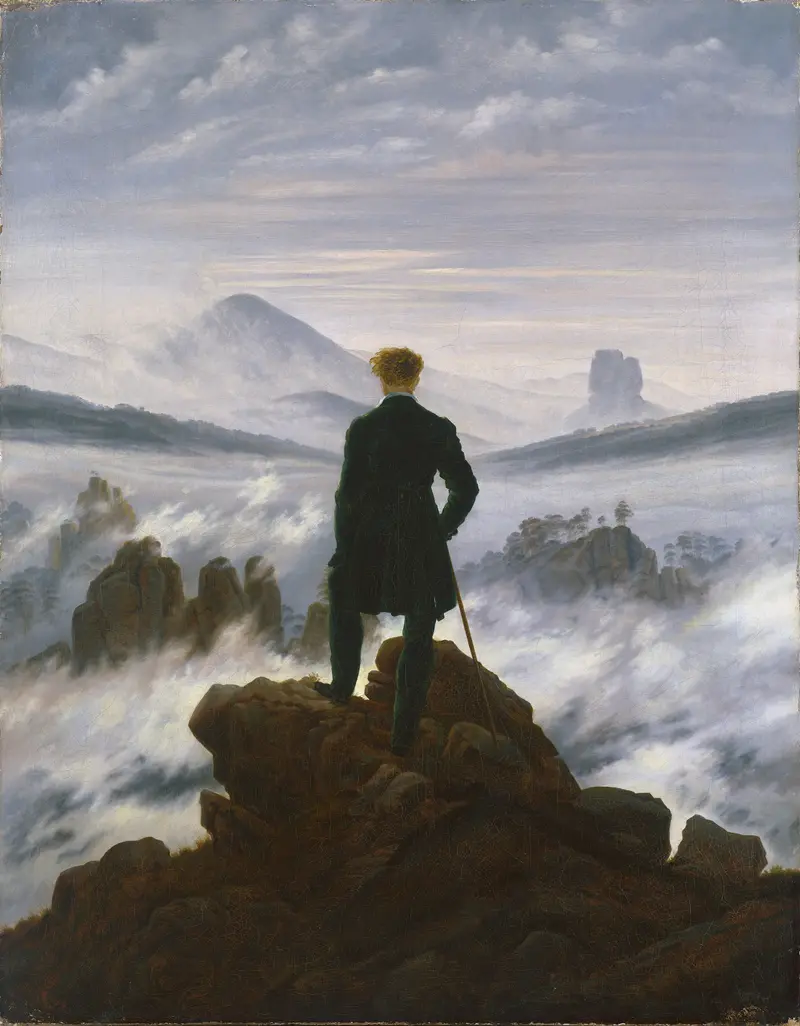
Painted in 1818 by Caspar David Friedrich, Wanderer above the Sea of Fog reflects the Romantic era's fascination with nature and the striking. Friedrich, known for his expressive landscapes, created this piece to encapsulate the emotional experience of confronting the vastness of nature. The solitary figure, often interpreted as an everyman, stands atop a rocky cliff, symbolizing humankind's quest for understanding and meaning in the world.
What You See
The composition of Wanderer above the Sea of Fog is strikingly simple yet profound. A lone man, dressed in a dark coat, stands with his back to the viewer, gazing out over a sea of fog that obscures the landscape below. The muted palette of grays and greens enhances the painting's mysterious atmosphere, inviting viewers to ponder what lies beyond the fog. The careful balance of the composition, with the figure slightly off-center, draws the eye and emphasizes the vastness of the scene.
Meaning and Interpretation
The meaning of Wanderer above the Sea of Fog has been widely debated. Some interpret the fog as a metaphor for the unknown, representing the uncertainties and challenges of life. The solitary figure, standing resolute against this backdrop, embodies the Romantic hero, confronting nature's mysteries with courage and introspection. This painting invites viewers to reflect on their own place in the world and the search for meaning amidst life's uncertainties.
Historical Context
Created during the height of the Romantic movement, Wanderer above the Sea of Fog exemplifies the era's emphasis on emotion, nature, and individualism. Romanticism emerged as a response to the Enlightenment's focus on reason and logic, celebrating the power of the natural world and the depth of human emotion. Friedrich's work, with its focus on solitude and the striking aspects of nature, captures the essence of this artistic movement.
Where to See It Today
Today, Wanderer above the Sea of Fog is housed in the Albertina Museum. Art enthusiasts can explore this iconic painting alongside other works of Romanticism, gaining insight into Friedrich's unique approach to landscape art. The museum offers a chance to experience the painting's scale and detail up close, providing a deeper understanding of its impact and legacy.
The Abbey in the Oakwood

Another notable work by Caspar David Friedrich is The Abbey in the Oakwood, painted between 1809 and 1810. This painting features the ruins of an abbey emerging from a fog-laden landscape, surrounded by twisted oak trees. Like Wanderer above the Sea of Fog, it conveys a sense of melancholy and contemplation, inviting viewers to reflect on the passage of time and the enduring power of nature.
The Monk by the Sea

The Monk by the Sea, created between 1808 and 1810, is another of Friedrich's profound landscapes. This painting depicts a solitary monk standing against the vast expanse of the ocean, symbolizing solitude and spiritual reflection. The stark contrast between the dark figure and the soft blues and greys of the sky evokes a sense of isolation and majesty, similar to the themes found in Wanderer above the Sea of Fog.
Caspar David Friedrich's Wanderer above the Sea of Fog continues to captivate audiences with its profound exploration of nature and the human spirit. As you ponder the themes and meanings of this iconic work, consider downloading it in high resolution for free from FineArtFree, alongside other remarkable pieces by Friedrich. Embrace the opportunity to explore the depth and beauty of Romanticism from the comfort of your own home.