
20, rue Grâcieuse — History & Facts
In this artistic realm, memories intertwine with colors, inviting us to transcend the confines of our own existence. Here, the canvas ceases to be a mere representation; it transforms into a vessel of nostalgia, an echo of emotions that resonate beyond the visible. Focus first on the soft palette that envelops the composition, where muted hues of lavender and earthy browns create a serene atmosphere. Notice how the light gently filters through the depicted architecture, casting delicate shadows that dance upon the cobbled street below.
Each stroke captures not just the physical space but also the essence of fleeting moments, invoking a sense of quietude and introspection. This contrasts with the bustling life often found in urban settings, prompting a contemplative pause in the viewer. Delve deeper into the painting's emotional landscape, where the interplay of light and shadow symbolizes the passage of time and the weight of history. The solitary figure, poised beneath the archway, embodies both isolation and reflection, suggesting the complexity of human experience amidst the backdrop of a seemingly tranquil scene.
This juxtaposition invites us to question what lies beyond the frame, hinting at stories unspoken and memories lingering quietly in the recesses of our minds. Created in 1915, this piece finds its roots during a period of turmoil and transformation in Europe. Manesse was influenced by the burgeoning modernist movement, navigating the delicate balance between traditional representation and the emerging abstract tendencies of his time. As the world was engulfed in the chaos of war, his work became a quiet meditation on resilience and the enduring power of memory, capturing a moment that beckons us to reflect amid uncertainty.
More Artworks by Georges-Henri Manesse
Browse all →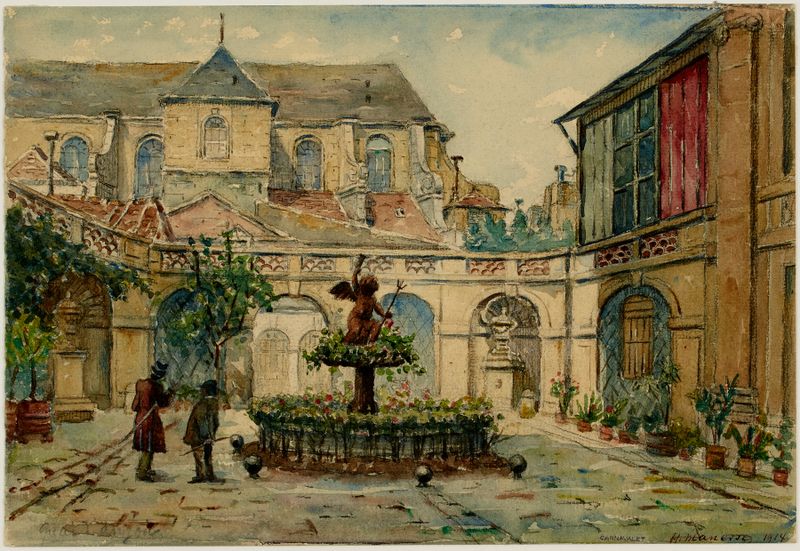
Cour intérieure de l’Hôtel Hesselin, 24 quai de Béthune
Georges-Henri Manesse
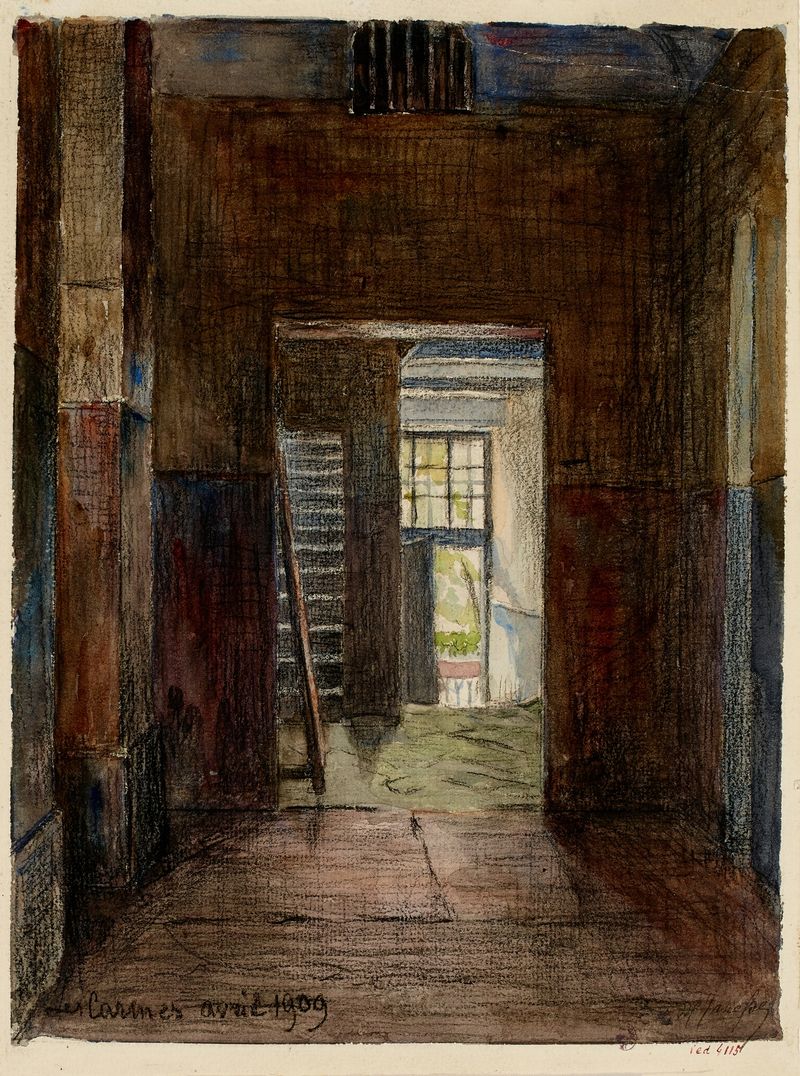
Intérieur du couvent des Carmes, rue de Vaugirard
Georges-Henri Manesse
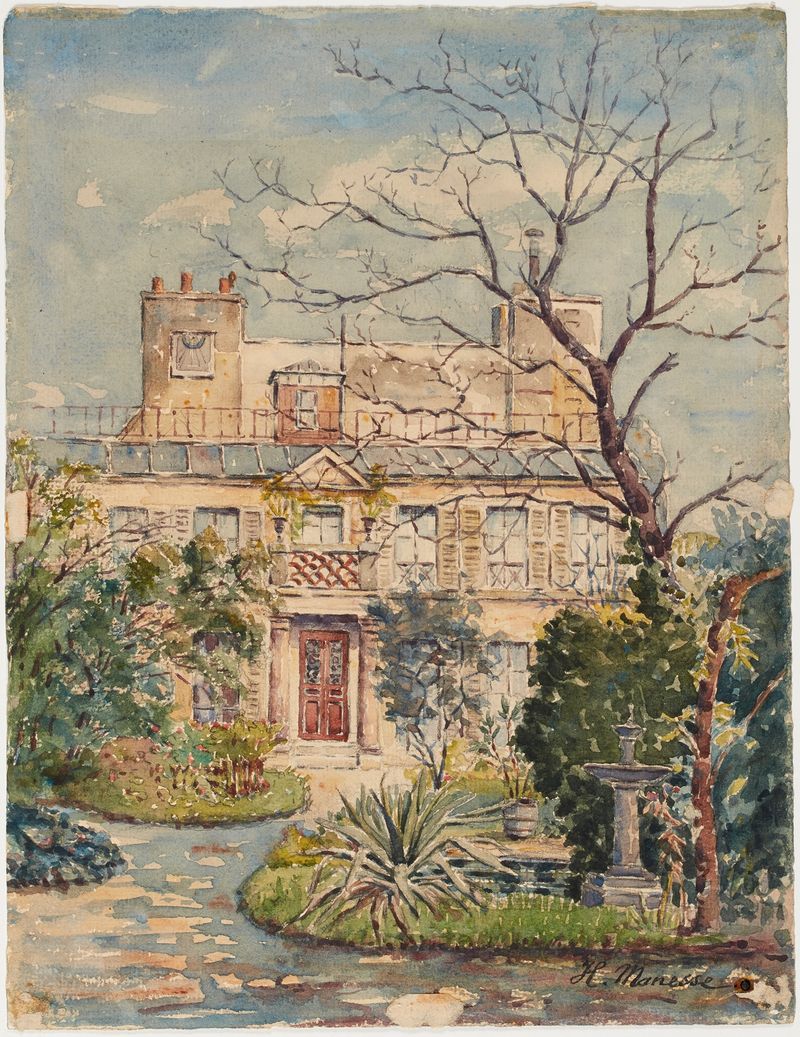
Maison de Victor Hugo, rue du Cherche-Midi
Georges-Henri Manesse
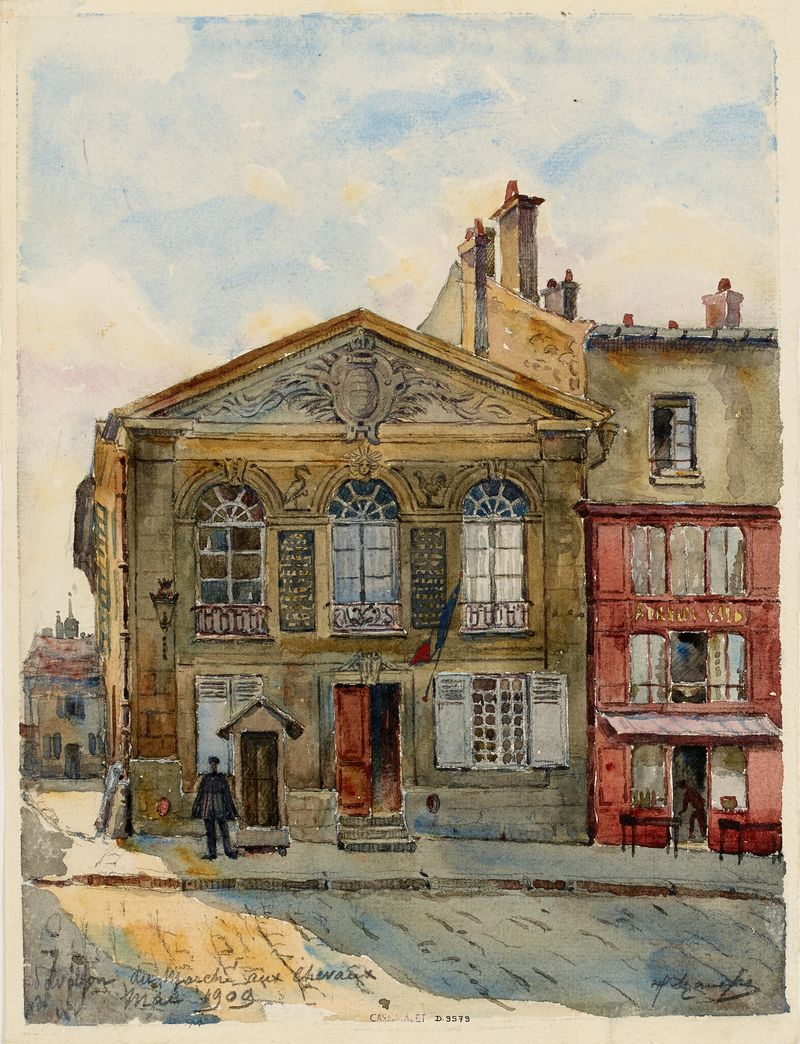
Le pavillon de police du Marché aux chevaux, rue Geoffroy Saint Hilaire
Georges-Henri Manesse

Passerelle des Arts
Georges-Henri Manesse

Vieille maison du XVè siècle, 6 rue Boutebrie
Georges-Henri Manesse
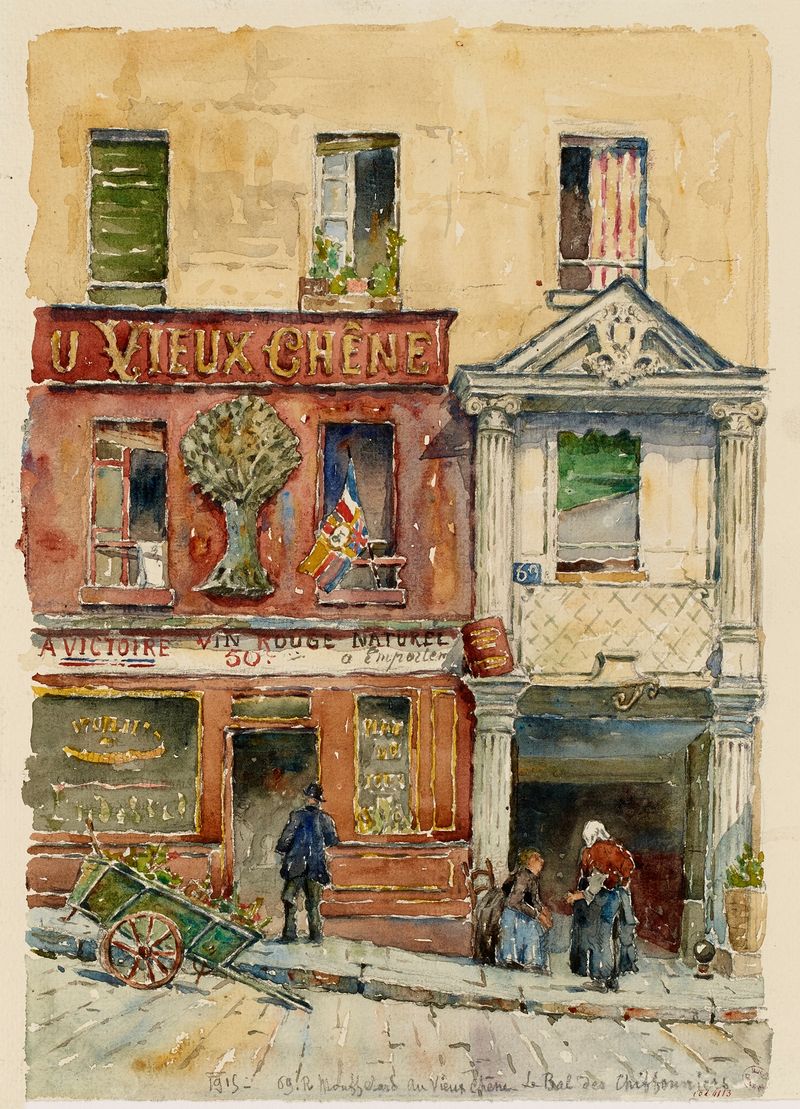
69, rue Mouffetard Boutique de vins à l’enseigne du Vieux chêne
Georges-Henri Manesse
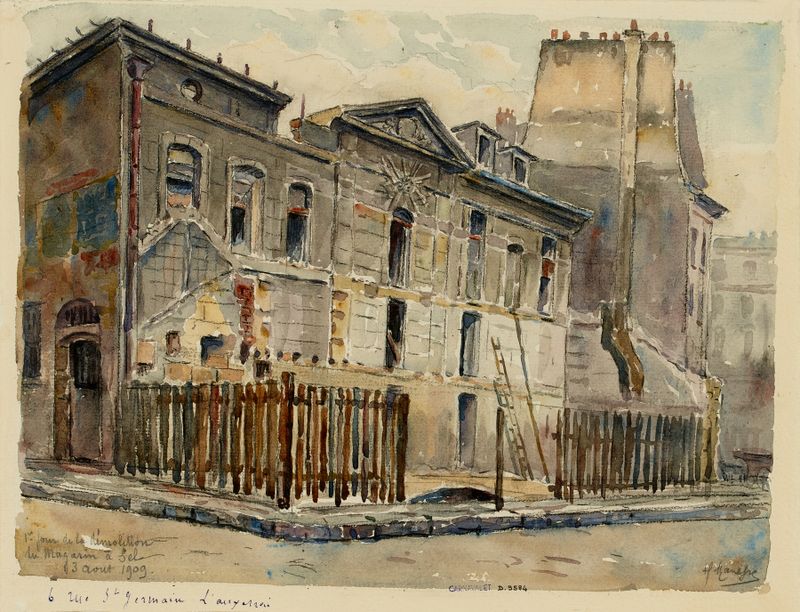
Premier jour de la démolition du magasin à sel, 6 rue Saint Germain de l’Auxerrois
Georges-Henri Manesse
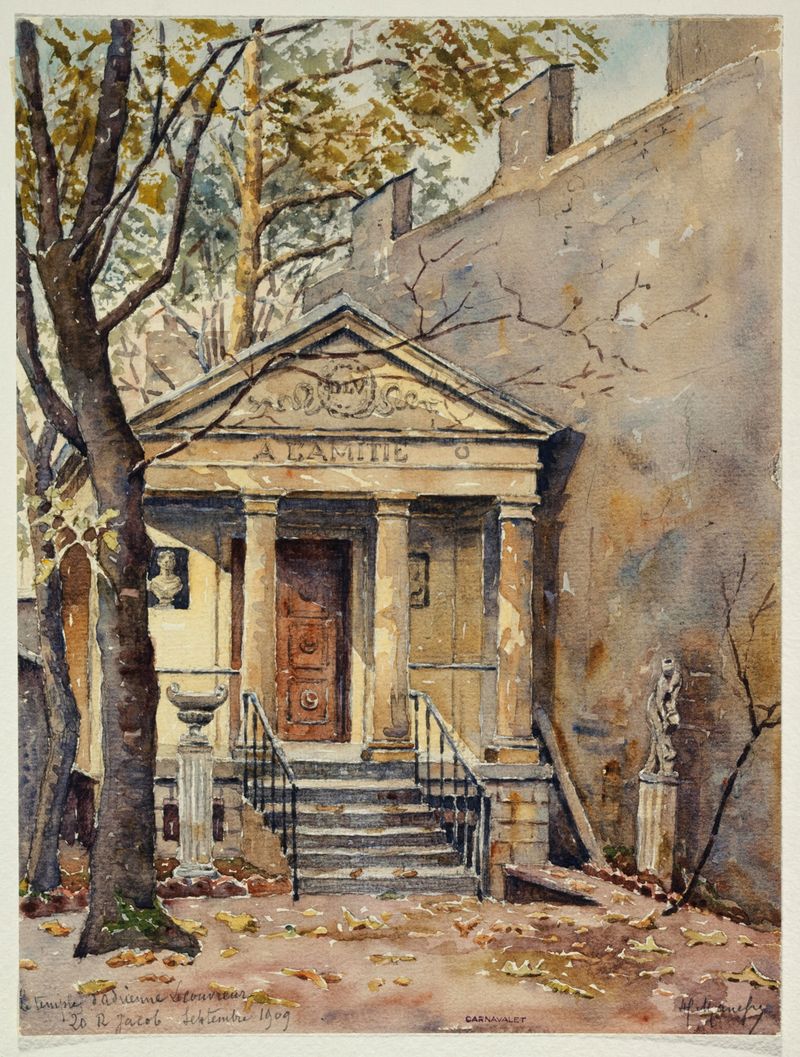
Temple de l’Amitié, 20 rue Jacob où habita Adrienne Lecouvreur
Georges-Henri Manesse

Maison de campagne de Jean-Jacques Rousseau, 20 quai de Passy
Georges-Henri Manesse





