
81, rue Mouffetard — History & Facts
This sentiment looms large over the canvas, where echoes of violence and memory intertwine, forcing us to confront the fragility of life. Look closely at the textured surface, where deep hues of ochre and muted blues engage in a silent conversation. The focal point draws you in: a doorway framed by weathered stone, hinting at stories untold. Notice the subtle brushstrokes that animate the shadows, creating a tension between illumination and obscurity; the light seems to penetrate a world that is both inviting and threatening.
Each detail invites inquiry, weaving a narrative that feels instantly personal yet disturbingly distant. Deeper meanings emerge within the interplay of light and shadow, invoking a sense of nostalgia tinged with foreboding. The doorway, a symbol of transition, stands as a stark reminder of choices made and paths taken or avoided. Here, the juxtaposition of warmth and the chilly undertones suggests a past marked by violence that lingers in memory, shaping the lives of those who pass through.
This duality invites reflection on how spaces hold the weight of history, demanding confrontation with the echoes of its inhabitants. Georges-Henri Manesse created 81, rue Mouffetard during a transformative era in the early 20th century, a time marked by both artistic innovation and the shadows of war. Living in Paris, he was influenced by the burgeoning movements of modernism while wrestling with the tumultuous political landscape. This piece reflects not just the artist's individual experience but the collective memory of a society grappling with its past and the complexities of urban existence.
More Artworks by Georges-Henri Manesse
Browse all →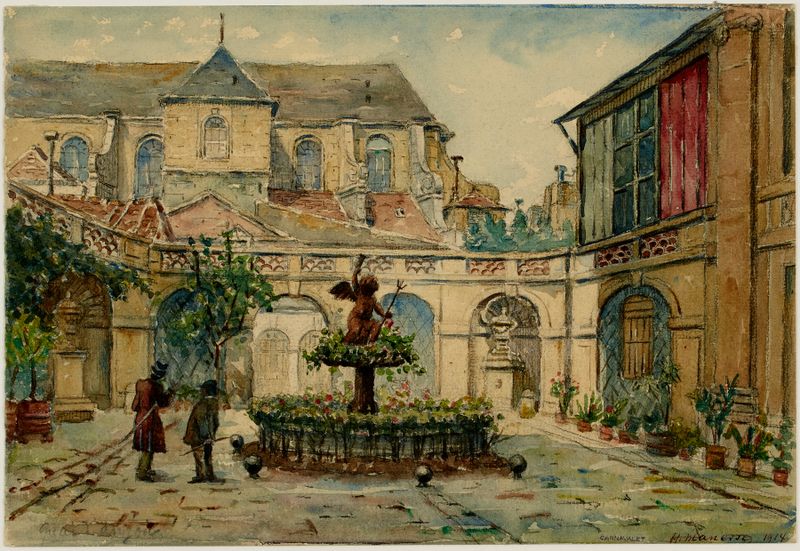
Cour intérieure de l’Hôtel Hesselin, 24 quai de Béthune
Georges-Henri Manesse
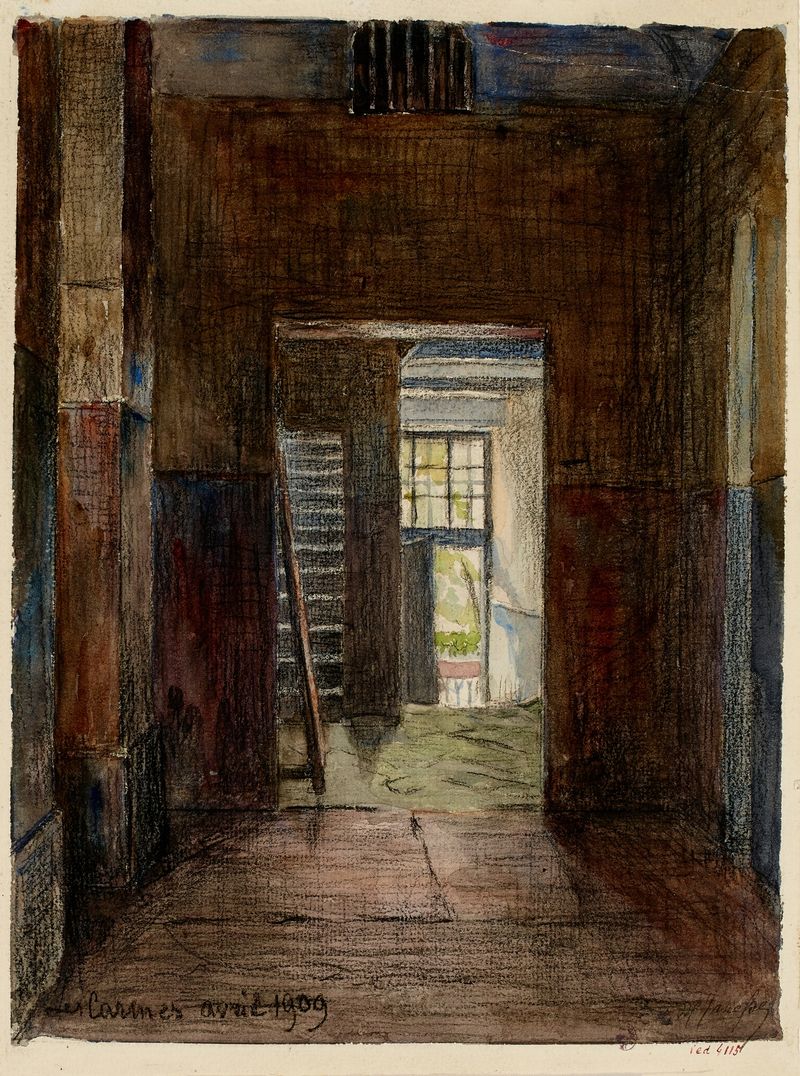
Intérieur du couvent des Carmes, rue de Vaugirard
Georges-Henri Manesse
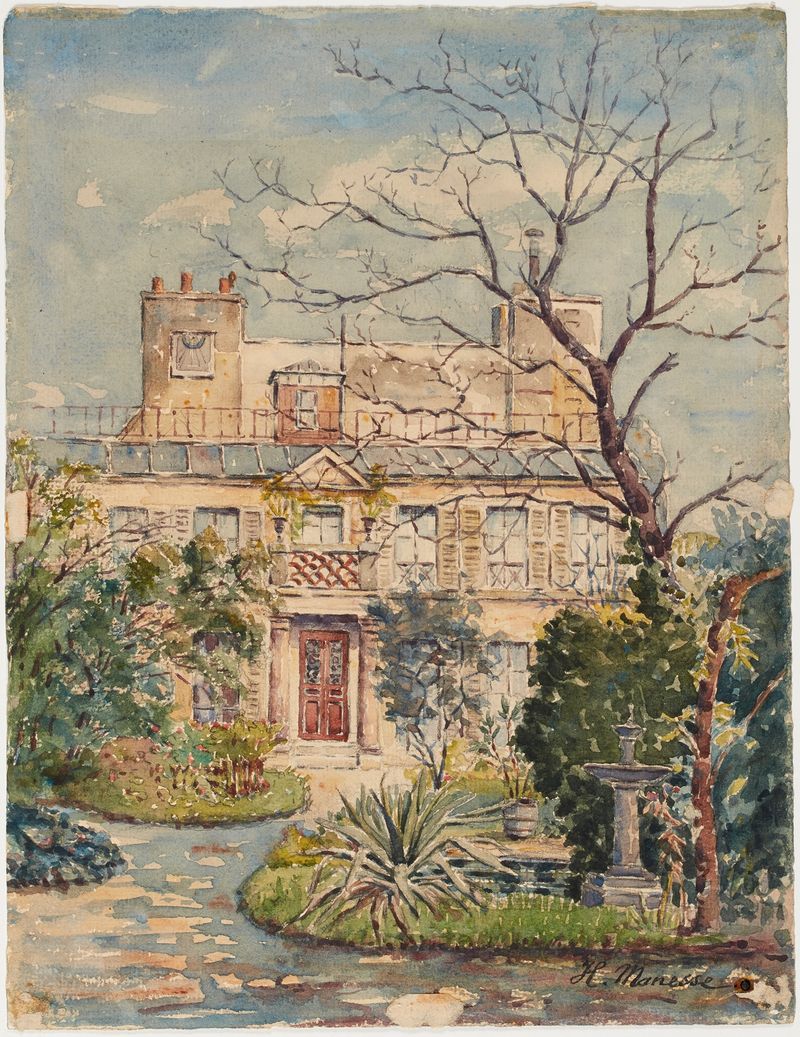
Maison de Victor Hugo, rue du Cherche-Midi
Georges-Henri Manesse
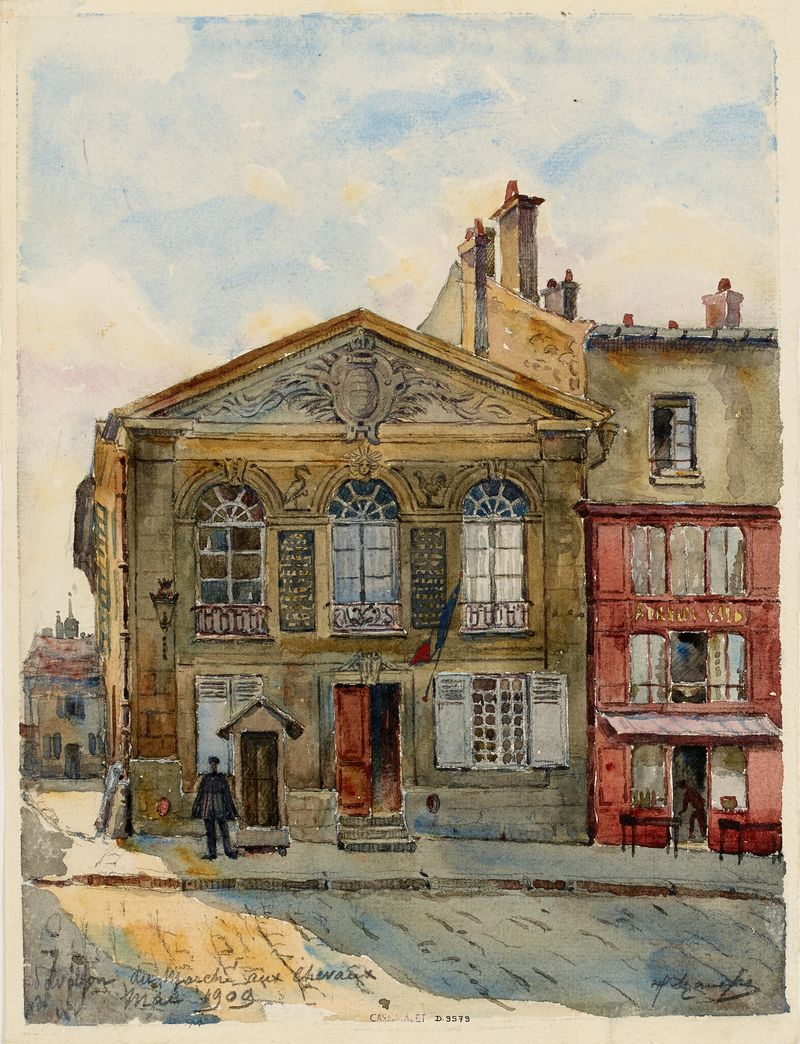
Le pavillon de police du Marché aux chevaux, rue Geoffroy Saint Hilaire
Georges-Henri Manesse

Passerelle des Arts
Georges-Henri Manesse

Vieille maison du XVè siècle, 6 rue Boutebrie
Georges-Henri Manesse
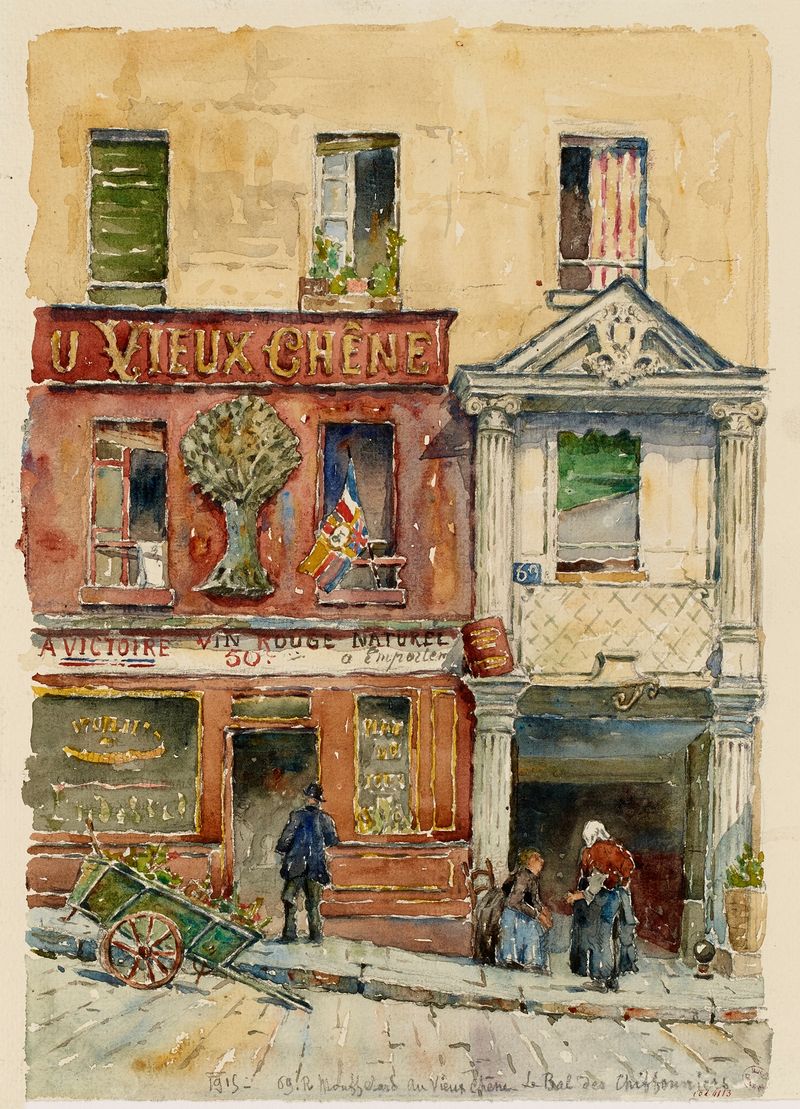
69, rue Mouffetard Boutique de vins à l’enseigne du Vieux chêne
Georges-Henri Manesse
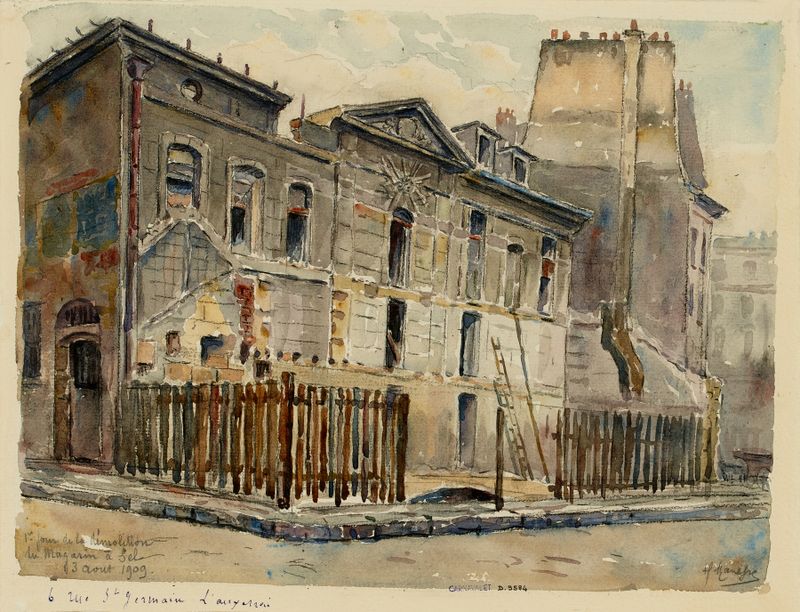
Premier jour de la démolition du magasin à sel, 6 rue Saint Germain de l’Auxerrois
Georges-Henri Manesse
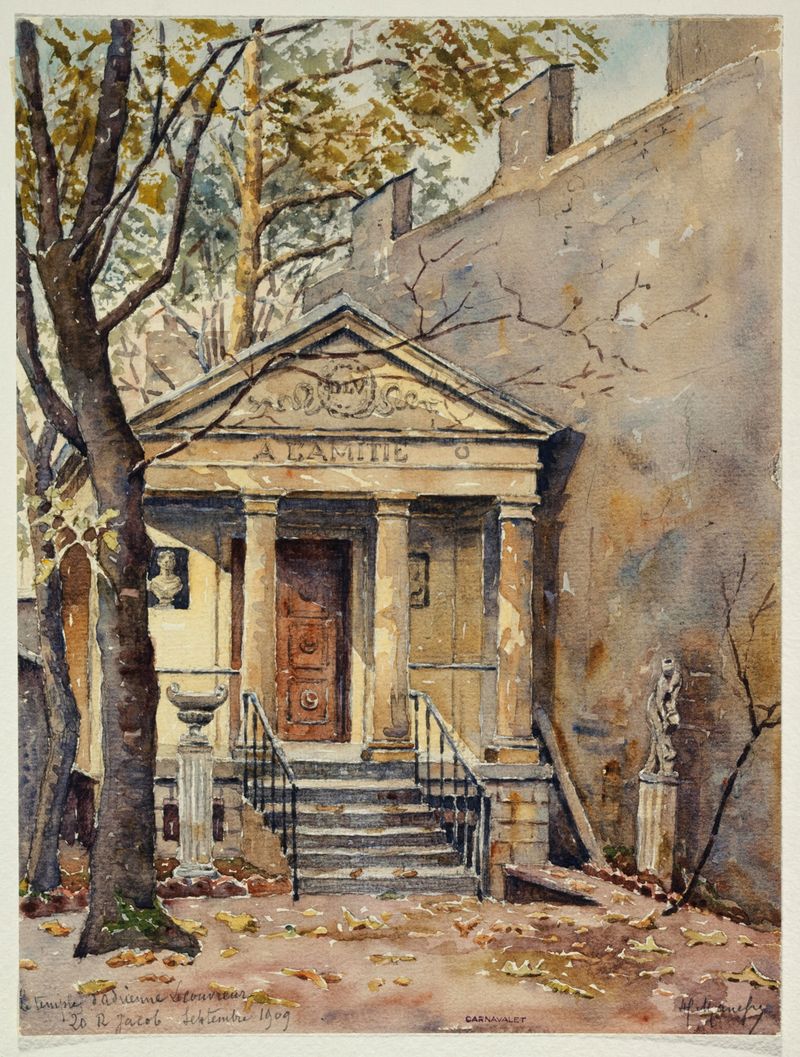
Temple de l’Amitié, 20 rue Jacob où habita Adrienne Lecouvreur
Georges-Henri Manesse

Maison de campagne de Jean-Jacques Rousseau, 20 quai de Passy
Georges-Henri Manesse
More Architecture Art
Browse all →
The statue of Liberty
Frédéric Auguste Bartholdi

View of Houses in Delft, Known as ‘The Little Street’
Johannes Vermeer

View of Houses in Delft, Known as ‘The Little Street’
Johannes Vermeer

The Cathedral in Rouen. The portal, Grey Weather
Claude Monet

The yellow house
Vincent van Gogh

The Church in Auvers-sur-Oise, View from the Chevet
Vincent van Gogh