
A Bengal scene with a thatched dwelling and a goat beside a bridge — History & Facts
What if silence could speak through light? In A Bengal scene with a thatched dwelling and a goat beside a bridge, longing permeates the stillness, hinting at desires woven into the everyday. Focus on the delicate interplay of light and shadow across the thatched roof of the dwelling. Notice how the sun filters through the surrounding foliage, casting dappled patterns that break the static tranquility. The goat, positioned to the right of the bridge, becomes a symbol of simplicity and domesticity, its subtle movements drawing your eye as it grazes near the water's edge.
The artist’s choice of muted earth tones evokes a sense of serenity, grounding the viewer in this intimate moment. Yet beneath this calm exterior lies an undercurrent of yearning. The bridge, a threshold between two realms, suggests crossing into the unknown. The thatched dwelling represents both safety and isolation, holding secrets of life and longing within its walls.
The goat's presence hints at dependency and the gentle tethering of aspirations to the familiar, while the soft light reinforces the fragile nature of these desires—both illuminating and obscuring, inviting contemplation. Painted during a period of exploration and cultural exchange in the early 19th century, the artist crafted this scene in India, a place where East met West in vibrant color and style. Chinnery, known for his portraits and evocative landscapes, sought to capture both the essence of his surroundings and the emotional landscape of its people. This work reflects his keen observations during a transformative time for both himself and the art world, where each brushstroke revealed layers of connection and longing.
More Artworks by George Chinnery
Browse all →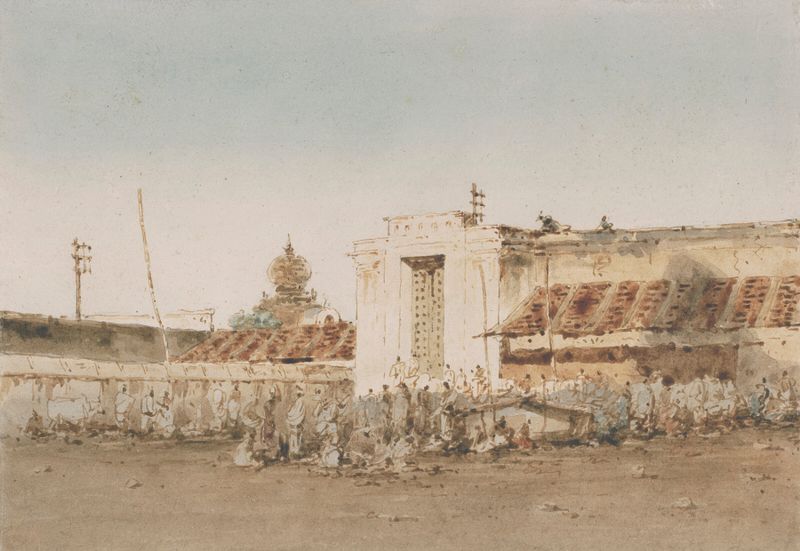
The entrance to ‘the Honourable East India Company’s pagoda’, Madras
George Chinnery
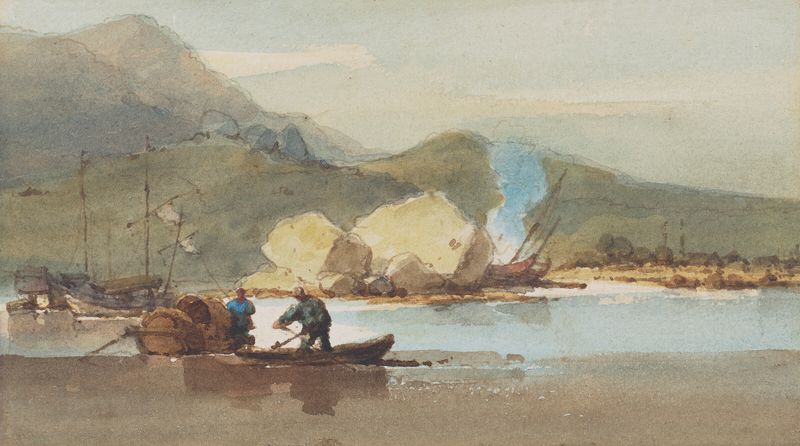
Junks and Tanka boats in a bay, with a beached junk and cooking fire beyond
George Chinnery
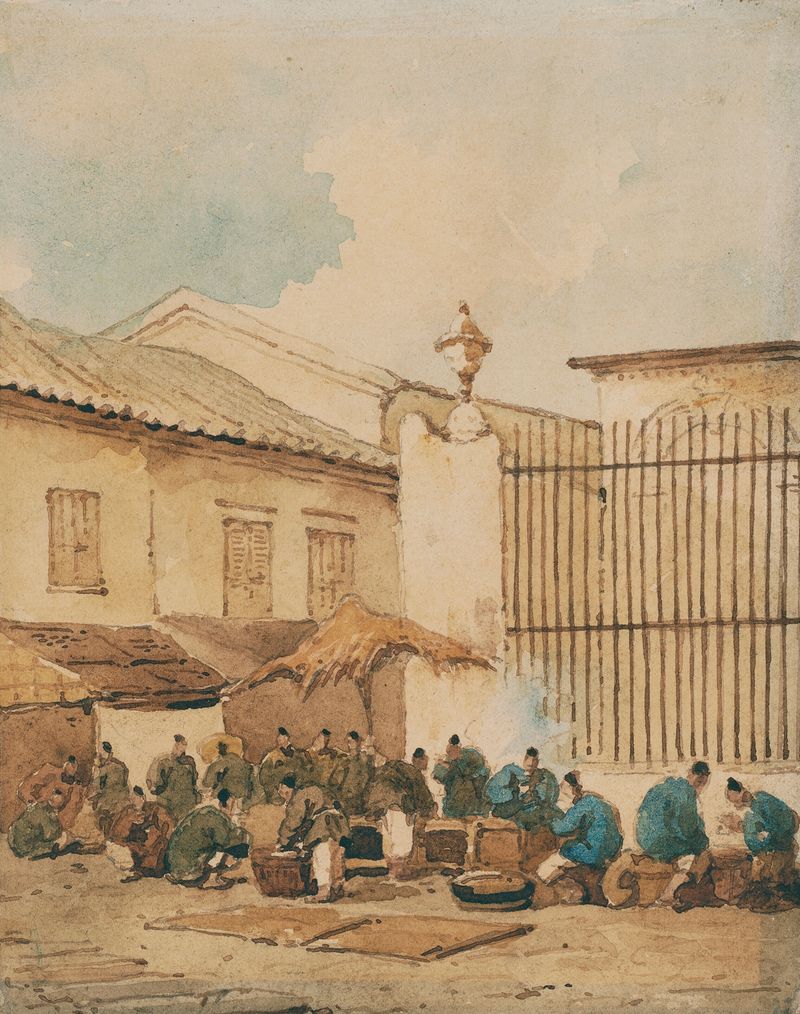
A market outside the railings of St. Dominic’s Church, Macau
George Chinnery

Temple by the Lake
George Chinnery

A River in Ceylon
George Chinnery
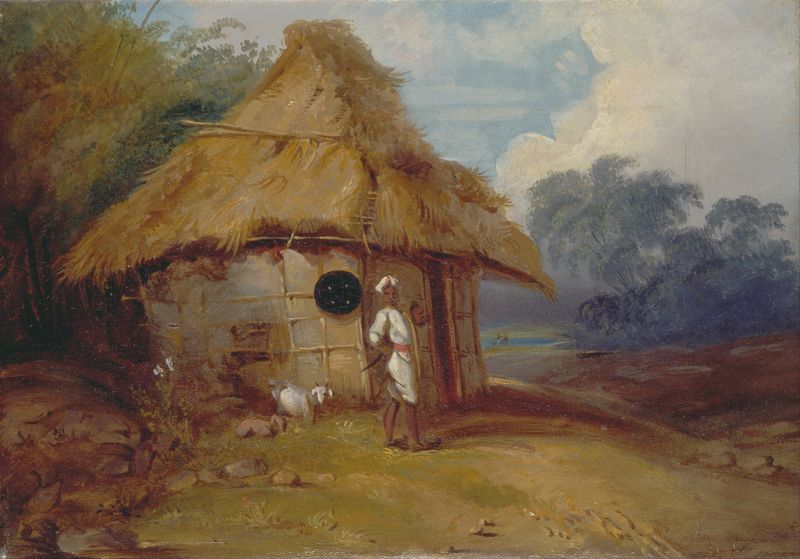
View in Southern India, with a Warrior Outside his Hut
George Chinnery
Indian Landscape with Temple
George Chinnery

Madras, a street scene
George Chinnery
A landscape in Macau with a herdsman walking along a track
George Chinnery

Tanka boat off Macao
George Chinnery





