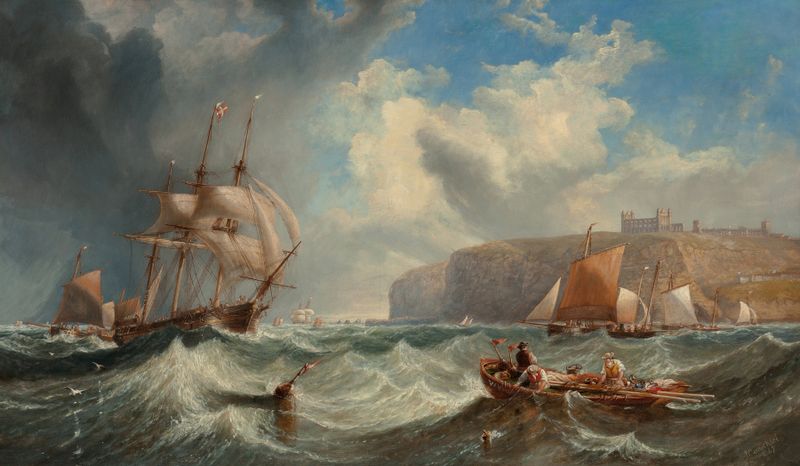
A British Opium Schooner And Other Shipping Off Hong Kong — History & Facts
In a world where the tides of history ebb and flow, art serves as a vessel for transformation, capturing moments that might otherwise fade into obscurity. Look closely at the center of the canvas, where the opium schooner cuts through the azure waters, its sails billowing against a backdrop of vibrant hues. Notice how the artist employs sharp contrasts, with the warm golden rays of the sun illuminating the ship's hull, while shadows dance playfully around the edges. The subtle play of light across the watercraft evokes a sense of movement, creating a dynamic interplay that breathes life into the scene.
Each brushstroke encapsulates the bustling maritime activity of 19th-century Hong Kong, pulling the viewer into a vibrant moment in time. Yet, beneath the surface lies a story of duality. The opium trade, both lucrative and destructive, casts a long shadow over the cheerful maritime scene. The delicate balance of trade and turmoil mirrors the clash between beauty and moral ambiguity.
In the fleet's careful arrangement, one can sense the tension between prosperity and its consequences—a reflection on the human condition that speaks volumes even beyond its picturesque setting. James Wilson Carmichael painted this work in 1843 during a period of rapid change in Hong Kong, where British colonial ambitions were shaping the region's future. As a maritime artist, he was deeply engaged with the themes of commerce and exploration, showcasing the complexities of trade that defined the era. Amidst the backdrop of imperial expansion and the opium crisis, this painting stands as a poignant reminder of the dichotomies that lie at the heart of historical progress.