Passing the harbour buoy, Whitby — History & Facts
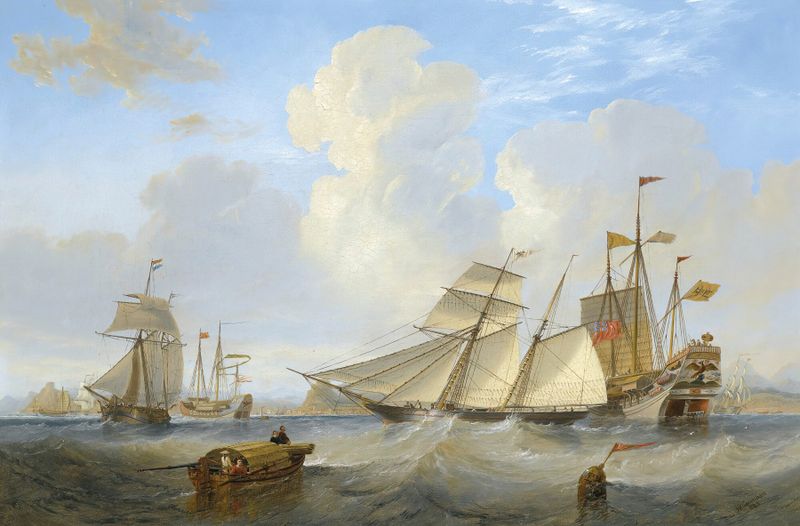
Can beauty exist without sorrow? The quiet solitude of a lone boat navigating through the waters speaks volumes of longing and loneliness, embodying the delicate interplay between nature and human existence. Look to the center of the canvas, where a small vessel cuts through the gentle waves, its sails taut against the wind. The contrast between the soft, muted blues of the sky and the brilliant white of the boat draws the eye, while wisps of clouds loom overhead, as if sharing in the moment’s stillness. Notice how the light dances upon the water’s surface, creating an ephemeral shimmer that evokes a sense of transience — a fleeting glimpse into the vastness of existence. Here, the boat symbolizes isolation amid the grandeur of the harbor, emphasizing a tension between the vibrancy of life and the underlying loneliness of the seafarer.
The buoy stands as a solitary guardian, hinting at the unseen challenges ahead, while the distant cliffs loom protectively yet ominously. This composition reveals a deeper narrative, suggesting that within the beauty of nature lies the quiet ache of solitude. In 1867, the artist created this work during a period of transition in his life and the art world. Carmichael, known for his maritime scenes, had established himself in the vibrant artistic community of England, where the Industrial Revolution was reshaping society.
As he painted the harbor, he grappled with the evolution of landscape painting amidst burgeoning changes in technology and culture, reflecting both personal and universal themes of connection and isolation.