Shipping in the Open Sea — History & Facts
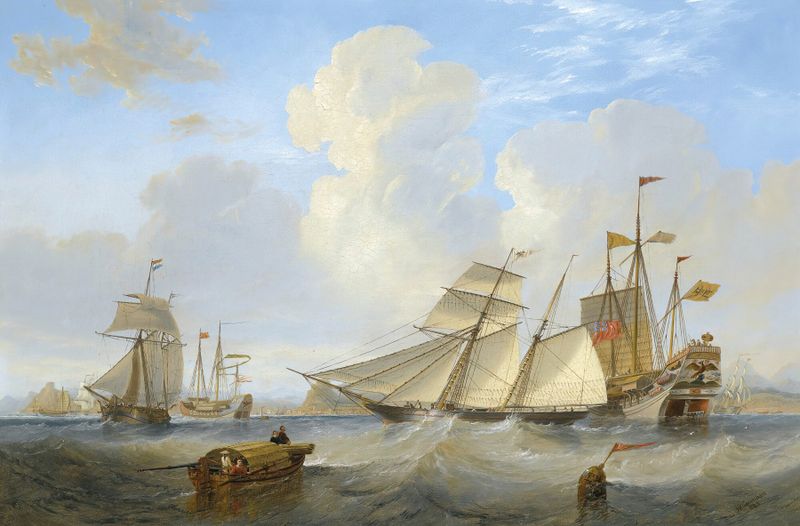
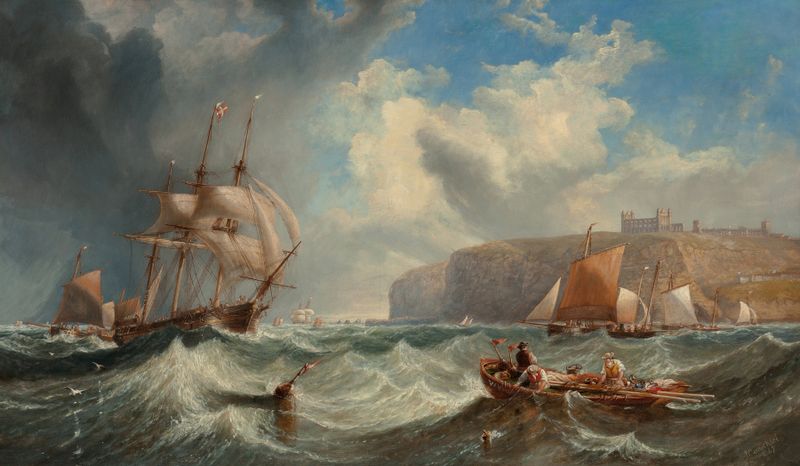
Could a single brushstroke hold eternity? In Shipping in the Open Sea, the interplay of light and shadow captures the essence of maritime life, evoking the vastness and solitude of the ocean. Look to the left at the gentle swell of waves, each brushstroke meticulously crafted to create texture and rhythm. The soft hues of blue and gray dominate, giving way to a warm golden light that bathes the distant horizon. Notice how the sunlight dances on the water's surface, illuminating the sails of the ships as they glide effortlessly through the scene.
This contrast between the shimmering light and the darker, shadowed areas of the ocean reflects both serenity and the unseen depths beneath. The emotional tension in the painting lies in the juxtaposition of movement and stillness. As ships sail toward the horizon, there’s a sense of adventure and exploration, yet the shadows cast by the cumulus clouds hint at the unpredictability of the sea. This duality mirrors the human experience of hope and uncertainty, drawing viewers into a moment that feels both dynamic and contemplative. James Wilson Carmichael created this artwork in 1838, during a time when maritime trade was flourishing and the British Empire was expanding its reach across the globe.
Living in England, Carmichael was influenced by the Romantic movement, focusing on the sublime beauty of nature. His works during this period reflect not only the majesty of the sea but also the growing appreciation for the relationship between mankind and the vast, untamed world beyond.