
A calm anchorage — History & Facts
A sweep of blue sky takes command here, broken by billowing clouds and the angled sails of fishing boats riding the water’s restless surface. The eye is pulled first to the sharply lit hull in the foreground, its ochre sail catching the last warmth of the day, while smaller craft and distant silhouettes recede into a haze of blue and grey. The rhythm of the brushwork in the waves and sky suggests a world in motion, yet the boats themselves are anchored, their presence a quiet assertion of human steadiness amid the changing elements.
Figures in the nearest boat seem absorbed in their work, their gestures purposeful but unhurried, as if the day’s labor is drawing to a close. The low horizon grants the sky a vastness that dwarfs the vessels, but the flags atop the masts—small, distinct—signal identity and belonging. A calm anchorage belongs to the tradition of 19th-century Dutch and British marine painting, a genre that flourished as seafaring nations celebrated their relationship with the water. Artists like Abraham Hulk found inspiration in the everyday life of coastal communities, capturing not only the drama of storms but also the quieter, persistent routines of fishermen and sailors.
Such works were often commissioned by merchants, shipowners, or collectors who sought reminders of the sea’s central role in commerce and culture. This particular painting passed through Bonhams London in 2007, a reminder of how many such scenes have quietly changed hands, their histories pieced together from auction records rather than grand museum displays. What remains is the painter’s invitation: to pause, to look, and to imagine the lives lived just beyond the frame.
Sources: Wikidata Q113964934 · Image source (Wikimedia Commons)
More Artworks by Abraham Hulk

A freshening breeze
Abraham Hulk
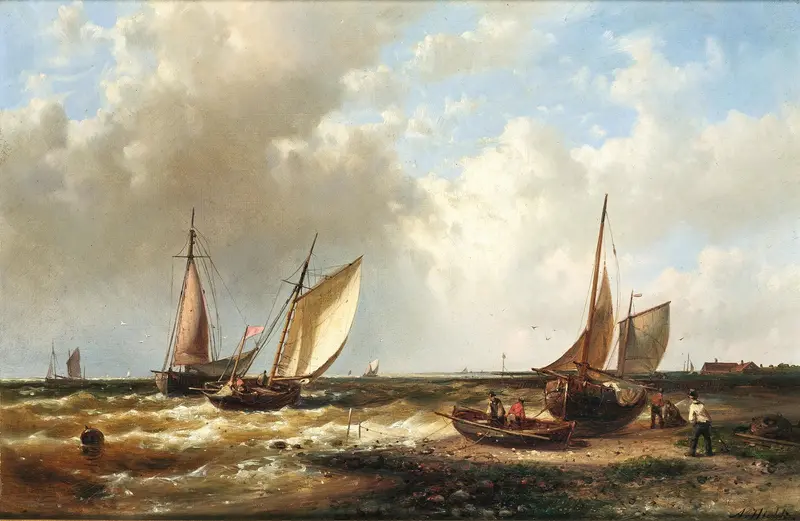
Fishermen at the Seaside
Abraham Hulk

Shipping off the coast
Abraham Hulk
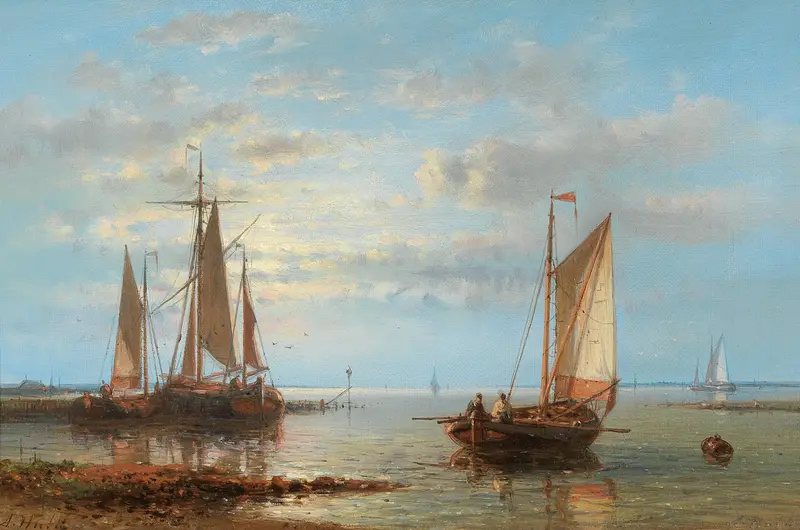
Sailing Boats on Rough Seas
Abraham Hulk
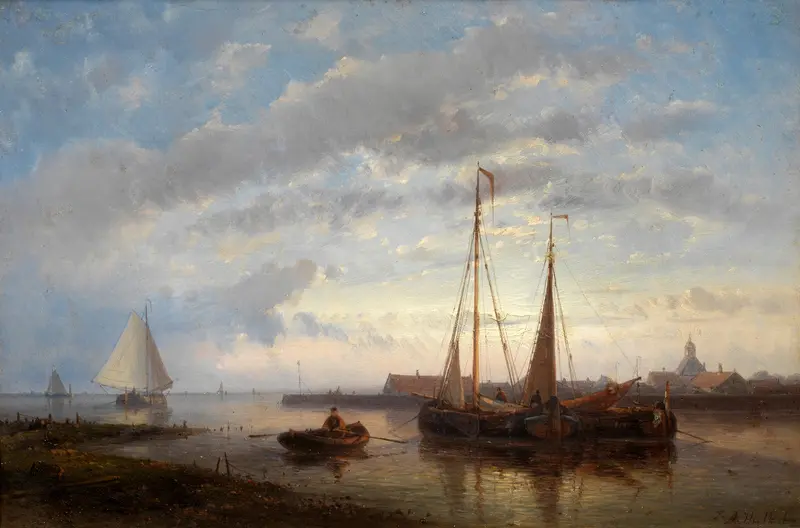
Fishermen at sunset
Abraham Hulk
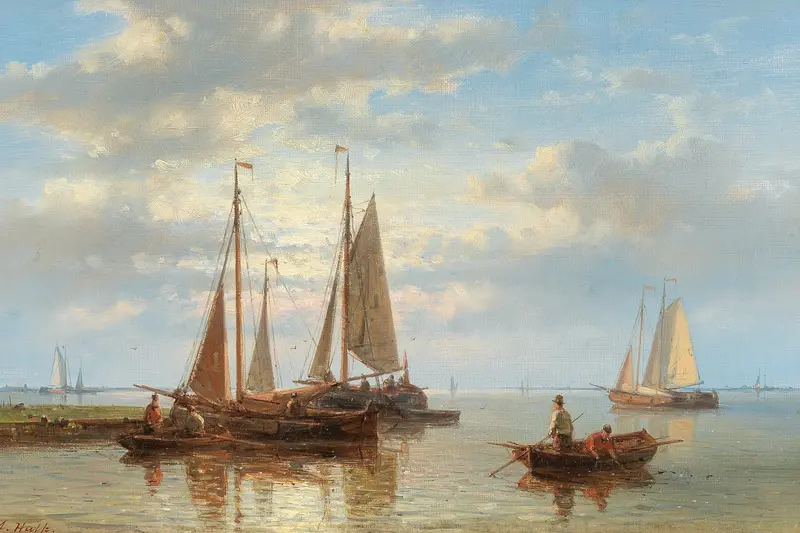
Sailing Boats On Rough Seas
Abraham Hulk
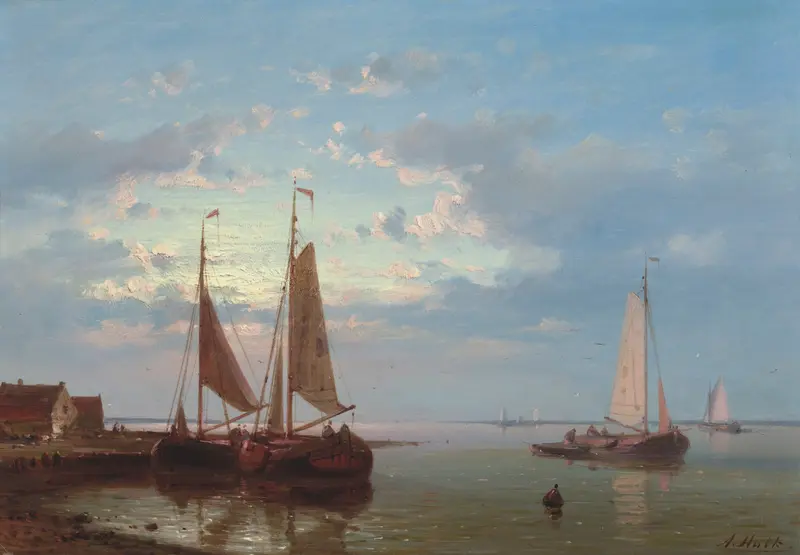
Fishing boats moored in a calm harbour
Abraham Hulk
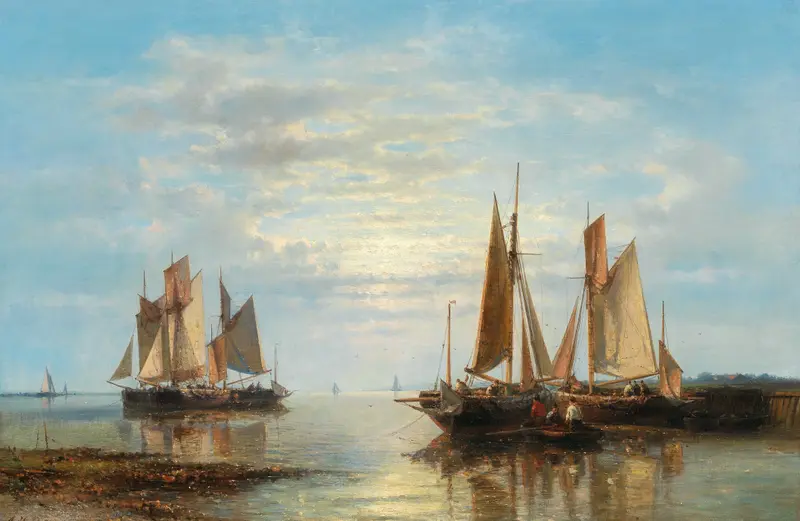
Sailing Boats On A Calm Sea
Abraham Hulk
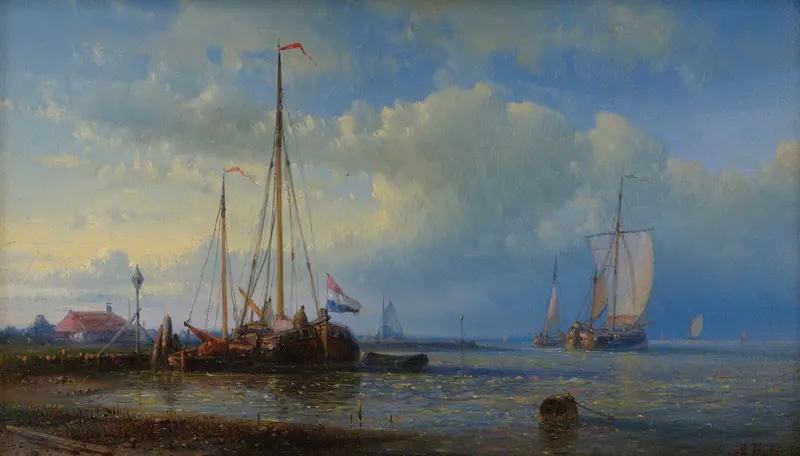
Seascape
Abraham Hulk
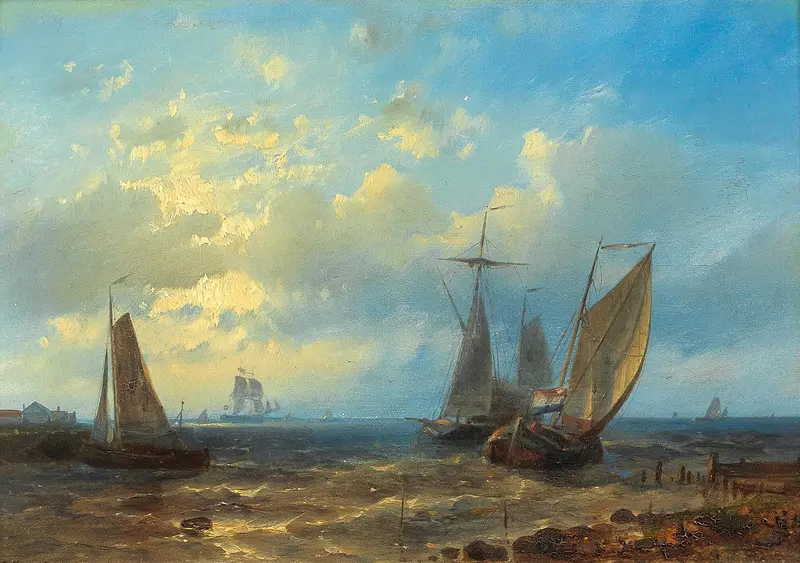
Fishing Boats By The Coast
Abraham Hulk





