A Calm (Ships in the Harbor by Calm Weather) — History & Facts
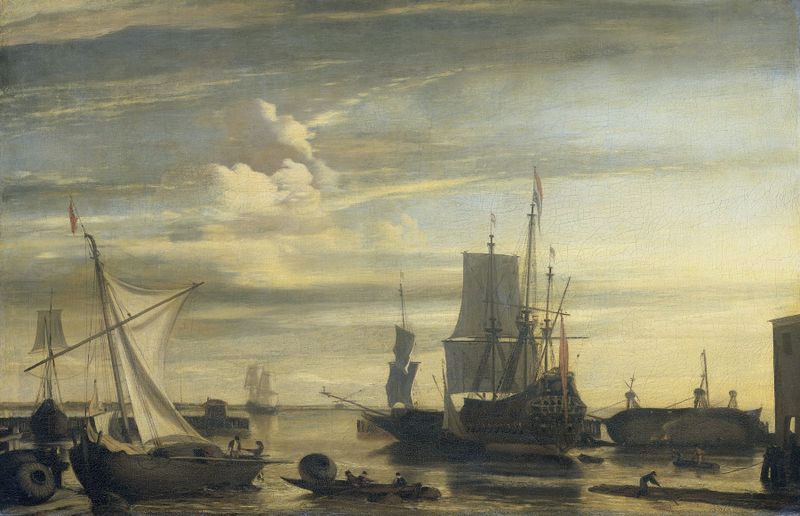
What secret hides in the quiet of the canvas? In a world often turbulent, stillness speaks volumes, revealing the divine tranquility present in everyday life. Look to the left, where the soft hues of dawn subtly kiss the horizon, casting a gentle glow over the calm waters. Notice how the meticulously rendered ships, their sails furled, rest in a perfect alignment—an elegant harmony that speaks to both order and peace. The reflective surface of the water mirrors the sky, creating a seamless blend of blues and grays that evoke a sense of serenity.
Each brushstroke captures the delicate balance between nature and humanity, inviting the viewer to linger. Yet, beneath this placid surface lies a tension between the natural world and human endeavor. The stillness of the harbor suggests a moment before the chaos of sea and storm, hinting at the fragility of calm. The ships, though at rest, bear the weight of untold journeys, each vessel a testament to aspirations and dreams.
This moment reflects not just tranquility but the divine promise of potential—what lies ahead and the hope that accompanies every venture out into the unknown. Jan Claesz. Rietschoof painted A Calm (Ships in the Harbor by Calm Weather) between 1675 and 1719, during a time of shifting artistic styles in the Dutch Golden Age. As maritime trade flourished, artists sought to capture the beauty and significance of seafaring life.
Rietschoof’s work embodies this transition, blending realism with a deeper philosophical reflection that resonates with the viewer, mirroring the era's fascination with both the divine and the earthly.