Ships in a stormy sea, with a dune coast beyond — History & Facts
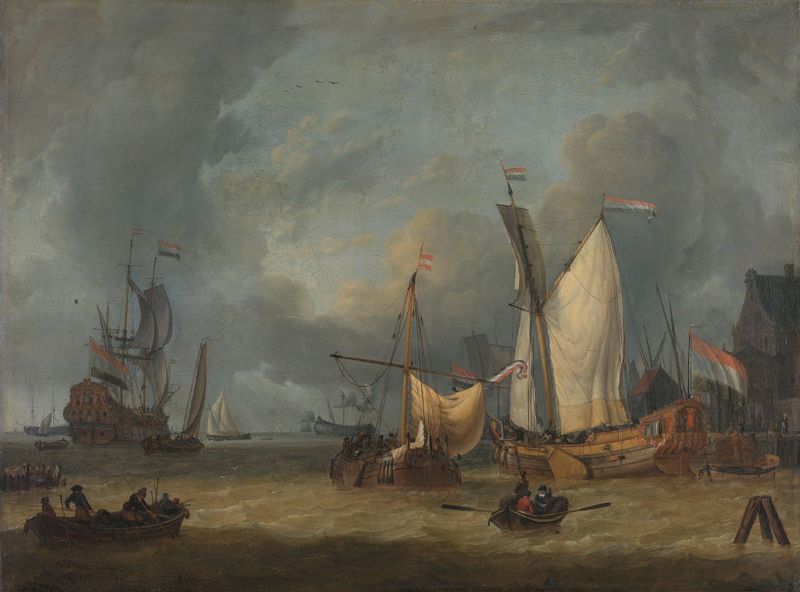
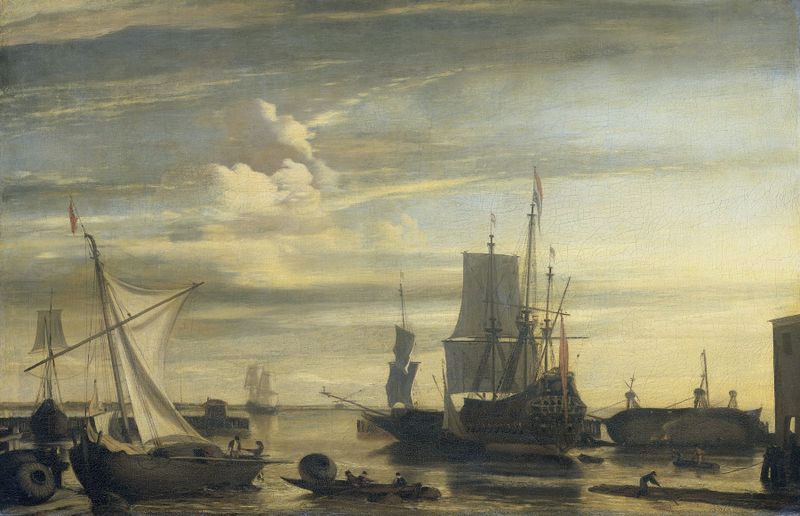
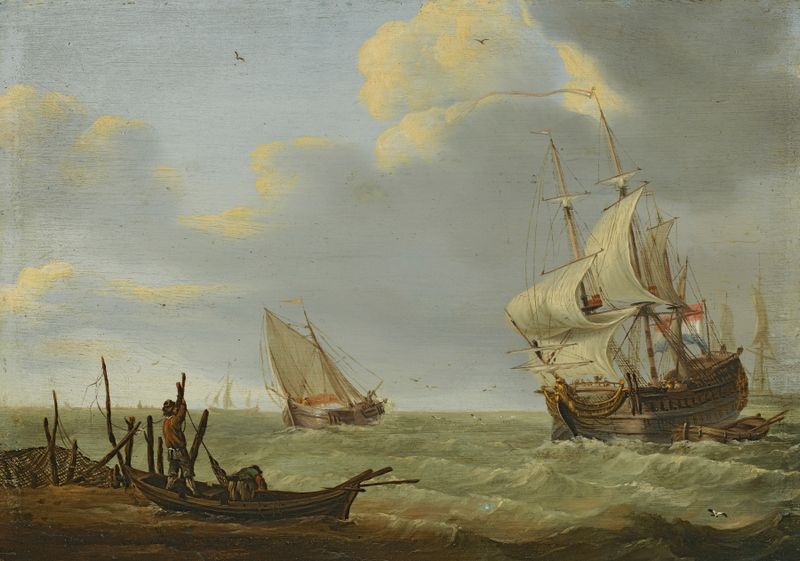
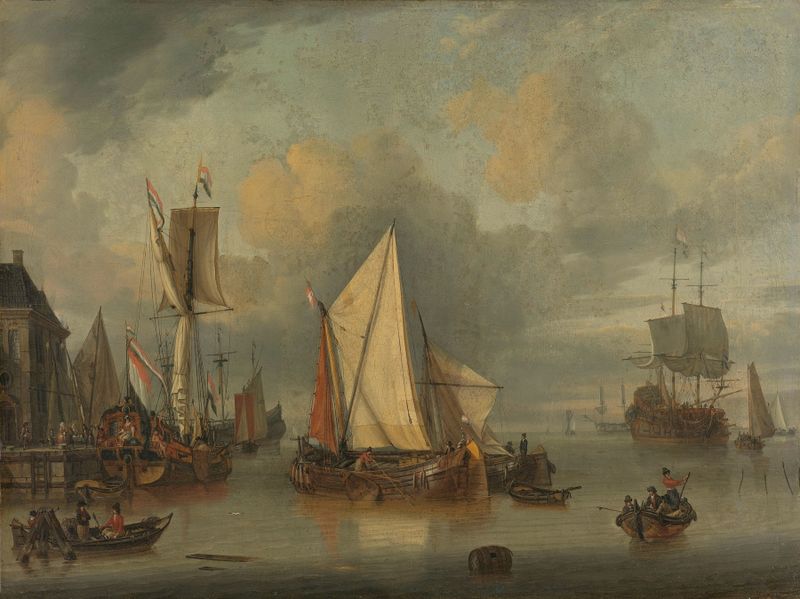
Could a single brushstroke hold eternity? In the tempestuous dance of waves and wind, time seems to freeze as Rietschoof captures a moment suspended between chaos and calm. Look to the left at the tumultuous waves crashing against the hulls of the ships, their forms blurred yet commanding against the stormy backdrop. The palette, dominated by deep, swirling blues and grays, evokes a palpable sense of urgency, while the delicate streaks of white foamy crests contrast starkly with the darkness of the sea. The horizon, where the sky meets the tumult, beckons viewers' eyes to venture beyond the immediate turmoil, hinting at the promise of land and solace just beyond the chaos. Delve deeper into the scene—the fragile boats, small against the vastness, reflect human vulnerability in the face of nature’s fury.
Each ship, though distinct in form, shares a common struggle, a metaphor for resilience amidst adversity. The distant dune coast, painted with softer, warmer hues, represents hope and safety, a stark contrast to the raw power of the storm—serving as a reminder of the eternal dance between tumult and tranquility, time and existence. Rietschoof created this artwork during a period when maritime scenes were becoming increasingly popular in Northern Europe, likely influenced by the turbulent socio-political climate of the time. The late 16th to early 17th century saw the Dutch Golden Age; artists were exploring themes of human struggle and the sublime.
Rietschoof's ability to immortalize a fleeting moment of nature's wrath reflects not only his skill but also a broader artistic movement wrestling with the relationship between humanity and the elements.