A Canal at Abbeville — History & Facts
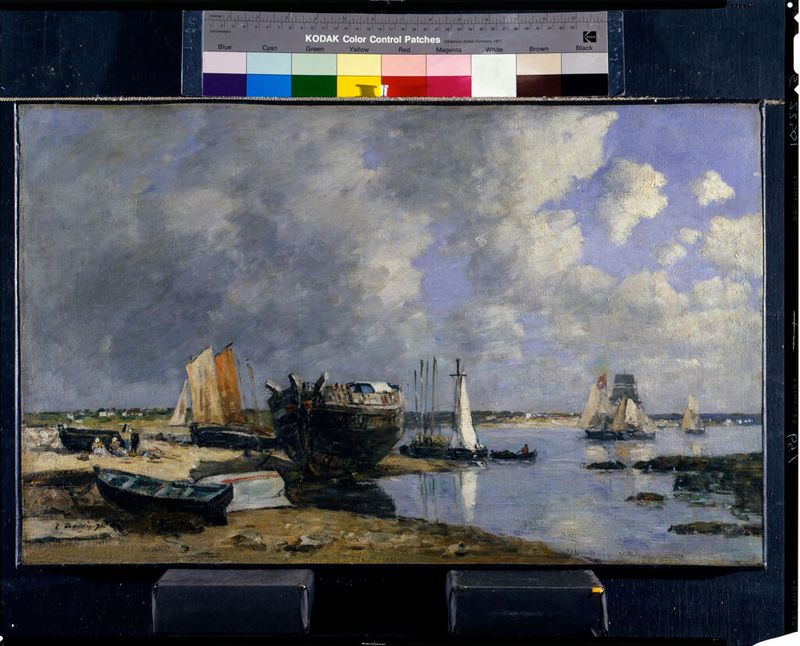
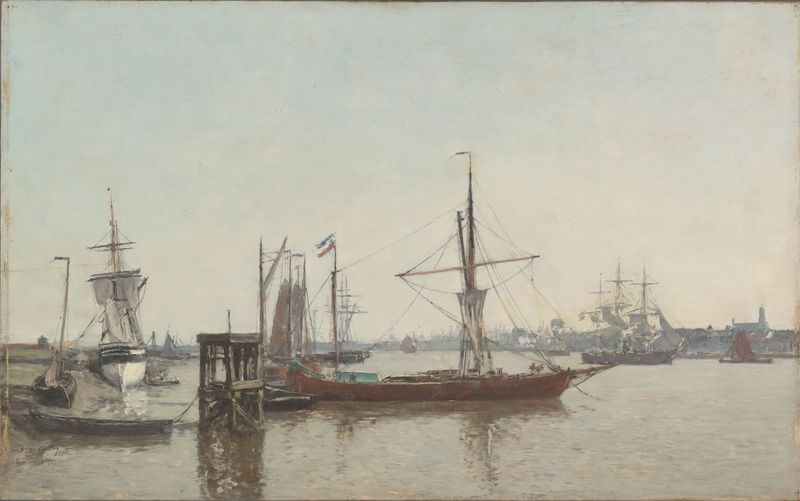
The canvas doesn’t lie — it simply waits. Within its depths lies an invitation to witness rebirth, as the vibrant landscape unfolds before our eyes. Look to the center where the canal glimmers under a soft, embracing light. The water, dappled with reflections, draws the gaze towards the gentle ebb and flow of the scene.
Notice how Boudin's brushstrokes dance with the wind, capturing the momentary play of clouds above and giving life to the vivid greens and blues that surround the waterway. Here, contrasts emerge — the serenity of the canal juxtaposed with the lively brushwork, suggesting a world at the cusp of change. The boats, anchored yet poised, symbolize both stillness and the potential for movement. Each stroke conveys an emotional weight, a reminder of nature’s cycles, as if Boudin whispers of seasons turning and life renewing. In 1894, while painting A Canal at Abbeville, Boudin was deeply immersed in his exploration of the French countryside, often seeking solace in its landscapes.
This was a period of transition in the art world, as Impressionism gained traction, and Boudin, a forerunner to this movement, was refining his mastery of light and atmosphere, capturing the essence of fleeting moments.