Antwerp: View of the Port from the Tête de Flandres — History & Facts
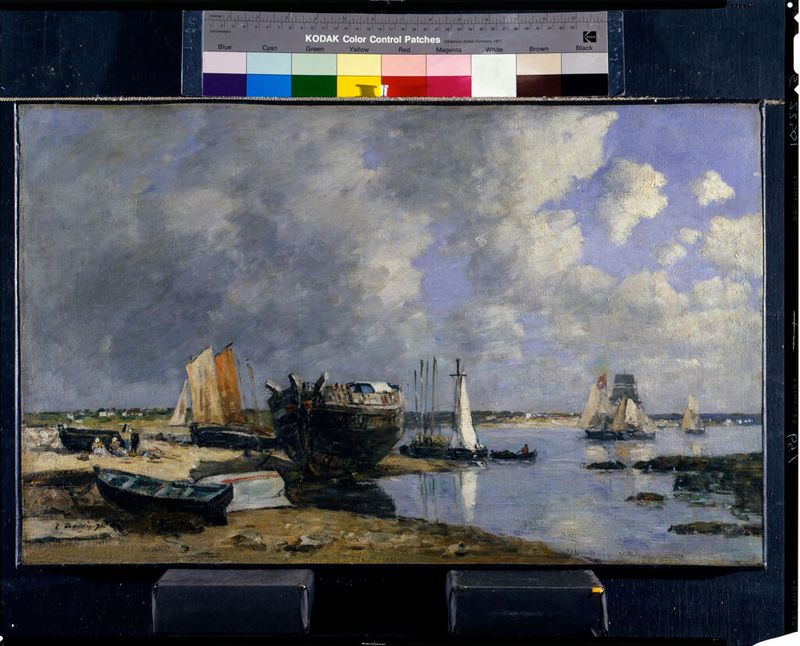
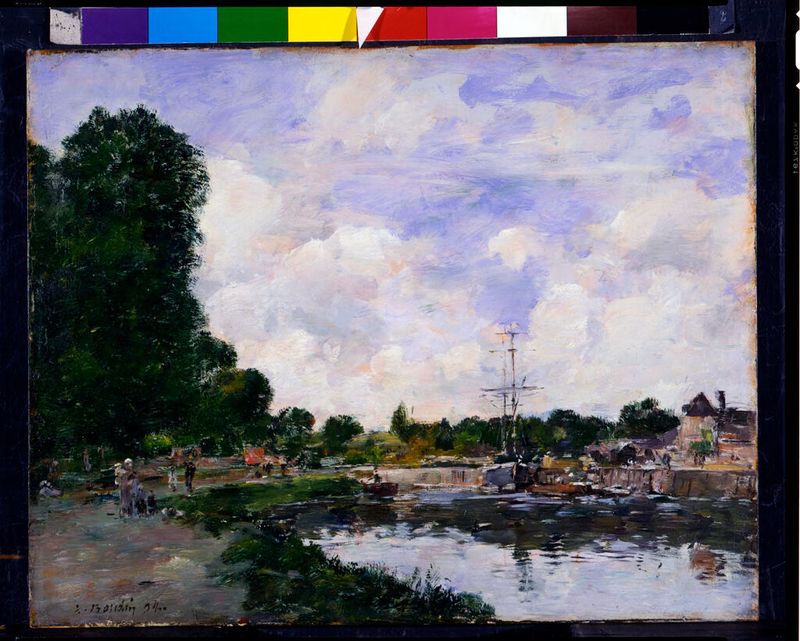
Could a single brushstroke hold eternity? In Antwerp: View of the Port from the Tête de Flandres, the fleeting moments of life and nature are captured with a depth that echoes across time. Look at the lower left corner, where the gentle lapping of the water meets the shore. The artist employs delicate strokes to depict the shimmering reflections of boats bobbing on the surface, their hulls merging into the undulating blues and greens. Notice how the light dances upon the waves, illuminating the scene with a golden hue that suggests the warmth of late afternoon.
The meticulous rendering of clouds in the sky hints at an impending shift, a moment caught between the tranquility of the day and the promise of evening. Boudin juxtaposes stillness and movement, revealing the tension between human enterprise and nature's grandeur. The cargo vessels, laden with goods, symbolize commerce and progress, while the serene waters reflect a world in flux—a duality that invites contemplation. Small details, such as the softly swaying mast of a ship, serve as reminders of the impermanence of both industry and life, as if proclaiming that even our most steadfast creations are bound to the rhythm of the tides. In 1871, when this piece was created, Boudin was deeply immersed in the burgeoning Impressionist movement in France.
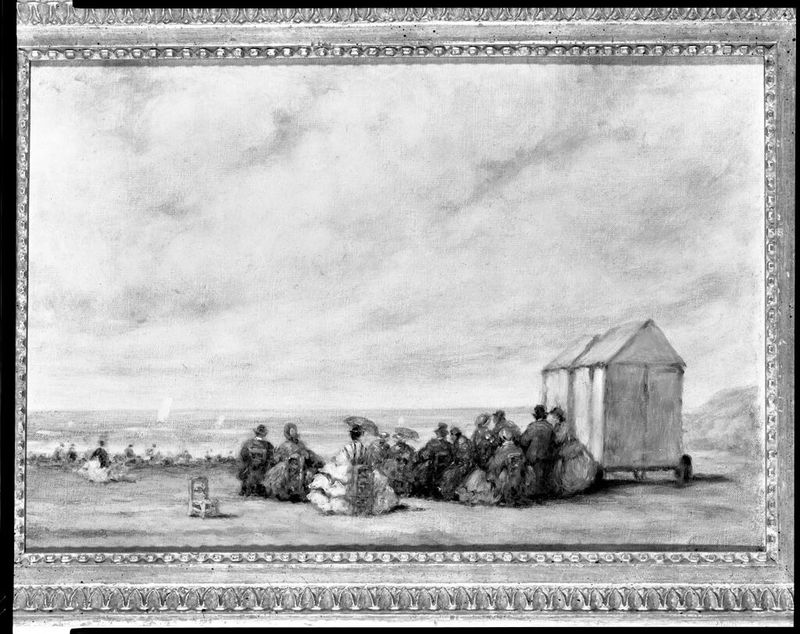
While residing in Trouville, he sought to capture the essence of light and atmosphere, influenced by both coastal scenes and urban life. The painting reflects his commitment to plein air techniques, highlighting the transition towards modernity in art, while also remaining anchored in the rich maritime history of Antwerp.