Boats at Anchor and Beachhead — History & Facts
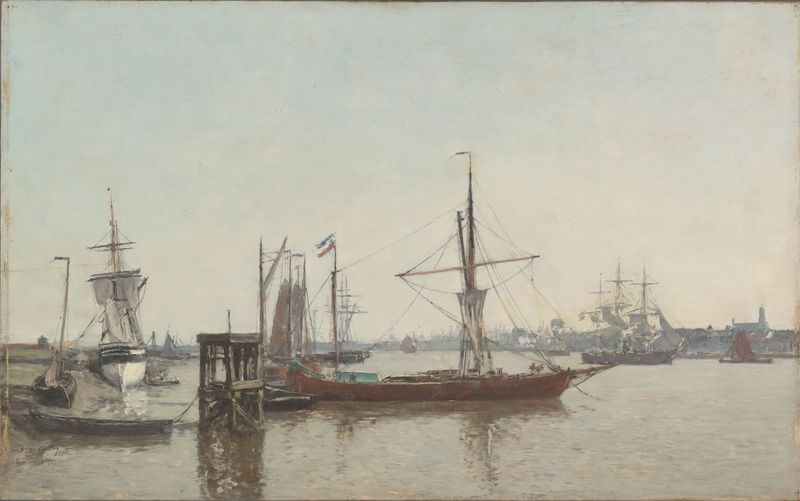
In Boats at Anchor and Beachhead, movement is suspended, yet the essence of life swells within every brushstroke. The canvas breathes, inviting us to explore its depths while contemplating the transience of existence itself. Look to the foreground where gentle waves lap against the shore, their rhythmic motion captured in soft, swirling brushstrokes. Notice how the boats, anchored yet poised, seem to sway with the tide, their hulls rendered in rich blues and earthy browns.
The light plays delicately across the water's surface, illuminating the subtle differences in texture and inviting your gaze to dance along its shimmering path. The composition is balanced and harmonious, with the horizon stretching beyond the boats, suggesting a world that is both expansive and intimate. Amidst the tranquil scene, a deeper tension unfolds. The stillness of the anchored boats contrasts with the dynamic pull of the sea, evoking a feeling of pause within an unending cycle.
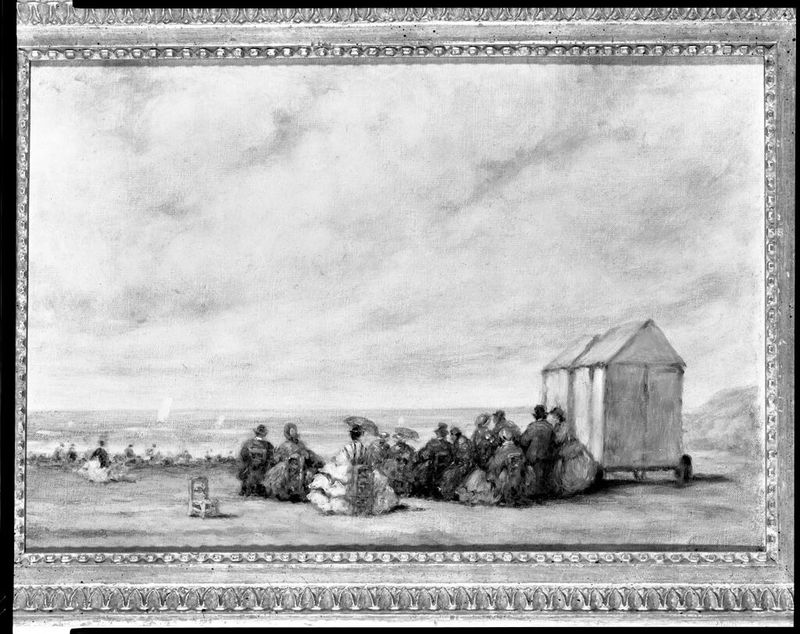
Additionally, the presence of distant figures on the beach hints at human activity—perhaps a longing for adventure or the comfort of home. This duality speaks to the delicate balance between yearning and contentment, drawing the viewer into a contemplative space. Created in 1871, during a time when Boudin was at the forefront of Impressionism in France, Boats at Anchor and Beachhead reflects his keen interest in the interplay between light and nature. Living in Normandy, he was inspired by the coastal landscapes, capturing moments that would resonate with the emerging modern art movement.
This piece embodies both his mastery of technique and a burgeoning exploration of the ephemeral nature of life and experience.