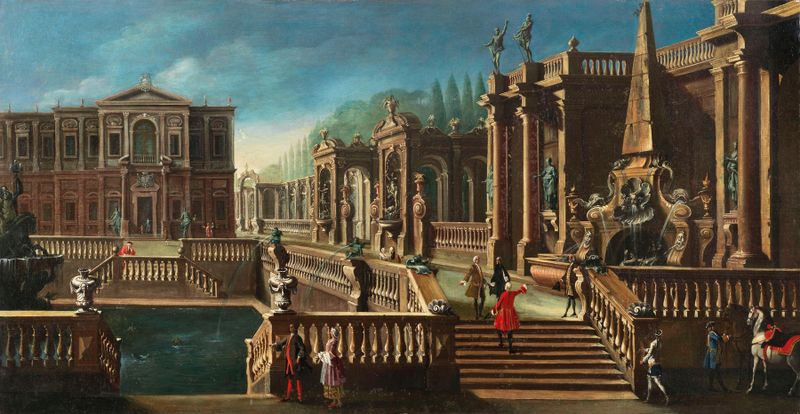
A Capriccio View Of A Walled Town With Elegant Figures On The River — History & Facts
In this moment of stillness, the essence of rebirth resonates through a strikingly composed vista, reminding us that beauty often lies in the interplay of light and shadow. Look to the river, where the gentle current glimmers under a hazy sun, guiding your gaze toward the elegant figures poised along its banks. Notice the vivid interplay of warm hues in the walled town, with ochres and terracottas harmonizing against the soft blues of the sky. The meticulous brushwork reveals not just the architecture but also the whispers of the lives contained within those walls, their stories emerging from the landscape like echoes from the past. Hidden within the scene are the gentle contrasts between nature and civilization, movement and stillness.
The flowing water suggests the passage of time, while the rigid structures of the town stand as a testament to endurance. Each figure, dressed in elegant attire, seems to navigate between realms, embodying the delicate balance between tradition and transformation, inviting viewers to ponder their own connections to place and identity. Francesco Battaglioli created this work during a period marked by the rise of neoclassicism in Italy, likely around the late 18th century. At this time, he was engaged in exploring themes of harmony and idealism, drawing inspiration from the beauty of the Italian landscape and its architectural heritage.
The world of art was shifting, embracing the revival of classical ideals, and Battaglioli’s vision reflected a cultural moment ripe with possibilities for renewal and exploration.