
A Colonnade in Ruins — History & Facts
In a world where nothing is permanent, how do we find beauty in decay? The viewer's gaze is drawn to the crumbling structure at the painting’s center, a once-majestic colonnade now reduced to ruins. Look closely at the arches, their elegant lines undermined by time's relentless passage, while muted earth tones blend with hints of green from the encroaching foliage. The artist uses light thoughtfully, letting it filter through the gaps, illuminating both the desolation and the resilience of nature reclaiming its territory. As you explore the artwork, notice the contrast between the serene sky and the fragmented colonnade.
This juxtaposition invites contemplation of impermanence and the void it creates, reflecting both loss and the quiet strength of the natural world. Delicate brushstrokes evoke the tender grip of ivy on stone, symbolizing renewal amid decay, while the open spaces suggest an eerie silence — the absence of life echoing loudly in the viewer's mind. The artist created this piece during a period of personal contemplation, likely in the late 18th century, reflecting a broader fascination with ruins in the art movement of the time. In Paris, Robert was influenced by the neoclassical ideals surrounding him, yet his work resonates with a romantic sense of nostalgia.
The vast transformations of the city and shifting artistic landscapes provided a backdrop for this exploration of beauty within the void left by architectural decay.
More Artworks by Hubert Robert
Browse all →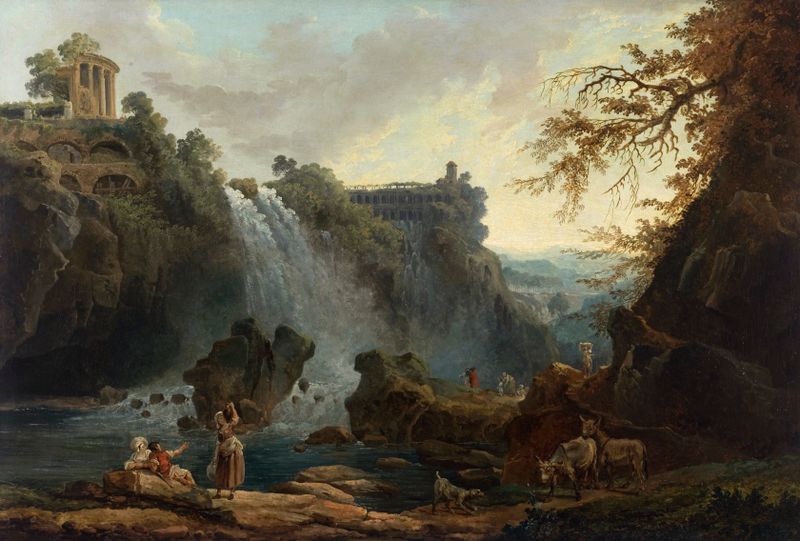
Les Cascatelles de Tivoli
Hubert Robert
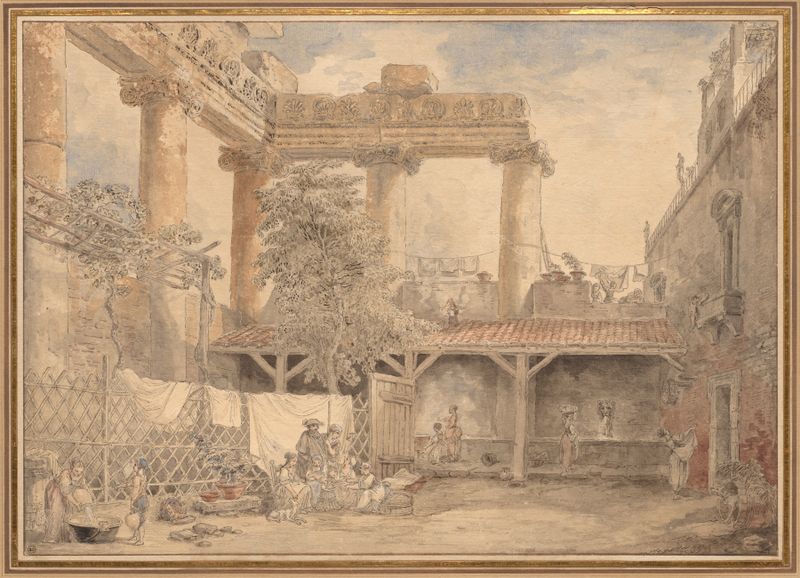
Roman Ruins, Villa Pamfili
Hubert Robert

The Rustic Bridge, Château de Méréville, France
Hubert Robert

The Portico of a Country Mansion
Hubert Robert

Architectural Capriccio
Hubert Robert

The Obelisk
Hubert Robert
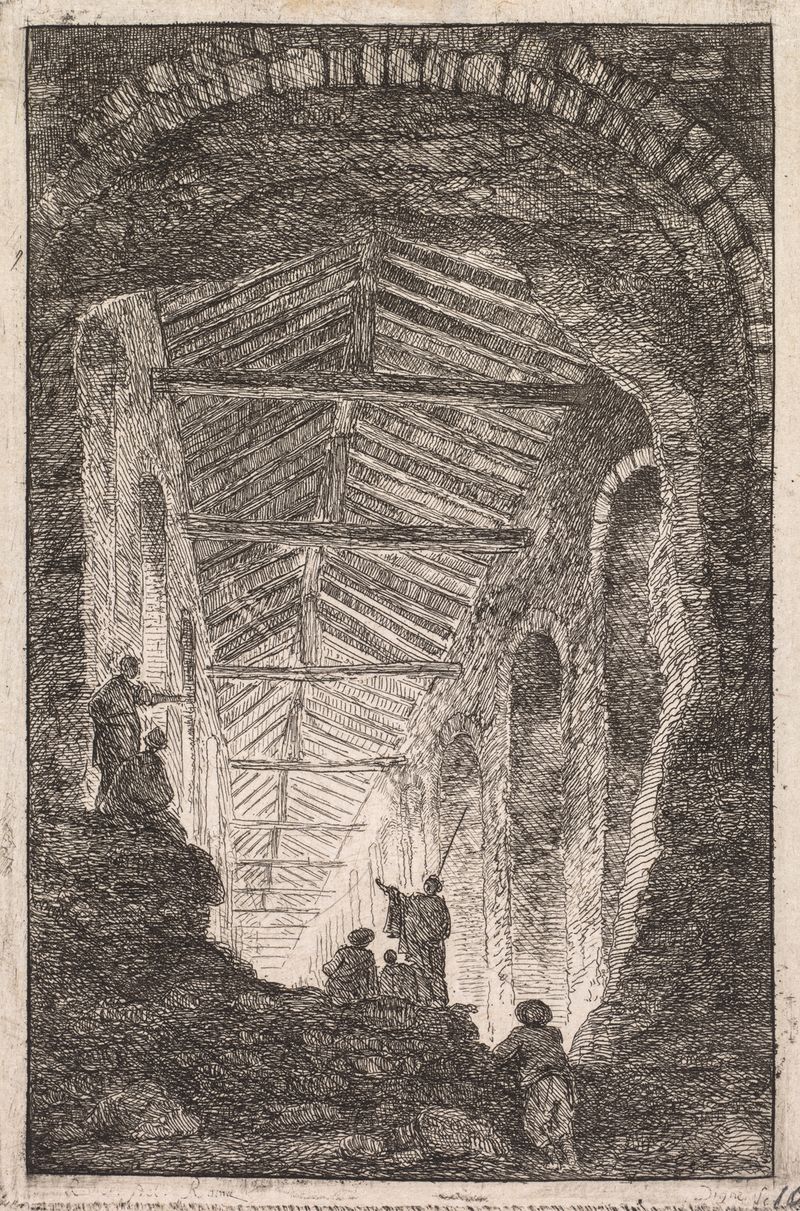
The Antique Gallery
Hubert Robert

L’incendie de l’Opéra, vu des jardins du Palais-Royal, le 8 juin 1781
Hubert Robert
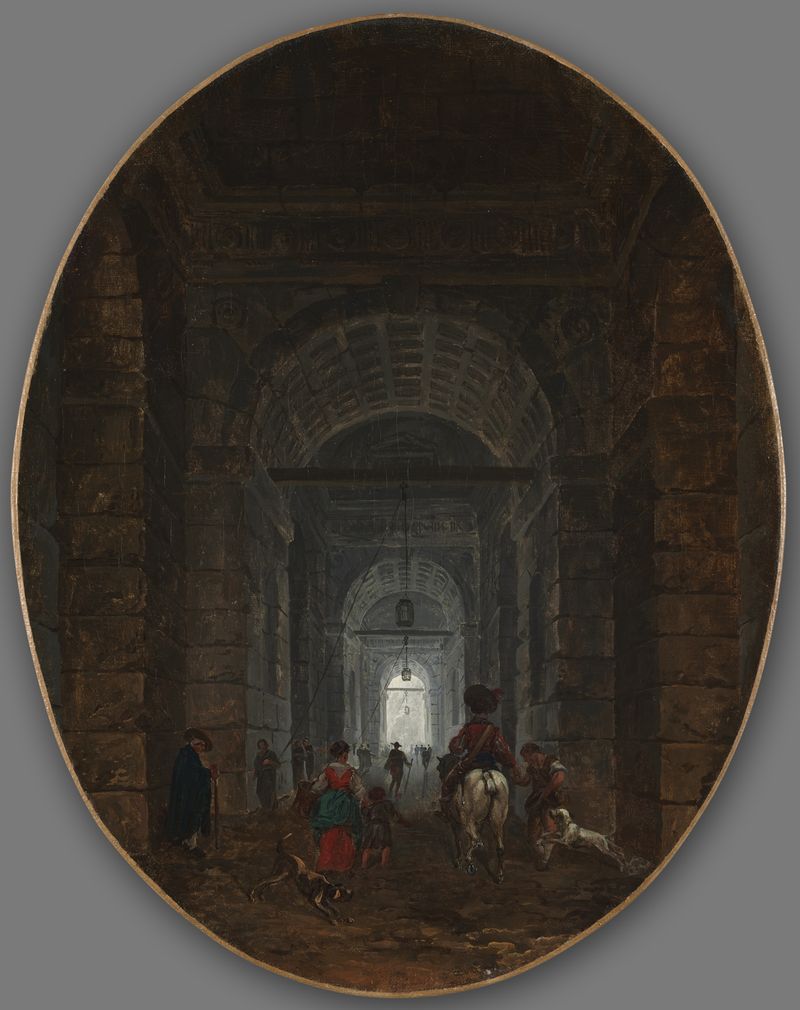
The Grotto of Posillipo
Hubert Robert

Architectural Capriccio with ruins of the Temple of Saturn and the Colosseum in the background
Hubert Robert
More Architecture Art
Browse all →
The statue of Liberty
Frédéric Auguste Bartholdi

View of Houses in Delft, Known as ‘The Little Street’
Johannes Vermeer

View of Houses in Delft, Known as ‘The Little Street’
Johannes Vermeer

The Cathedral in Rouen. The portal, Grey Weather
Claude Monet

The yellow house
Vincent van Gogh

The Church in Auvers-sur-Oise, View from the Chevet
Vincent van Gogh