A Cottage — History & Facts
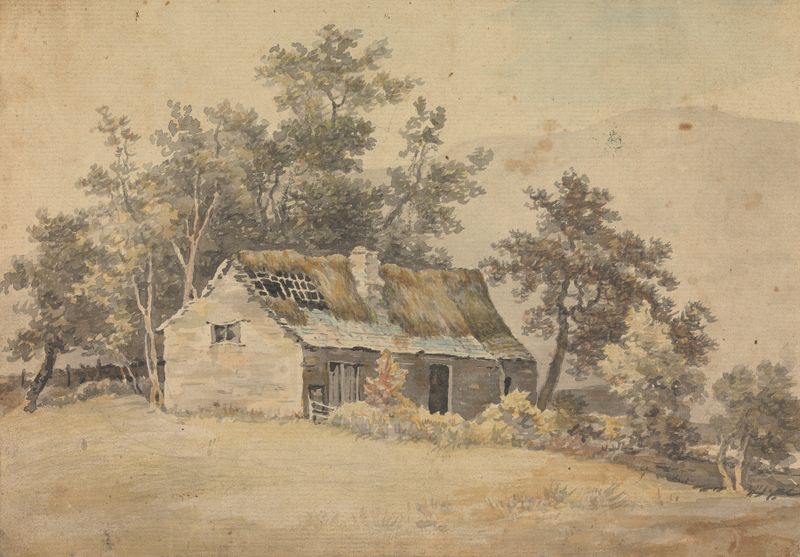
When did color learn to lie? In A Cottage, the tranquil palette belies an undercurrent of betrayal, a subtle discord between appearance and reality that beckons the viewer to look deeper. Focus first on the serene cottage nestled among the verdant trees, its warm hues inviting and seemingly idyllic. The soft light dapples through the leaves, casting gentle shadows that dance across the grassy foreground. Notice how the artist employs delicate brushstrokes to create an illusion of warmth and comfort, yet the lurking shadows suggest an unsettling truth hidden behind the charm of the scene. As you examine the details, the tension becomes palpable.
The cottage, while picturesque, stands alone, evoking feelings of isolation and abandonment. The vibrant greens of the surrounding foliage, though pleasing, also hint at the potential for decay and neglect. This dichotomy between the lively colors and the potential loneliness of the structure creates a complex emotional landscape, compelling the viewer to consider what may be concealed beneath the surface. In 1760, Sawrey Gilpin painted this work during a period of significant change in the art world, characterized by a shift towards Romanticism and a focus on nature.
At the time, he was immersed in the natural beauty of England, yet the serene exterior of A Cottage contrasts with the underlying themes of solitude and betrayal, reflecting both personal introspection and a broader commentary on human experiences within the changing landscape of art.