Landscape with a Dwelling in Ruin — History & Facts
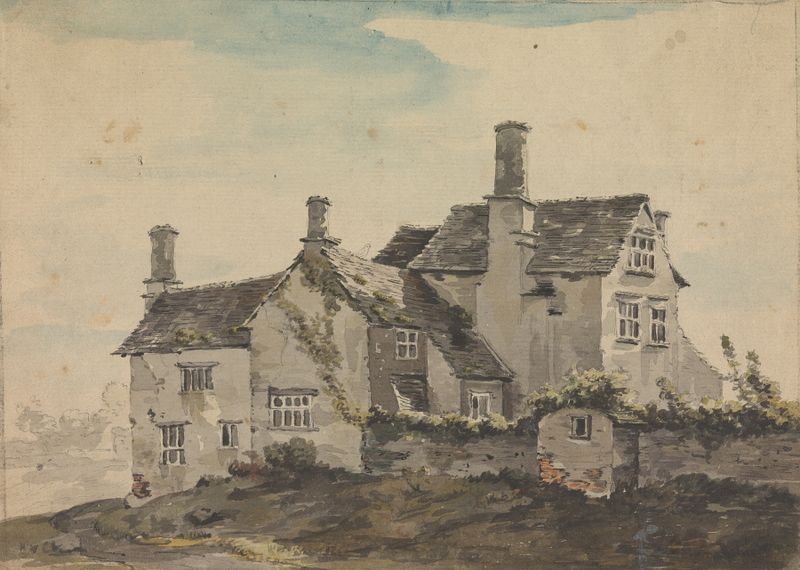
What secret hides in the quiet of the canvas? In Landscape with a Dwelling in Ruin, the artist invites viewers to explore a dreamscape where past and present intertwine, revealing stories untold. Look to the center, where the crumbling structure nestles amidst the undulating hills. Notice the vibrant greens and soft browns that envelop the scene, creating a lush embrace for the dilapidated dwelling. The brushwork is gentle, almost whispering, as it guides your gaze.
The light plays delicately across the landscape, illuminating the ruins while casting shadows that hint at the passage of time, evoking both nostalgia and melancholy. In the foreground, a lone figure surveys the remnants of a life once filled with laughter and warmth, suggesting a silent conversation between memory and loss. The juxtaposition of the vibrant nature surrounding the decay highlights the relentless march of time; life flourishes even as remnants of the past fade. This tension beckons contemplation on what we leave behind and what endures in our absence. Created in 1760, this work emerged during a transformative period for Gilpin, who was deeply influenced by the English Romantic movement.
Living in a time when landscapes were gaining new significance in art, he sought to evoke emotional depth through natural scenes. As the world around him began to industrialize, he captured a moment of reflection, bringing forth the beauty and tragedy of decay in a rapidly changing world.