Castle below mountains with horses by a river — History & Facts
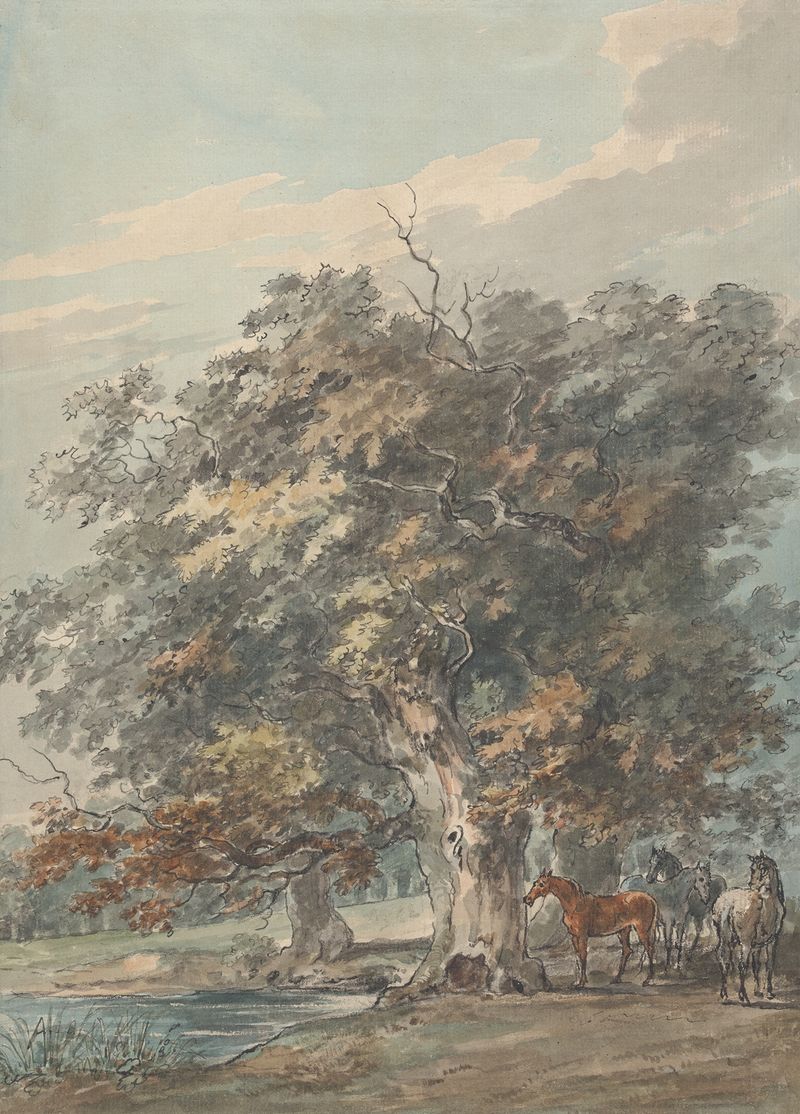
Is this a mirror — or a memory? In the tranquil embrace of nature, a serene river flows, cradling the shadows of a distant castle and echoing the power of forgotten conflicts. Focus on the left side of the canvas, where the gentle curve of the river glistens in muted light, inviting the eye to wander further into the landscape. The horses, subtly positioned near the water’s edge, exude a sense of calm yet hold a latent energy, poised as if ready to charge into the depths of the scene. Notice how the muted greens and browns blend seamlessly, creating a tapestry of tranquility, yet the stark presence of the castle looms ominously in the background, punctuated by sharp angles and a hint of decay. Delve deeper, and contrasting emotions arise from the interplay of light and shadow.
The bright, open space around the river suggests peace and pastoral beauty, while the imposing silhouette of the castle evokes a history steeped in violence and turmoil. Each element speaks to a duality: the idyllic serenity of nature against the harsh reminders of human struggle, encapsulating a world where harmony often teeters precariously on the edge of conflict. During the time Castle below mountains with horses by a river was created, Sawrey Gilpin was forging his path through the British art scene, likely influenced by the romantic landscapes of his contemporaries. Although the precise date is unknown, his work reflects an era when artists began to explore the emotional resonance of landscapes, intertwining nature with the complexities of human existence.
It was a moment when the serene and the tumultuous could coexist, much like the imagery captured in this painting.