
A dune landscape with figures — History & Facts
What if silence could speak through light? The vast expanse of dunes stretches endlessly, inviting whispers of solitude and reflection in its gentle curves. Look to the left at the distant figures, mere silhouettes against the low-hanging sky. Their elongated shadows merge with the sandy terrain, drawing your eye into the heart of the landscape. Notice how the golden light bathes the scene, accentuating the ripples of the dunes while casting a soft, melancholic glow.
The muted palette of earthy tones evokes a sense of quietude, where both the figures and the landscape seem suspended in time, caught in a moment of contemplative isolation. As you explore deeper, consider the contrasts in the painting — the interplay between the vast, unyielding landscape and the fragile, solitary figures. There’s a striking tension between the expansive emptiness and the intimate presence of humanity. The composition speaks of loneliness, suggesting that even in a crowd, one can feel utterly alone, trapped amongst the grandeur of nature’s indifferent beauty. In 1641, Jan van Goyen painted this work during a period when the Dutch Golden Age was flourishing, yet personal struggles marked his life.
Emphasizing landscape over complex narrative, he was exploring the emotional depth of natural scenes amidst his own financial hardships. This painting, reflecting a poignant solitude, resonates with the broader themes of human experience, encapsulating a moment where stillness and silence reign.
More Artworks by Jan van Goyen
Browse all →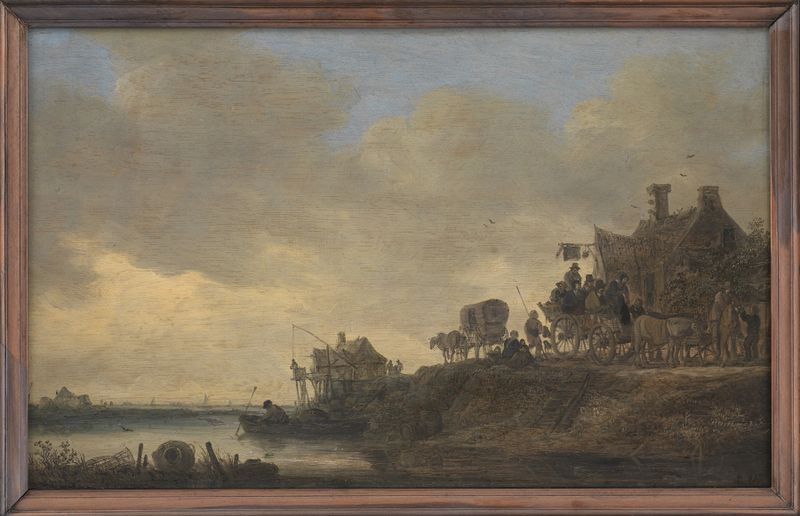
River Scene with the ‘Swan’ Tavern
Jan van Goyen

The Valkhof in Nijmegen
Jan van Goyen
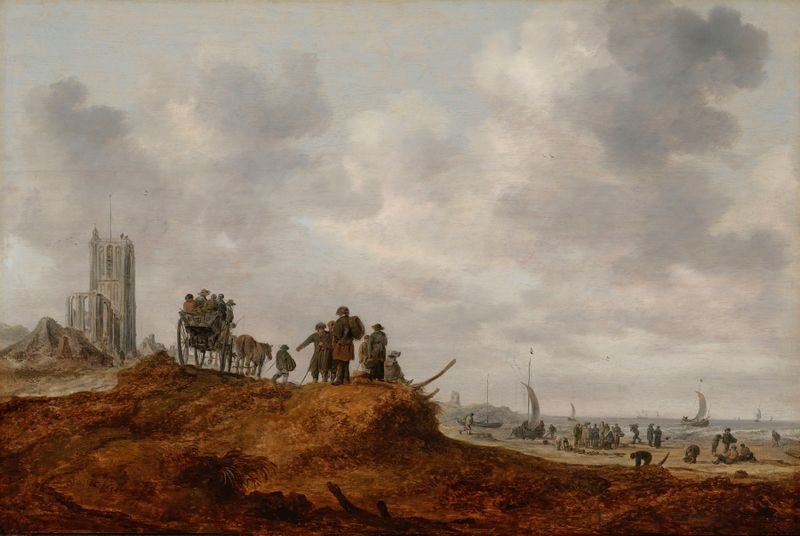
The Old Church at Egmond aan Zee
Jan van Goyen
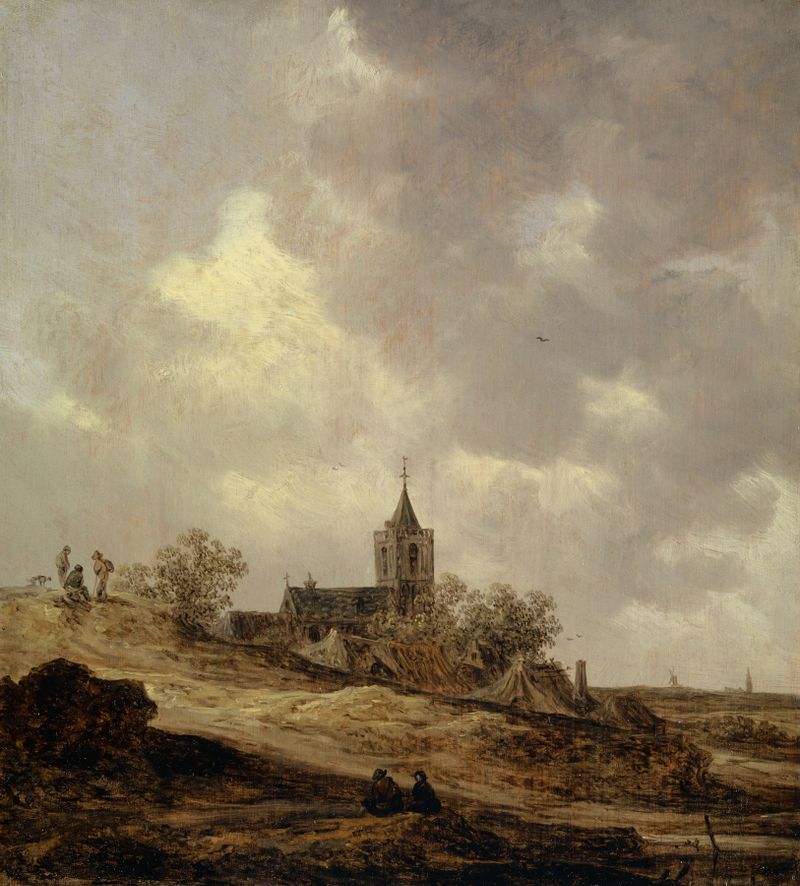
Village Church seen from the Dunes
Jan van Goyen
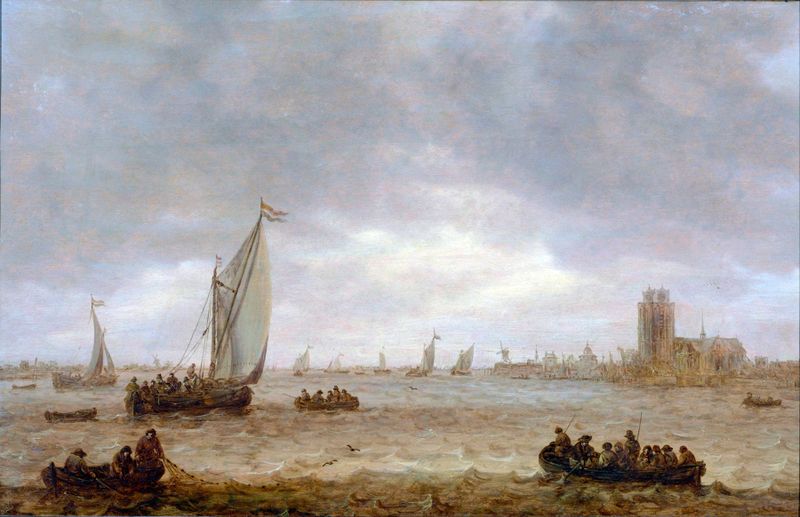
Mouth of the Meuse
Jan van Goyen

River Landscape with the Pellecussen Gate near Utrecht
Jan van Goyen
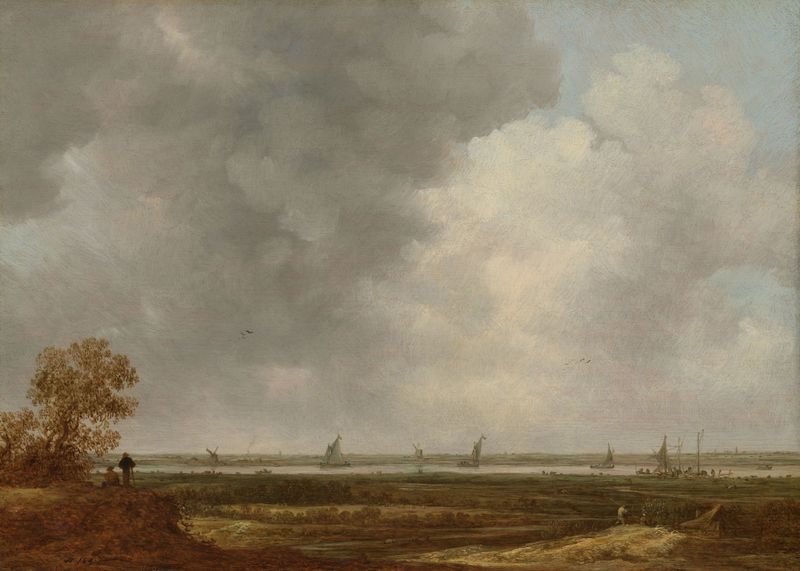
Panoramic View of a River with Low-lying Meadows
Jan van Goyen
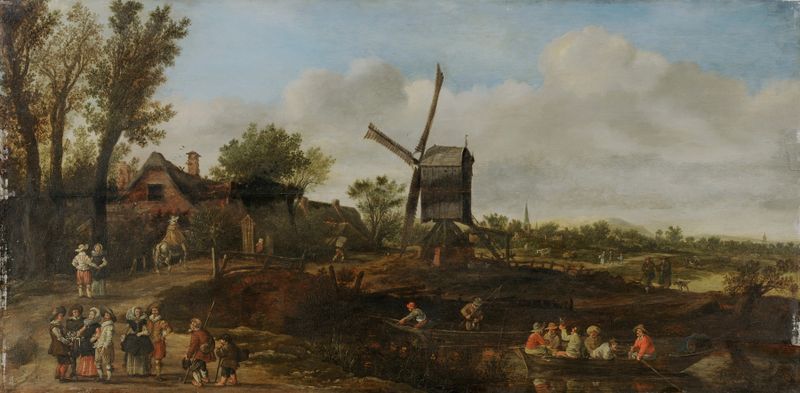
Dutch Landscape
Jan van Goyen
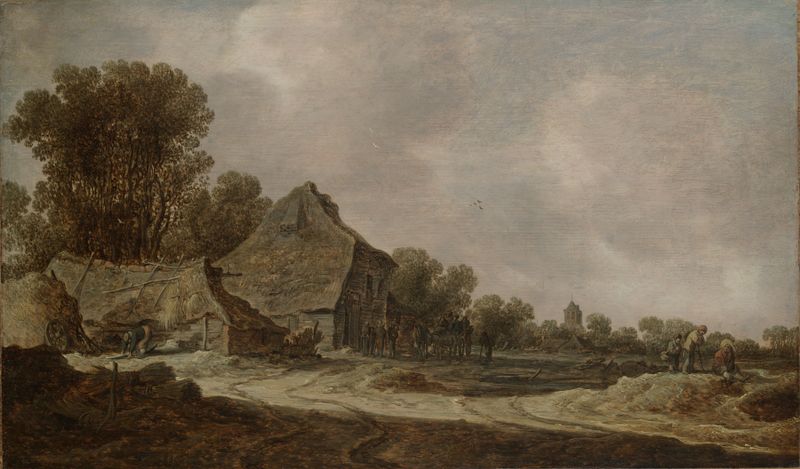
A Sandy Road with Thatched Cottages
Jan van Goyen
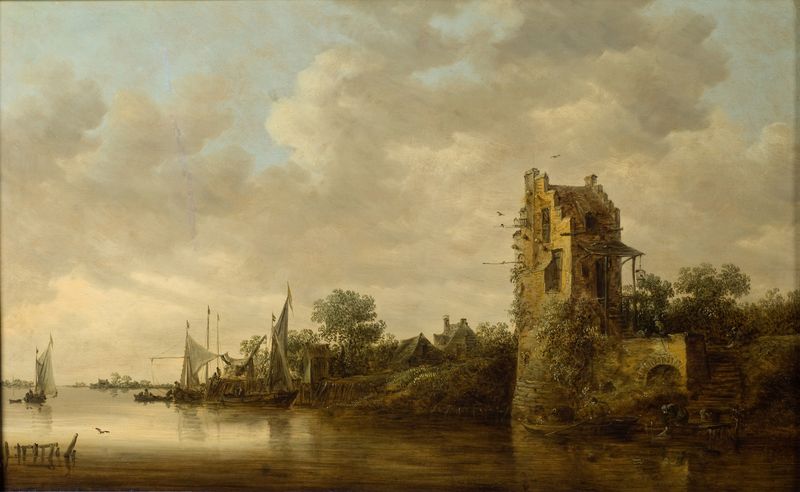
Riverside with an Old Tower
Jan van Goyen





