A Dutch East-Indiaman off Hoorn — History & Facts
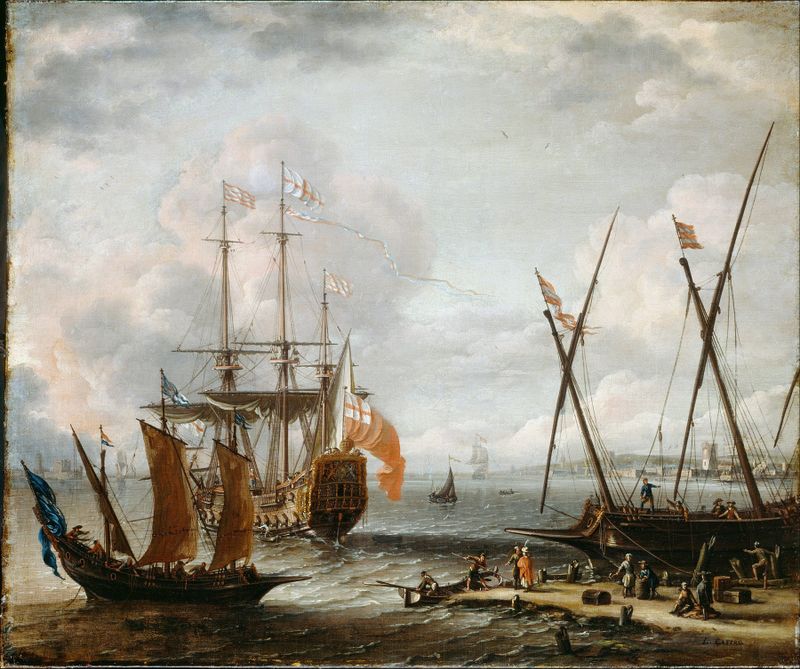
Time, like the gentle waves, ebbs and flows, whispering the stories of those who dared to sail the open seas. Look to the left at the majestic ship, a Dutch East-Indiaman, its sails catching the wind with a proud, confident spirit. The vessel is anchored against a vibrant horizon, where deep blues and shimmering golds melt into one another, beckoning the eye to roam across the canvas. Notice how the light dances across the water’s surface, creating a tapestry of reflections that transform each gentle ripple into a tale of adventure and exploration. Beneath the surface lies a tension between the grandeur of commerce and the underlying fragility of life at sea.
The ship, adorned with its intricate details, symbolizes the height of Dutch maritime power, while the distant shoreline hints at the safety and permanence one leaves behind in pursuit of fortune. In the interplay of light and shadow, the viewer senses not only the excitement of maritime trade but also the solitude that accompanies such ambition. Laureys a Castro painted this scene during a time when the Dutch Republic was a dominant force in global trade, likely in the 17th century when maritime exploration was rife with opportunity and peril. His work captures the essence of this era, reflecting both the prosperity of the Dutch East India Company and the longing for adventure amidst the tumult of an ever-evolving world.
This canvas stands testament to a moment in history when the horizon was filled with promise, yet the sea held its mysteries close.