
A Dutch Fishing Boat on the Shore — History & Facts
Where does light end, and longing begin? In A Dutch Fishing Boat on the Shore, this question lingers palpably, as the painting beckons us to explore the delicate interplay between nature’s beauty and human yearning. Focus on the gentle waves lapping at the shore, shimmering with a softness that contrasts with the sturdy yet weathered fishing boat resting on the sand. The horizon stretches wide, where the sky meets the sea in a muted palette of blues and grays, inviting the viewer to lose themselves in its depth. Notice how the light falls upon the boat, highlighting its textures and imperfections, creating a sense of nostalgia that echoes through the canvas.
Each brushstroke captures the quietude of the moment, drawing you into a tranquil space suspended between time and memory. Beneath the surface, the painting reveals a more profound tension. The boat, a symbol of livelihood and adventure, lies abandoned, suggesting a melancholic pause in the life of those who once relied on it. The stillness of the shoreline contrasts sharply with the energetic waves, embodying a longing for movement and purpose.
This interplay of absence and presence evokes reflections on the passage of time, loss, and the silent stories of those who inhabit coastal lives. In 1886, Nathaniel Hone the Younger painted this piece in a period marked by a burgeoning interest in realism and the emotive power of landscapes. Living in England, he was influenced by contemporary movements, seeking to capture everyday scenes infused with emotional depth. The world around him was shifting — industrialization was on the rise, and with it, a profound sense of nostalgia for simpler, more intimate connections to nature and the sea.
More Artworks by Nathaniel Hone the Younger
Browse all →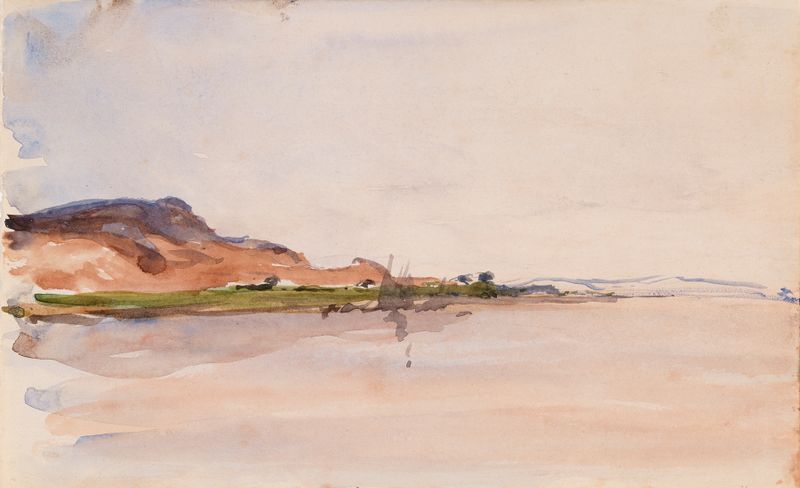
A Wooded Point on the Banks of the River Nile, Egypt
Nathaniel Hone the Younger
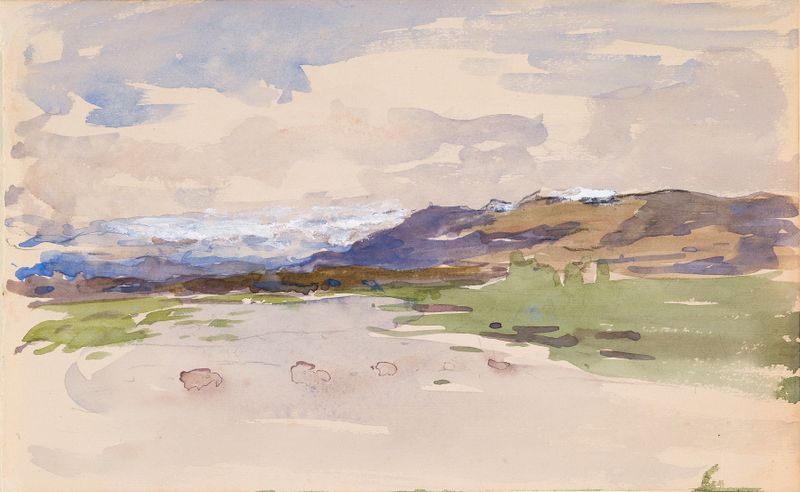
The Pyrenees
Nathaniel Hone the Younger

A View of Villefranche from the East
Nathaniel Hone the Younger
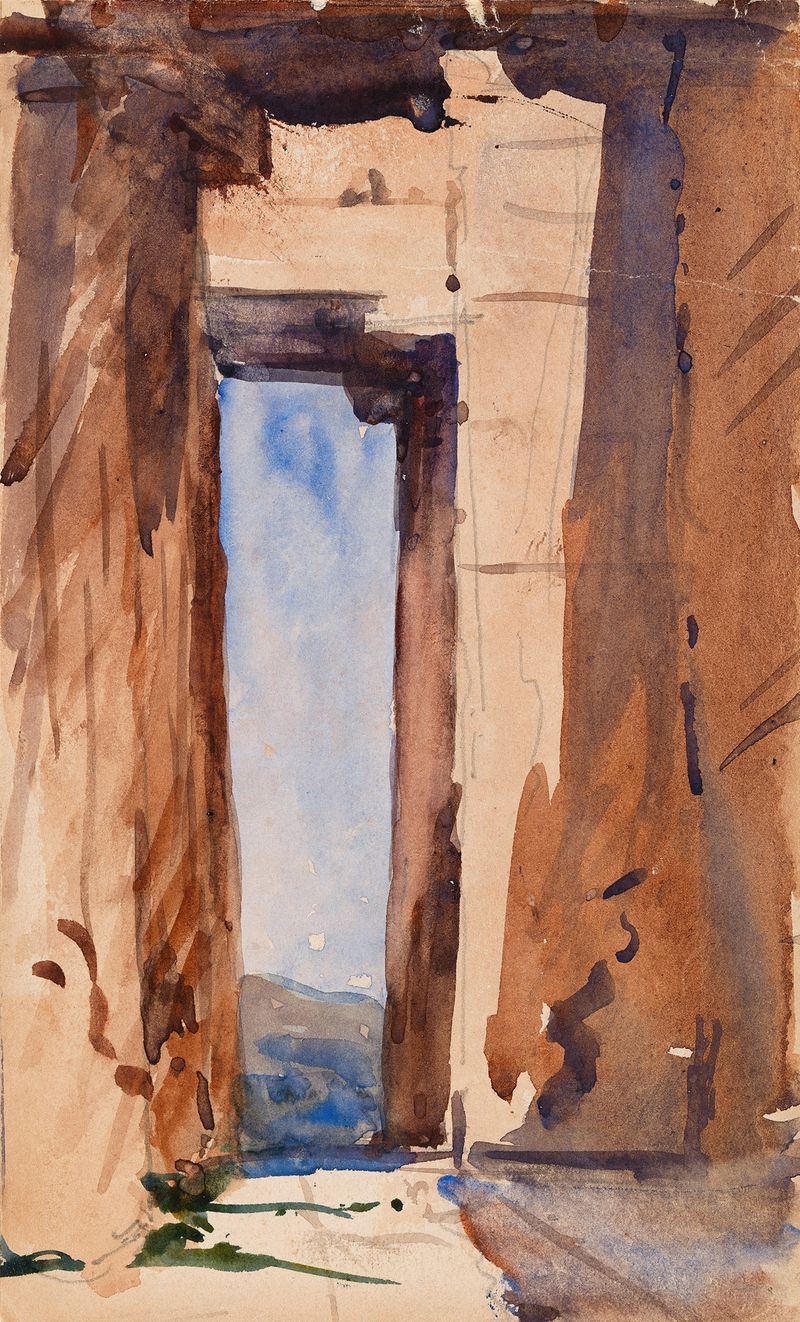
The Parthenon, Athens
Nathaniel Hone the Younger

The Sphinx
Nathaniel Hone the Younger
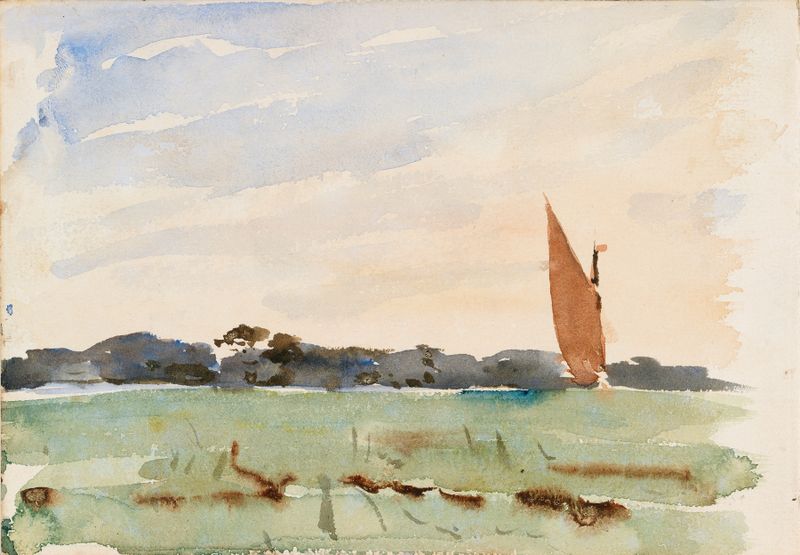
The Norfolk Broads, at Evening
Nathaniel Hone the Younger





