
A Grand Staircase — History & Facts
When did color learn to lie? It whispers promises of beauty while concealing the sorrows that dwell beneath its vibrant surface. In the world of A Grand Staircase, grief is a silent spectator amidst the grandeur of architecture and nature. Look to the left where the staircase curves majestically, beckoning the eye up to the light that filters through the trees. The soft palette of ochres and greens invites warmth, while the shadows deepen the sense of melancholy.
Notice the delicate interplay of the light, which dances on the steps, juxtaposing the rigid structure of stone with the fluidity of nature. Each brushstroke is intentional, guiding your gaze through the archways and into the ethereal sky above. Yet, the scene is not merely a celebration of beauty; it carries a weight of loss. The grandeur of the staircase, though magnificent, feels abandoned, echoing a sense of longing for what once was.
The looming trees create a barrier between the viewer and the horizon, symbolizing the separation between the past and the present. The soft whispers of foliage and the hard edges of stone reflect the dichotomy of hope intertwined with grief—an invitation to ascend, yet a reminder of the inevitable descent. In 1763, Hubert Robert painted this piece during a time of personal turmoil and shifting artistic trends. Living in Paris, he was influenced by the burgeoning movement of Romanticism, which sought to explore deeper emotional truths.
The art world was evolving, and Robert was at the forefront, capturing the delicate balance between human emotion and the grandeur of the natural world as he navigated his own experiences of loss and nostalgia.
More Artworks by Hubert Robert
Browse all →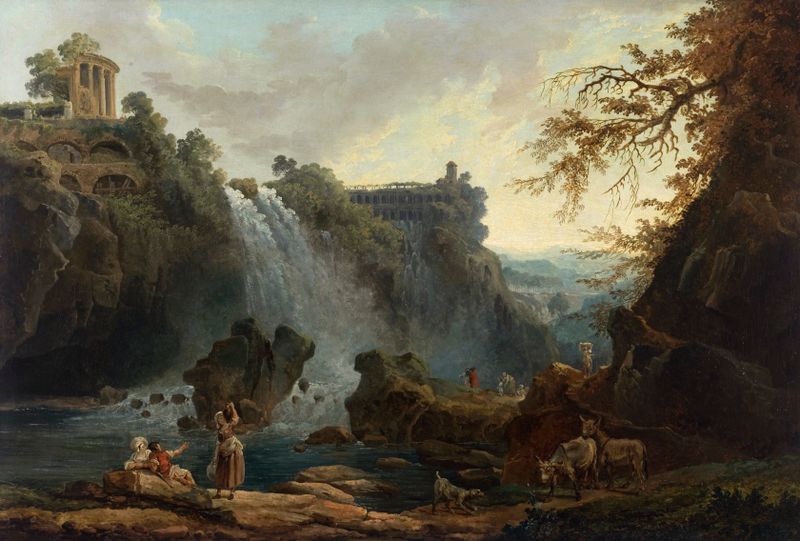
Les Cascatelles de Tivoli
Hubert Robert
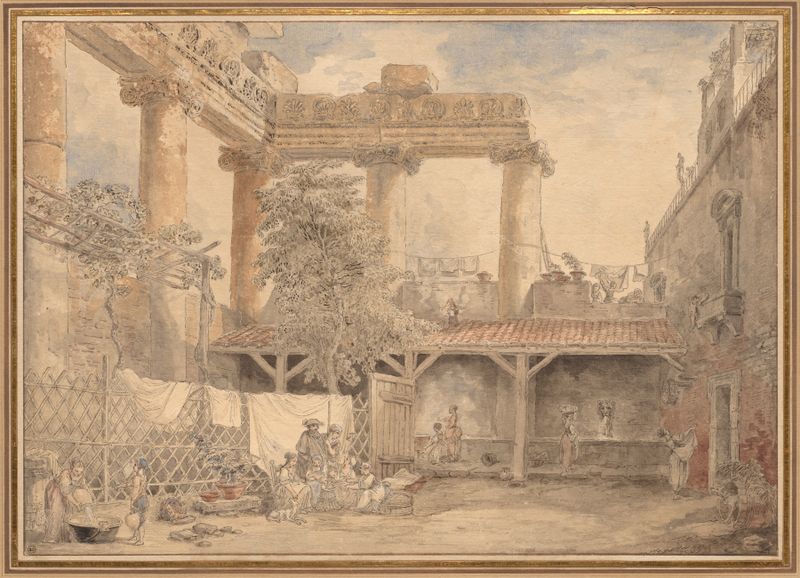
Roman Ruins, Villa Pamfili
Hubert Robert

The Rustic Bridge, Château de Méréville, France
Hubert Robert

The Portico of a Country Mansion
Hubert Robert

Architectural Capriccio
Hubert Robert

The Obelisk
Hubert Robert
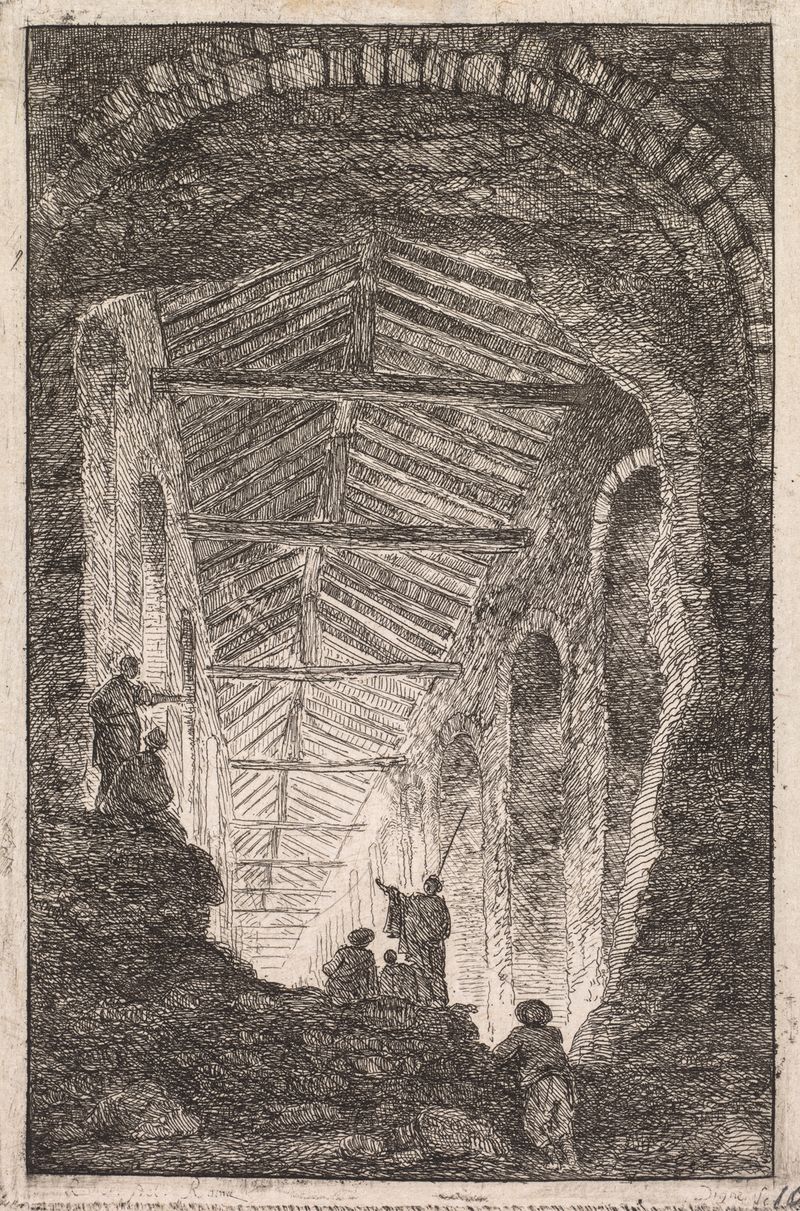
The Antique Gallery
Hubert Robert

L’incendie de l’Opéra, vu des jardins du Palais-Royal, le 8 juin 1781
Hubert Robert
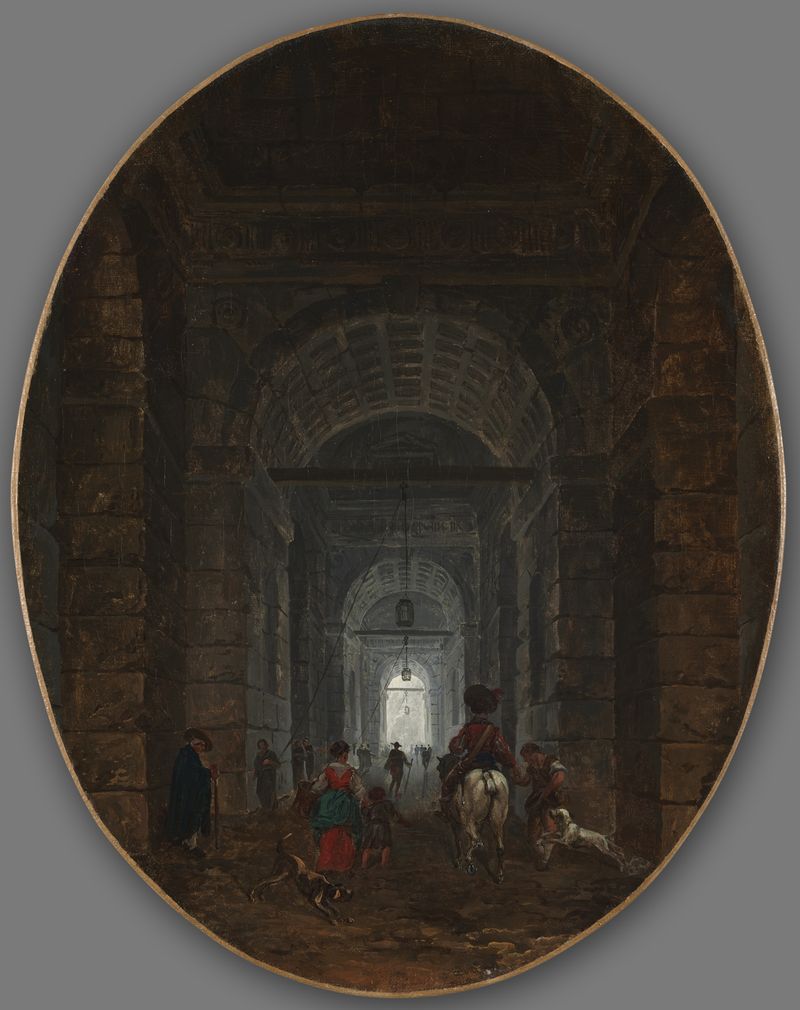
The Grotto of Posillipo
Hubert Robert

Architectural Capriccio with ruins of the Temple of Saturn and the Colosseum in the background
Hubert Robert
More Architecture Art
Browse all →
The statue of Liberty
Frédéric Auguste Bartholdi

View of Houses in Delft, Known as ‘The Little Street’
Johannes Vermeer

View of Houses in Delft, Known as ‘The Little Street’
Johannes Vermeer

The Cathedral in Rouen. The portal, Grey Weather
Claude Monet

The yellow house
Vincent van Gogh

The Church in Auvers-sur-Oise, View from the Chevet
Vincent van Gogh