A Hawking Party — History & Facts
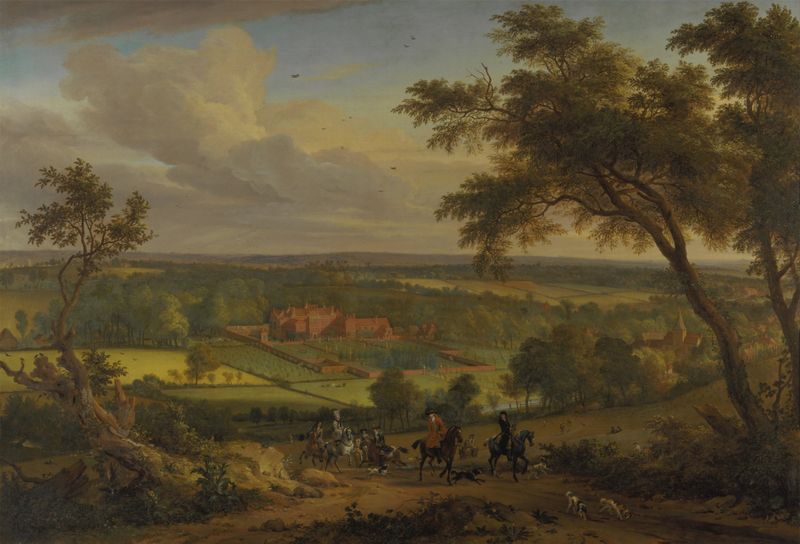
Can beauty exist without sorrow? In the heart of A Hawking Party, a bittersweet nostalgia lingers, evoking a sense of longing for simpler times. Look to the center of the composition, where a gathering of figures is captured in a moment of shared laughter. The warm hues of ochre and gold radiate a soft glow, enveloping the scene in an inviting yet melancholic warmth. Notice how the artist’s brushwork creates a sense of movement among the guests, their gestures expressing joy and camaraderie, yet framed by the subtle shadows that hint at deeper emotions. The interplay of light and shadow reveals a contrast between merriment and the inevitable passage of time.
The cheerful faces of the participants are juxtaposed with the muted colors of the surrounding landscape, suggesting that joy is fleeting, a moment suspended in time before the inevitable fade. Each detail—the way a hand gestures, how laughter echoes—carries the weight of memories, intertwining happiness with a whisper of loss. Jan Wyck painted this work during a period that bridged the late 17th century into the 18th century, likely influenced by the vibrant social life of the Dutch Republic. As a skilled painter known for his festive scenes, he captured both revelry and introspection, reflecting a world where the pleasures of life were often tinged with the awareness of their impermanence.
In creating A Hawking Party, he not only documented a social occasion but also invited viewers to contemplate the bittersweet nature of joy.