
A Heath in Sussex — History & Facts
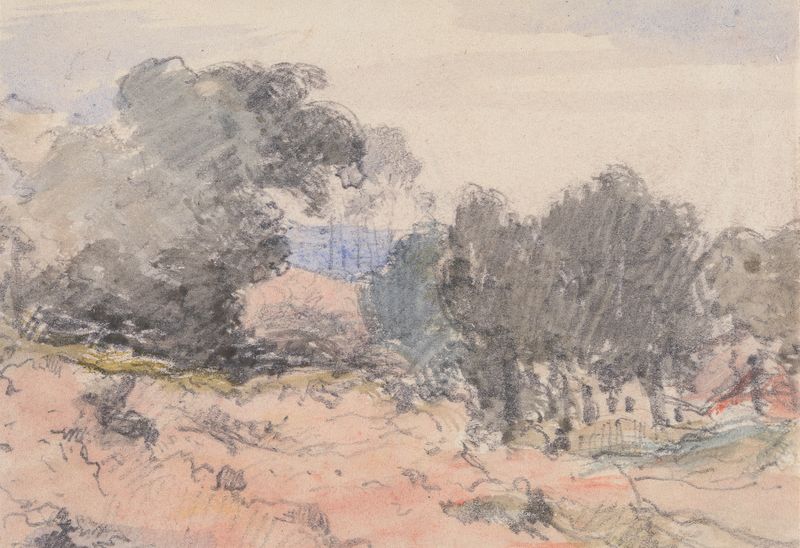
Each brushstroke vibrates with the hues of nature, whispering the secrets of a moment forever captured in time. Look to the left at the gentle transition of greens and browns, where the heath stretches into the horizon, inviting the viewer to wander through its serene landscape. Notice how the light dances across the wildflowers, illuminating splashes of yellow and orange, almost as if they are alive. The subtle interplay of shadow and sun creates a delicate balance, drawing your eye across the canvas and into this tranquil scene, while the soft brushwork gives the entire composition a dreamlike quality. In the distance, a solitary figure stands, reinforcing the solitude of the vast heathland.
This lone presence not only emphasizes the enormity of the surrounding nature but also evokes a sense of introspection. The contrast between the vibrant colors of the flowers and the muted tones of the land speaks to the fleeting beauty of life, a reminder that joy can be found even in the quietest moments. The expansive sky looms overhead, its pastel blues hinting at both promise and melancholy, which resonate deeply with the viewer’s own experiences. William Collins created this piece between 1810 and 1815, a time when the Romantic movement was flourishing in Britain.
Amidst the shifting tides of industrial progress and changing landscapes, Collins found inspiration in the untouched beauty of the English countryside. His commitment to landscape painting during this period reflected a broader artistic response to the increasing mechanization of the world, as artists sought solace in nature's enduring splendor.
More Artworks by William Collins
Browse all →
Landscape with Fence
William Collins

Landscape: Valley with Mountain in Distance
William Collins
Landscape: House and Trees
William Collins
Returning from the Haunts of the Seafowl
William Collins

Landscape with Cart
William Collins

Landscape with Man on Beach
William Collins

Dartmouth
William Collins

Paddling
William Collins
Frost Scene
William Collins





