A Landscape — History & Facts
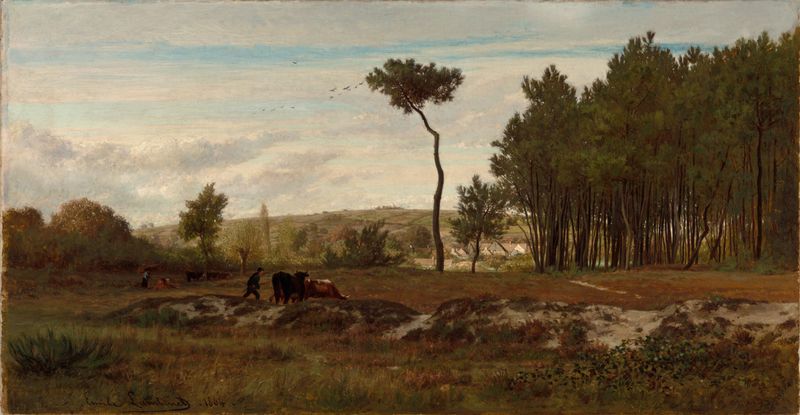
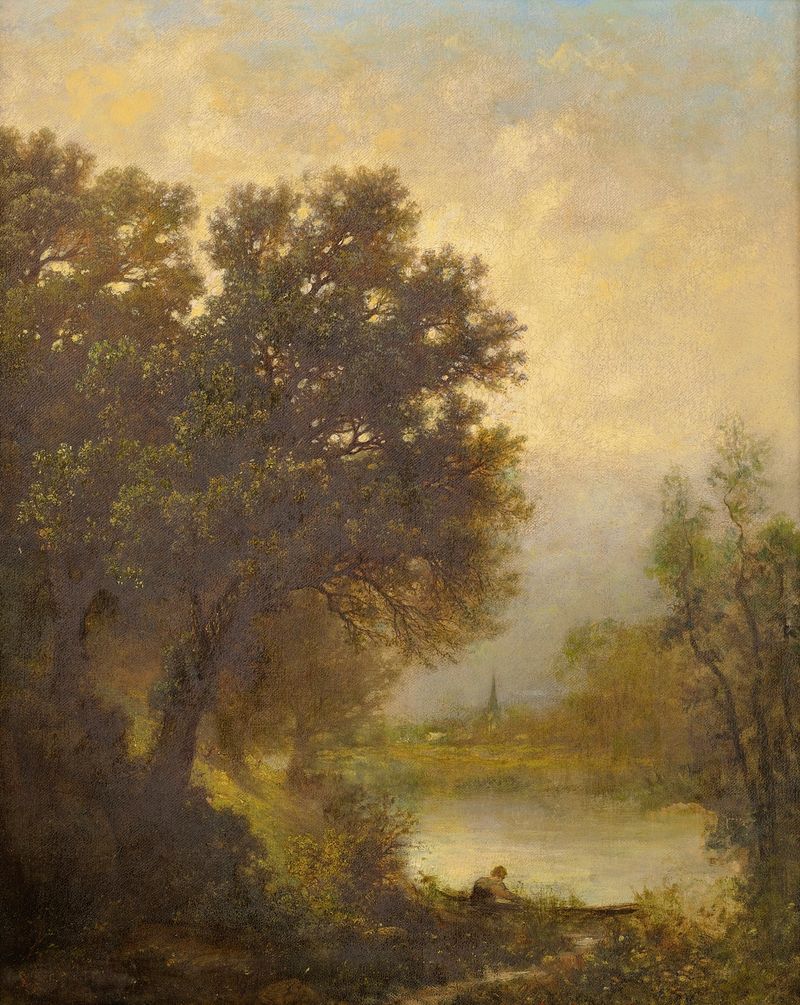
What if silence could speak through light? In the gentle embrace of nature, a landscape unfolds where awe and tranquility intermingle, inviting contemplation and reverence. Look to the foreground, where a serene river flows calmly, its surface reflecting the sky’s soft hues. Notice the delicate brushstrokes that shape the trees, their leaves fluttering as if whispering secrets to one another. The light dances across the canvas, illuminating the distant hills, which rise majestically against a vast, ethereal sky.
The muted palette combines warm golds and cool blues, creating an atmosphere that feels both timeless and inviting. At first glance, the painting reveals a harmonious balance between light and nature, yet a deeper inspection uncovers contrasts in emotional tone. The juxtaposition of the still water and the vibrant landscapes suggests a dialogue between peace and vitality. The ethereal glow casting from the horizon evokes a sense of wonder, while the shadowed areas hint at the mysteries that linger just beyond sight.
It is as if the landscape embodies the dual nature of existence—both serene and filled with possibility. In 1851, the artist crafted this piece amidst a growing interest in Romanticism, where nature became a channel for emotional expression. Working in France, Emile Charles Lambinet was influenced by the natural landscapes of his surroundings, as well as the evolving techniques of his contemporaries. This work reflects not only his personal exploration of light and form but also the broader shift in the art world toward capturing the sublime beauty of the natural world.