Cows and Cowherds in a Landscape — History & Facts
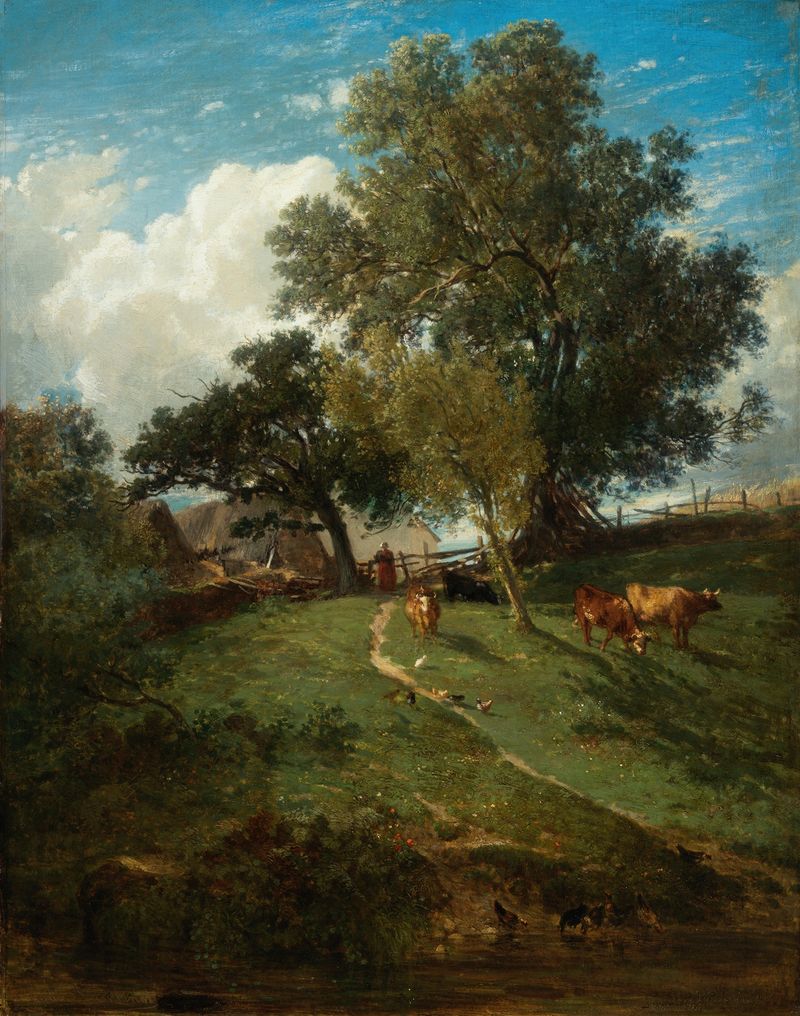
The colors of this landscape whisper tales of longing and solitude, capturing the delicate balance between serenity and melancholy. Look to the foreground, where the gentle browns and greens of grazing cows blend seamlessly into the lush, undulating hills. The soft amber hues of the sunlit grass contrast starkly with the cool shadows cast by the grazing animals, inviting your gaze to wander deeper into the canvas. Notice how the brushstrokes vary — from the smooth, flowing lines of the landscape to the more textured, palpable forms of the cows, creating a sense of harmony and tension within the scene. The interplay of light and shadow in this painting hints at deeper narratives.
The cows, seemingly content, are framed by an expansive sky that looms overhead, suggesting both freedom and confinement. This duality evokes a longing for peace while acknowledging the inherent struggles of pastoral life, a theme prevalent during the time. The juxtaposition of the tranquil beauty of nature with the emotional weight of the scene invites contemplation on the essence of rural existence and the passage of time. In 1864, Emile Charles Lambinet was navigating the shifting tides of the art world, where realism began to challenge traditional romantic ideals.
Living in France, he was part of a growing movement that sought to reflect the everyday lives of ordinary people, particularly in rural settings. This painting reflects his fascination with landscape and the human condition, marking a turning point in his career as he embraced the nuances of light and color to convey complex emotions.