Pêcheurs devant un moulin — History & Facts
In the quiet corners of our minds, echoes of madness often linger, obscured yet vibrant, much like the scene before us. Pêcheurs devant un moulin captures a moment where tranquility meets turmoil, a delicate balance between serenity and the chaos of existence. Look to the foreground where the fishermen stand, their figures framed against the sweeping curves of the river. The play of light on the water reflects shimmering hues of azure and gold, inviting you to explore the depths of their world.
Notice how the wind tousles the fishermen's garments, suggesting a gentle but persistent urgency, while the distant windmill stands stoically in the background, a silent witness to their toil. Lambinet's brushwork invites a close examination of texture, each stroke breathing life into the canvas, revealing the struggles that lie beneath the serene surface. But beneath this idyllic landscape, tensions brew. The juxtaposition of the fishermen's labor against the stillness of the natural world hints at the madness of life: the relentless pursuit of sustenance amidst the sublime beauty of nature.
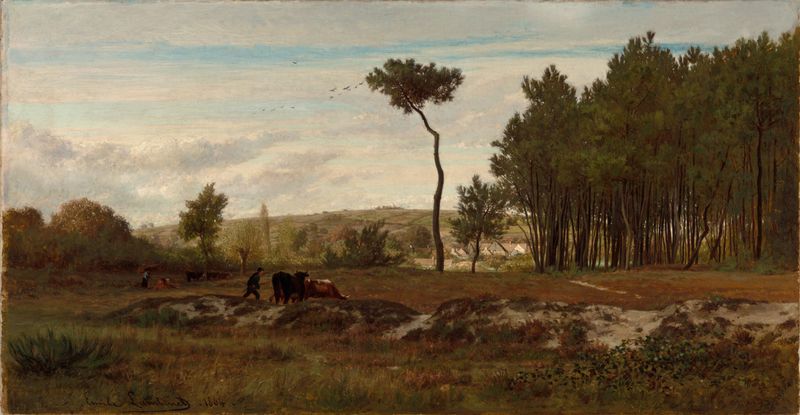
The looming windmill, an emblem of progress, contrasts sharply with the timelessness of the fishermen's age-old rituals. This visual dialogue reflects a deeper commentary on the balance of human endeavor and the manic rhythms of the world we inhabit. Created in 1864, this painting finds Lambinet in Paris, a city brimming with artistic innovation and a burgeoning interest in realism. During this period, he was grappling with the themes of nature and human existence, often exploring the complexities of everyday life.
Amidst the shifting tides of the art world, Lambinet sought to capture fleeting moments, using his craft to articulate the struggles and beauty that define our shared human experience.