A Landscape with Figural Staffage — History & Facts
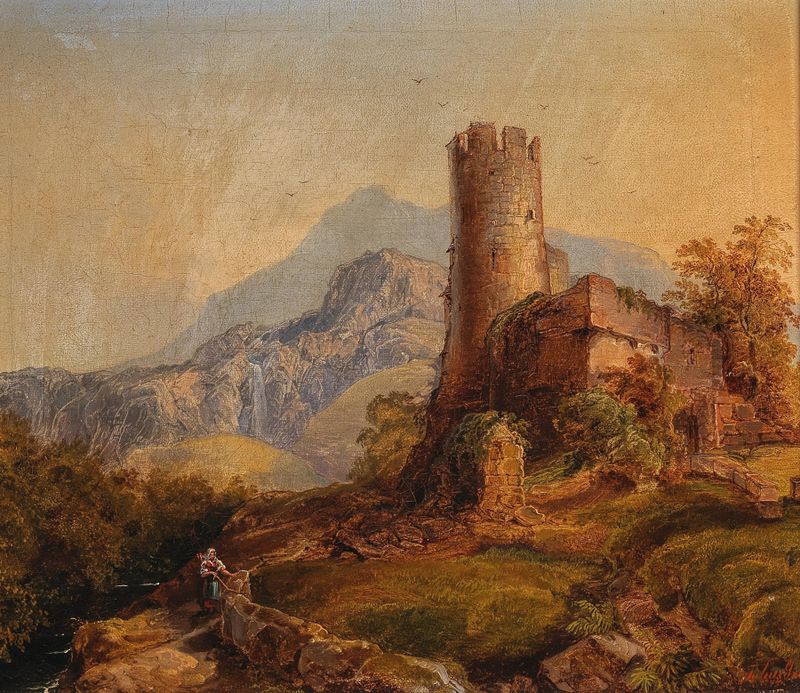
Within the serene expanse of A Landscape with Figural Staffage, a revelation unfolds, inviting the viewer to ponder the interplay between nature and humanity. Look to the left where a gentle stream meanders through a verdant landscape, its surface reflecting the soft hues of a dawning sky. The artist’s meticulous technique captures the vibrant greens and earthy browns, while delicate figures dot the scene, hinting at stories woven into the fabric of the landscape. Notice how the light dances upon the water, creating a shimmering pathway that draws the eye deeper into this quiet world. Beneath the tranquil surface lies a rich tapestry of emotional contrasts.
The figures, though small against the vastness of nature, pulse with life and purpose; they connect intimately with their surroundings while remaining enigmatically detached. The juxtaposition of the expansive backdrop against the intimate scale of the figures invites contemplation on human insignificance and connection to the natural world, hinting at a broader narrative of existence and belonging. During the time A Landscape with Figural Staffage was created—exact dates remain elusive—Julius Theodor Gruss was likely influenced by the growing Romantic movement, which emphasized emotional expression and a reverence for nature. Operating in the 19th century, Gruss experienced a world transitioning rapidly through industrialization, and his work reflects the tension between the encroaching modernity and the timeless landscapes that inspire reflection and communion with the earth.