A Mountainous Landscape with Castle Ruins and Figures — History & Facts
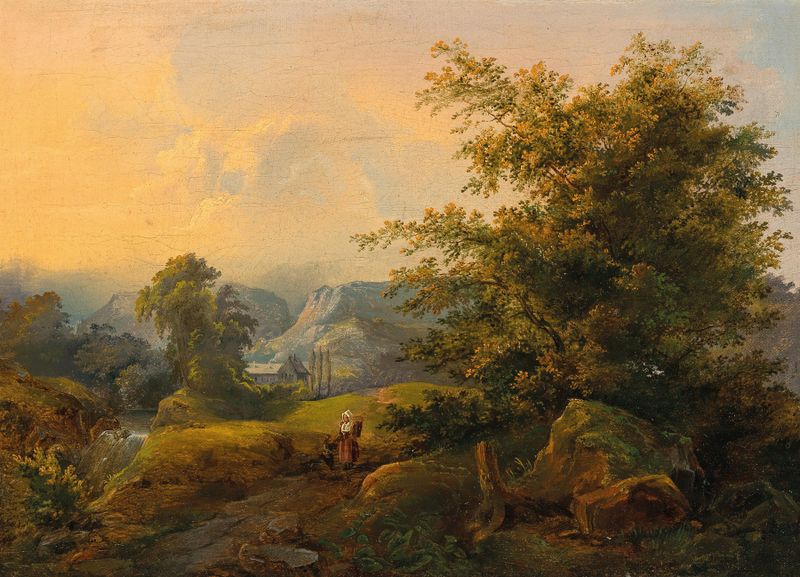
In the quiet embrace of nature, where fading remnants of the past meet the unyielding present, a delicate balance unfolds between the ruins of human ambition and the majesty of the surrounding landscape. Look to the center, where the crumbling castle ruins rise defiantly against a backdrop of swirling clouds and lush greenery. The artist’s choice of muted earth tones contrasts sharply with the vibrant blues and whites of the sky, creating a visual dialogue between decay and vitality. Notice how the gentle slopes of the mountains cradle the fortress, their contours echoing the fragile remnants of stone, inviting the viewer to contemplate the passage of time and the stories held within each weathered surface. Delve deeper into the scene and observe the small figures in the foreground, seemingly dwarfed by their surroundings.
Their presence evokes a sense of humility against the backdrop of nature’s grandeur, suggesting that while humanity strives for permanence, it is ultimately nature that endures. The interplay of light and shadow across the landscape not only highlights the texture of the ruins but also reflects the emotional weight of loss and nostalgia, drawing the viewer into a contemplative space where history and nature intertwine. In 1847, during a period of romanticism and growing interest in landscapes, the artist created this piece while living in Germany. This era was marked by a fascination with the sublime and the exploration of emotional depth through natural settings.
The artist’s work exemplifies this movement, as it juxtaposes human constructs against the vastness of the natural world, inviting reflection on the impermanence of all things.