A Lighthouse on the Coast, Norway — History & Facts
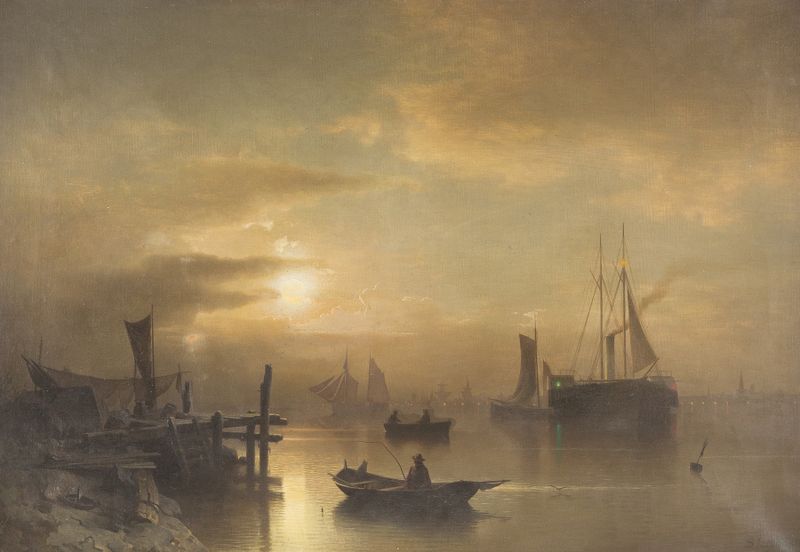
When did color learn to lie? The brilliance of hues can be a beguiling veil, obscuring truths as much as revealing them, awakening the soul to the natural world’s multifaceted realities. Look to the left at the distant lighthouse, its white façade stark against the stormy grey sky. The light casts a warm glow, a beacon of hope amidst turbulent tides. Soft blues and greens blend harmoniously in the waves below, while the rocky coastline invites a sense of rugged permanence.
The balance between land and sea reflects a careful hand, with brushstrokes that dance with movement and life, embodying both the serenity and turmoil of nature. Yet, beneath the surface, contrasting emotions emerge. The lighthouse stands resilient against the chaos surrounding it, symbolizing guidance amid uncertainty. The turbulent waves crashing against the rocks seem almost alive, echoing the struggles inherent in the journey toward enlightenment.
This dichotomy speaks not only to the power of nature but also to the inner conflicts faced by those who seek clarity in life’s mysteries. In 1855, Sophus Jacobsen painted this piece while living in Norway, a time when Romanticism was flourishing across Europe. He was deeply influenced by the coastal landscapes of his homeland, striving to capture both their beauty and their ferocity. This period marked a transition for Jacobsen, as he began to explore the emotional depth within his works, reflecting broader artistic movements that sought to convey the sublime experience of nature.