Night of a full moon over the harbour — History & Facts
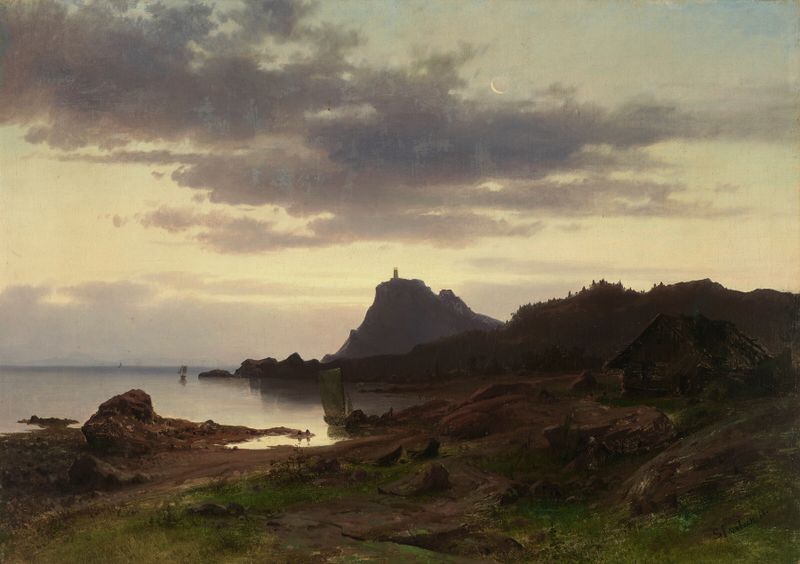
Can paint confess what words never could? In Sophus Jacobsen’s Night of a Full Moon over the Harbour, a silent dialogue unfolds between light and shadow, inviting the viewer to reflect on the delicate balance of tranquility and turmoil that night can evoke. Look to the left at the shimmering waters, where the full moon casts a silvery path across the surface, guiding your gaze toward the distant boats gently rocking in the harbor. Notice how the palette of deep blues and silvery whites creates a serene atmosphere, while soft brushstrokes suggest the gentle ripples of the water, instilling a sense of calm. The contrast of stillness in the foreground against the fading light of the horizon speaks to a harmonious embrace of both night and day. Amid this serene nightscape lies an emotional undercurrent.
The darkened silhouettes of the boats, while peaceful, hint at the mysteries and stories that lie beneath the surface of the water. This duality suggests a tension between the visible and the unseen, balancing the beauty of nature with the innate anxieties that nighttime can stir within us. The moon itself, bright yet distant, becomes a symbol of aspiration and longing, illuminating not just the harbor, but also the inner landscapes of the viewer’s heart. In 1863, Jacobsen painted this piece during a period of artistic exploration in Denmark, where he was influenced by Romanticism and the growing interest in the interplay of light and nature.
The world was rapidly changing, with industrialization looming on the horizon, and Jacobsen sought to capture the fleeting beauty of the natural world before it was altered irrevocably. This work is a testament to both the artist’s vision and the moments lost in time, forever preserved under the soft glow of a full moon.