Moonlit Bay — History & Facts
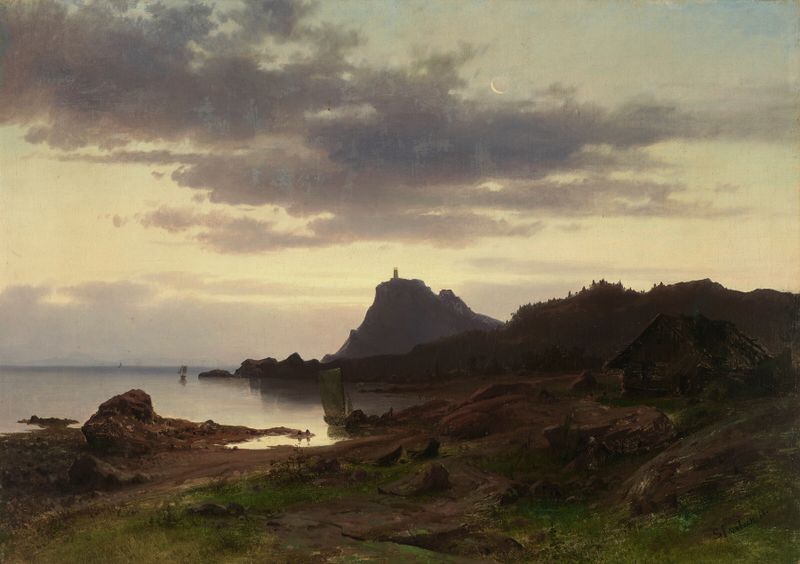
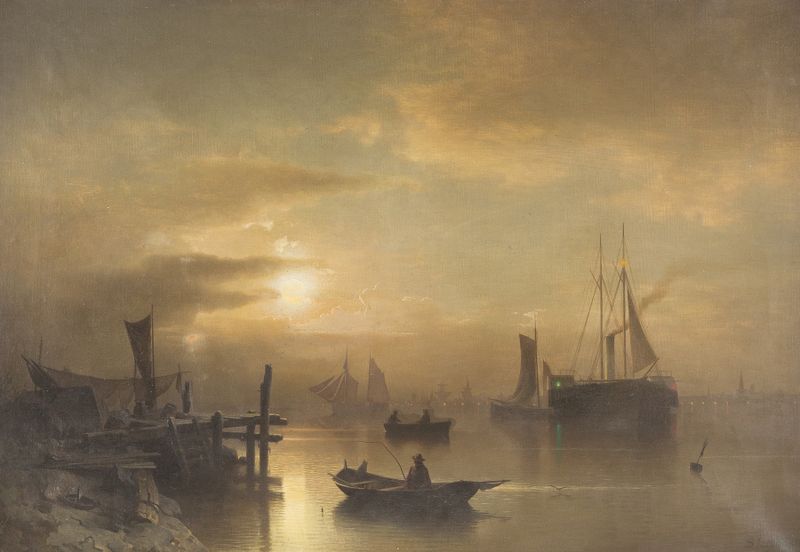
Where does light end, and longing begin? In the embrace of twilight, the boundaries of reality blur, echoing a delicate balance between serenity and desire. Look to the left at the shimmering water gently caressing the shore, where hues of deep indigo and soft silver intertwine. The moon hangs low in the sky, casting an ethereal glow that dances upon the surface, inviting the viewer into its tranquil embrace. Notice how the brushstrokes vary; the soft, flowing lines of the water contrast with the more defined shapes of the rocks, underscoring the tension between the tranquil and the tumultuous.
Each wave seems to carry whispers of secrets, revealing the artist's mastery of color and light. Here, the moonlit scene represents more than just a peaceful bay; it embodies a longing for the unattainable. The juxtaposition of light and dark suggests the fragile equilibrium of hope and despair, with the calm waters symbolizing a yearning that remains just outside of reach. The interplay of cool blues and warm whites evokes a sense of nostalgia, as if the viewer is peering into a dreamscape that teeters on the edge of memory and imagination. Sophus Jacobsen painted this piece during a time marked by personal struggles and the evolving landscape of art in the late 19th century.
The artist, influenced by the Impressionists, sought to capture the essence of light and atmosphere in his surroundings. While specific dates remain uncertain, it is clear that his work reflects a yearning to connect with nature and profound emotions, characteristic of an artist navigating a world in flux.