A Lugger Driving Ashore in a Gale — History & Facts
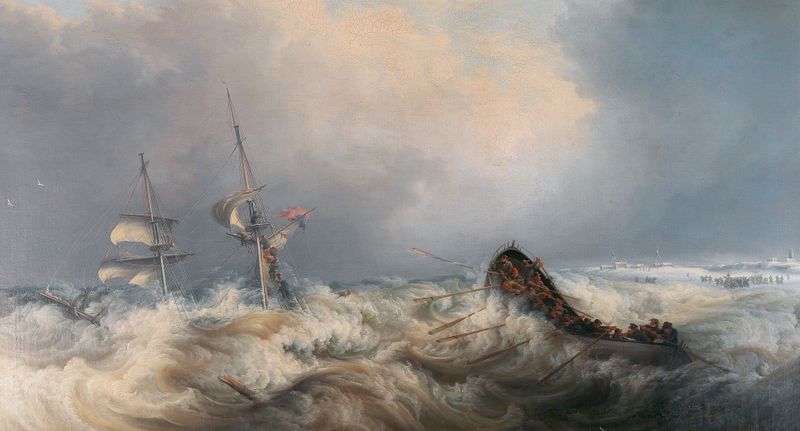
Can paint confess what words never could? In a tempestuous swirl of sea and sky, the medium becomes a vivid language of its own, capturing the essence of transformation among chaos. Focus first on the turbulent azure waves, surging towards the viewer with unyielding force. Notice how the artist employs vigorous brushstrokes to convey the power of nature, each stroke a testament to the gale’s ferocity. The lugger, a small fishing vessel, skims perilously close to the rocky shore, its sails billowing defiantly against the fierce winds.
The color palette, dominated by deep blues and grays, enhances the drama, while splashes of white foam punctuate the surface, signifying both danger and resilience. Beneath this stormy surface lies a profound exploration of human struggle. The fishermen aboard the lugger seem caught in a moment of sheer determination, reflecting the relentless pursuit of survival against nature's whims. The juxtaposition of vulnerability and tenacity speaks to a universal truth — transformation is often birthed from the crucible of adversity.
Each wave, like a challenge, threatens to engulf, yet the boat presses on, embodying hope amid despair. This artwork emerged during a period in which William Joy was deeply influenced by the maritime traditions of his coastal home, likely in the early 19th century. He painted this piece amidst a burgeoning interest in the sublime qualities of nature, reflecting the Romantic movement's preoccupations with human emotion and the power of the elements. Joy’s work represents not just a moment in time but a connection to the enduring struggle of mankind against the immutable forces of the sea.