Dutch Fishing Boats at Anchor in an Estuary — History & Facts
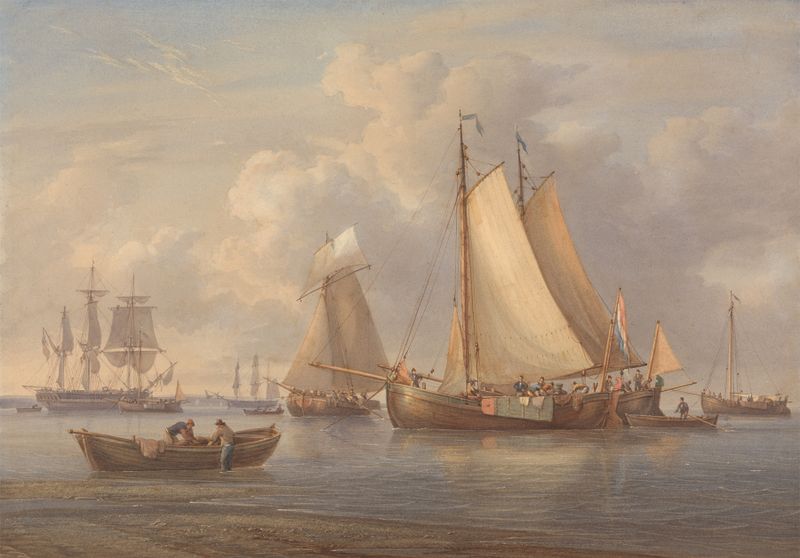
What secret hides in the quiet of the canvas? In Dutch Fishing Boats at Anchor in an Estuary, the stillness of the water invites contemplation, revealing a delicate balance between nature and human endeavor, and evoking a sense of serenity. Look to the left at the softly rendered fishing boats, their muted colors harmonizing with the earthy tones of the estuary. Notice how the light plays off the water’s surface, casting gentle ripples that mimic the brushstrokes on canvas. The composition draws the viewer's eye to the horizon, where the sky meets the water in a seamless blend of blues and grays, creating a tranquil yet dynamic atmosphere. The interplay between the grounded boats and the expansive sky suggests a tension between security and freedom, hinting at the fishermen's lives tethered to both risk and routine.
Subtle details, like the wisps of clouds or the distant silhouettes, heighten the sense of vastness, while the ships remain solid and stable, embodying resilience. Each element resonates with the theme of balance, an equilibrium between man and nature that is both fragile and enduring. William Joy painted this serene landscape in 1850, a period when marine art was gaining prominence in England as artists sought to capture the beauty of the sea and coastal life. Living in a time of industrial change, Joy's work reflects both a nostalgia for simpler times and an appreciation for the delicate relationship between humanity and the natural world.