A Market Scene in Tlemcen, Algeria — History & Facts
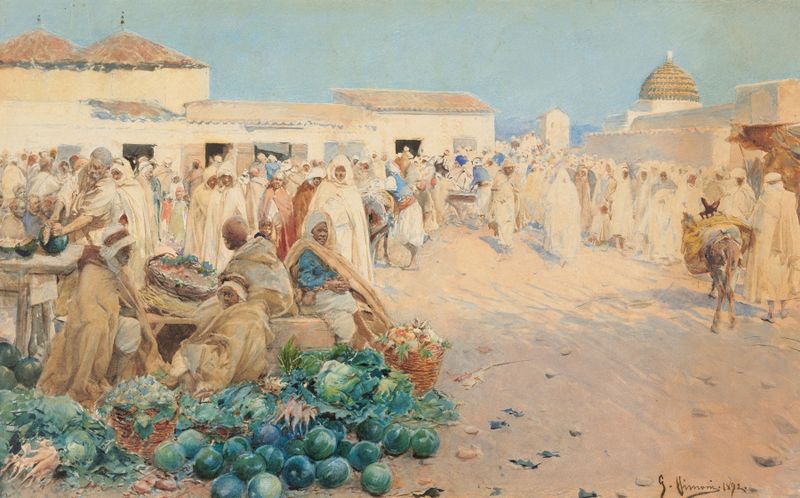
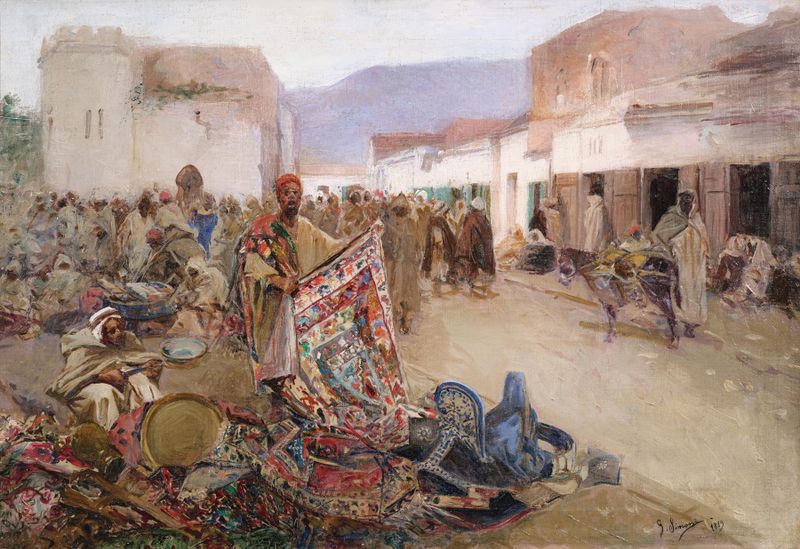
Can paint confess what words never could? In the vibrant chaos of this market scene, deeply rooted fears of displacement and cultural erosion pulse beneath the surface, inviting the viewer to confront the silent struggles of a community. Focus your gaze on the multitude of figures gathered, bustling beneath the expansive sky. The lively hues of saffron, cobalt, and emerald embody the vibrancy of life, while the gentle play of light hovers over the stalls, illuminating textiles and produce. Notice how the diagonal lines formed by vendor tents guide you through the scene, creating a sense of movement that pulls you into the heart of the market.
Each brushstroke tells a story, weaving together the textures of fabrics and the sheen of fruits, inviting you to explore the layered tapestry of daily life. Yet amidst this apparent vivacity, the tension of fear lingers. The guarded expressions of the vendors reveal a deeper anxiety—the threat of modernity encroaching upon tradition. Observe the shadowed corners where the older generation stands, as if reluctant to fully engage with the vibrant youth surrounding them.
These details capture a landscape not just of goods exchanged, but of an identity fragile and at risk of slipping away. Gustavo Simoni painted this work around 1883, during a period marked by a growing European interest in North African cultures. Living in Algeria, he was influenced by the socio-political shifts of colonialism that shaped the lives of local communities. This painting reflects both the allure and the fear of change, encapsulating a moment in history where cultures collided, and identities were both celebrated and challenged.