The Carpet Seller — History & Facts
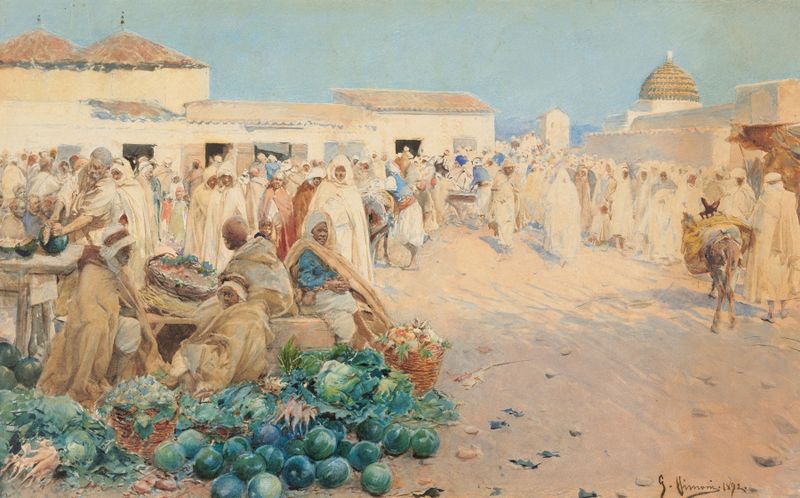
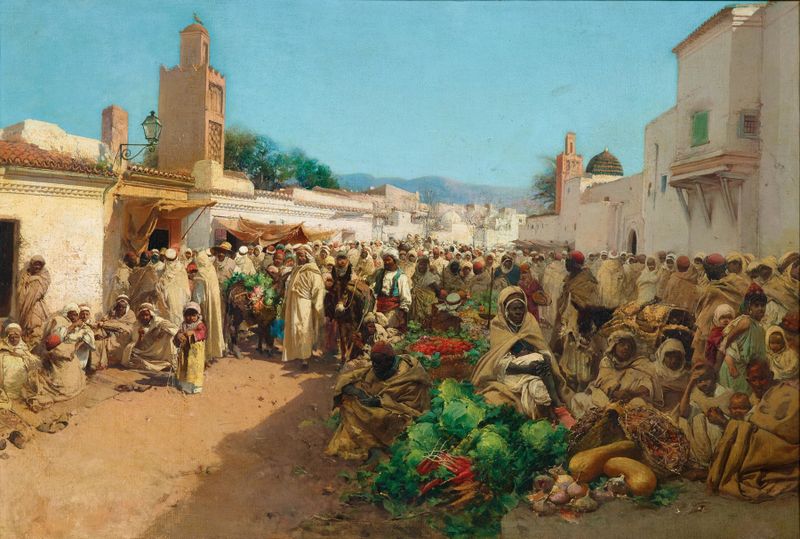
Is this a mirror — or a memory? In The Carpet Seller, the interplay of color and texture invites us to question our own perceptions of reality and illusion, drawing us into a world where the two intertwine effortlessly. Look to the left at the artisan, whose deft hands cradle a vibrant array of textiles, each a tapestry of stories waiting to be unraveled. Notice how the light spills over the intricately patterned carpets, illuminating subtle details that evoke both warmth and nostalgia. The rich reds and deep blues communicate not just beauty, but echo the fervent life of the marketplace, inviting the viewer to linger in this intimate exchange. Beneath the surface, tensions reveal themselves in the contrast between the seller’s focused gaze and the vibrant chaos surrounding him.
The bright hues of the carpets stand in stark opposition to the muted tones of his attire, suggesting a deeper narrative of aspiration versus reality. This painting captures a fleeting moment, yet it resonates with the timeless struggle between dreams and the everyday grind, making each glance reveal new layers of meaning. Gustavo Simoni painted The Carpet Seller in 1889 while residing in Paris, a city that buzzed with artistic innovation and burgeoning modernity. During this period, he sought to blend traditional subjects with contemporary techniques, reflecting the cultural shifts of the time.
His works often engaged with themes of daily life, evoking a sense of connection and intimacy rarely seen in the art world of that era.