
A Meadow at Sunset — History & Facts
Could beauty survive in a century of chaos? In the tranquil embrace of this landscape, an answer whispers through the golden hues of a setting sun. Look to the left — the vibrant strokes of orange and gold blend seamlessly into the tranquil greens of the meadow, creating a sense of warmth and solace. Notice how the light falls upon wildflowers, each petal illuminated, inviting the viewer to admire their delicate forms. The gentle play of shadow and light dances across the scene, guiding your gaze from the foreground to the distant horizon, where the sun sinks lower, casting elongated shadows that stretch like reflections of time itself. In this serene tableau, a profound tension emerges between the fleeting moment of beauty and the chaos of the world beyond.
The idyllic setting, seemingly untouched, contrasts sharply with the historical backdrop of the mid-19th century, a time marred by revolutions and upheavals. Each brushstroke reveals an introspective yearning for permanence, as if the artist captures a single, fragile moment in nature's vast canvas, begging us to ponder the nature of destiny and its role in our fleeting existence. Created around 1845, this piece emerged during a period of transformation in France, where Paul Huet was actively seeking to redefine landscape painting amidst the rise of Romanticism. As industrialization loomed, threatening the pastoral beauty of the countryside, Huet’s work became a refuge, embodying a longing for a simpler, unblemished world.
In this context, A Meadow at Sunset stands as both a celebration of nature’s beauty and a poignant reminder of the transient nature of peace amid turbulence.
More Artworks by Paul Huet
Browse all →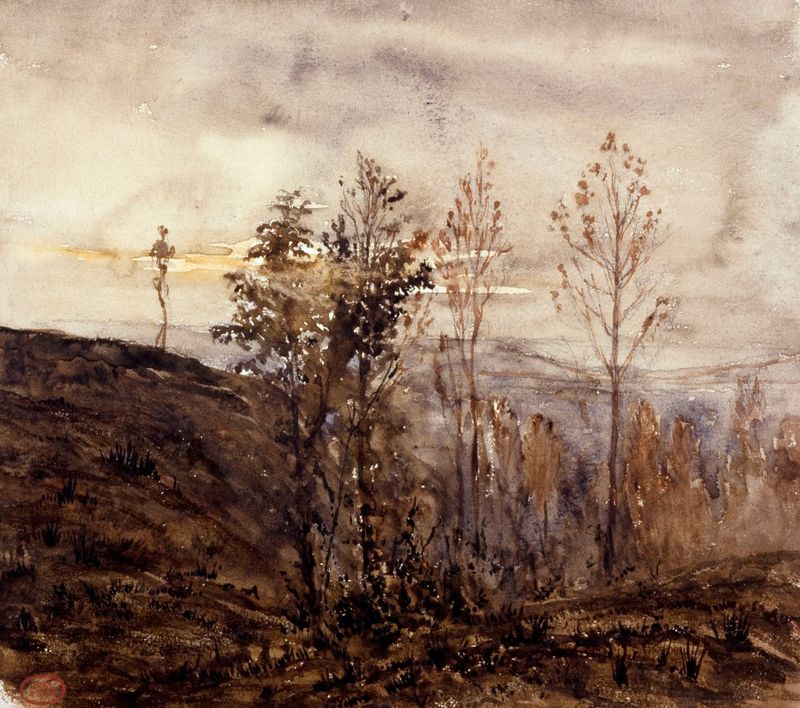
Les bois de Sèvres
Paul Huet

An Abbey by a Wooded Lake at Twilight
Paul Huet

Woodland Stream
Paul Huet
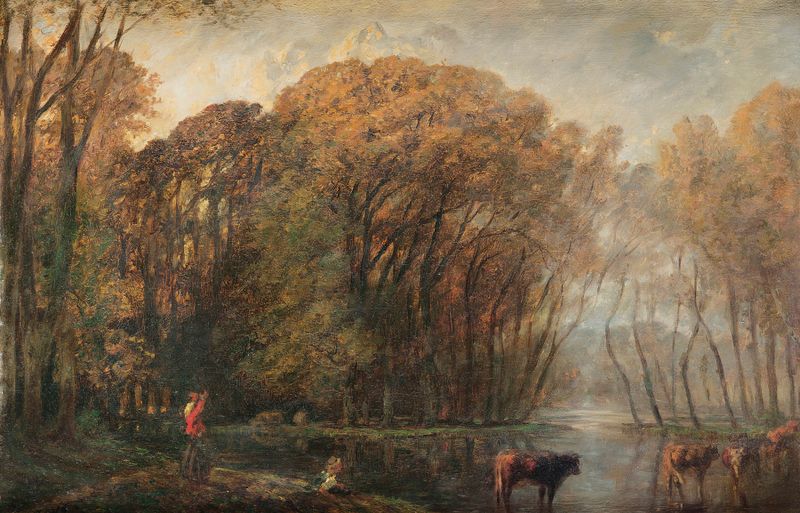
The Laïta in high tide, Brittany
Paul Huet

Sur la route de Nice
Paul Huet
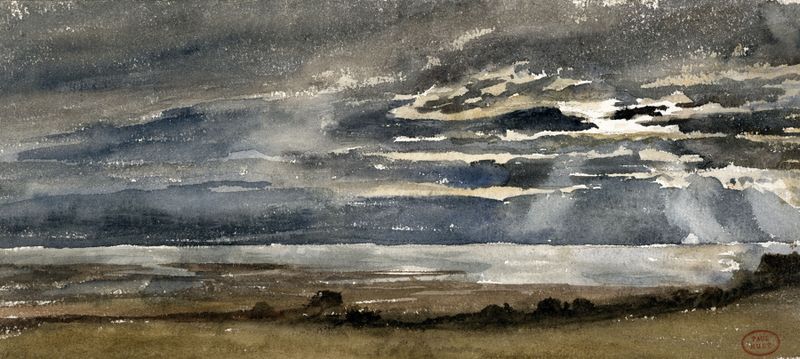
Soleil couchant
Paul Huet

A Wild Beech in Full Leaf
Paul Huet

Les Roches noirs, bij Villers
Paul Huet

Cannes
Paul Huet

Mountain View at Oisans (Isère)
Paul Huet





