
Mountain View at Oisans (Isère) — History & Facts
In the pursuit of beauty, one cannot help but become enthralled by the obsession that nature ignites within us. In Mountain View at Oisans (Isère), Paul Huet encapsulates this fervor, inviting viewers into a realm where the majesty of the landscape eclipses all else. Look to the sweeping expanse of the mountain range, where rugged peaks rise majestically against a softening sky. The artist’s meticulous brushwork captures the interplay of light and shadow, guiding your gaze to the gentle slopes bathed in a warm, golden hue.
Notice how the cool, muted tones of the foreground contrast sharply with the vibrant colors above, establishing a dialogue between the earth and the heavens. The composition draws you in, creating a sense of immediacy, as if you are standing upon the very precipice of this panoramic view. Every brushstroke reveals an emotional undercurrent—a yearning for the sublime, perhaps. The solitude imbued in the vastness speaks to an obsession not merely with beauty, but with the transcendence found in nature.
The delicate balance of color and form portrays a now-fleeting moment, inviting contemplation on the fleeting nature of time, as well as humanity's often thwarted attempts to grasp the eternal. Huet’s choice of palette reflects not only a love for the landscape but also a deeper connection to the sublime that pervades our existence. In 1858, Paul Huet created this work amidst a burgeoning movement of Romanticism, which sought to reconnect art with the emotional landscape of nature. Living in France, Huet was inspired by the Alps and sought to capture their profound beauty.
This was a time when artists were increasingly leaning toward the exploration of their inner worlds, marking a significant shift in the trajectory of landscape painting, one where nature was not just a backdrop but a vital force imbued with meaning.
More Artworks by Paul Huet
Browse all →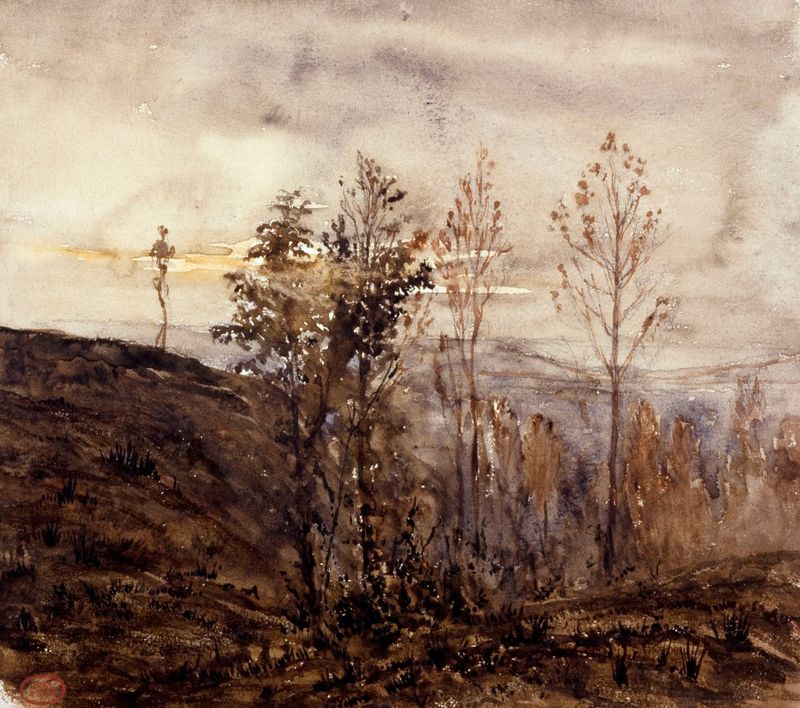
Les bois de Sèvres
Paul Huet

An Abbey by a Wooded Lake at Twilight
Paul Huet

Woodland Stream
Paul Huet
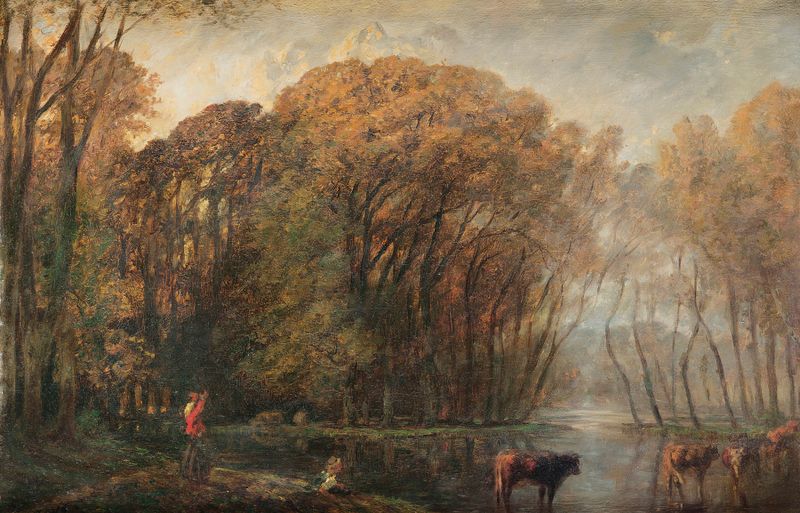
The Laïta in high tide, Brittany
Paul Huet

Sur la route de Nice
Paul Huet
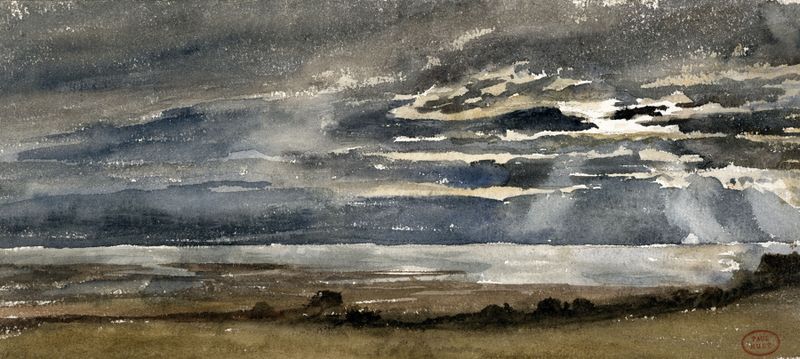
Soleil couchant
Paul Huet

A Wild Beech in Full Leaf
Paul Huet

Les Roches noirs, bij Villers
Paul Huet

Cannes
Paul Huet

Mountains of Auvergne
Paul Huet





