
Sur la route de Nice — History & Facts
Can beauty exist without sorrow? In Sur la route de Nice, the interplay of light and shadow compels the viewer to ponder this very question. The vibrant hues of the landscape contrast with darker undertones, suggesting that joy often emerges from the depths of grief. Look to the left at the horizon where cerulean skies meet the undulating hills, each brushstroke meticulously capturing the gentle play of sunlight filtering through clouds. Notice the way the warm oranges and yellows of the sun-drenched fields juxtapose with the cooler tones of the shadowed areas, creating a dynamic tension that draws the eye deeper into the composition.
The artist's technique, marked by loose, expressive strokes, infuses the scene with a sense of movement, as if the viewer could step into the delightful chaos of nature. Beneath the surface, the layering of light and shadow evokes a poignant narrative. The golden fields represent fleeting happiness, while the encroaching shadows hint at the inevitable presence of sorrow and uncertainty that accompanies life’s beauty. The winding path suggests a journey filled with both joyous discovery and somber reflection, accommodating the duality of human experience—a harmonious blend of emotions. In the mid-1840s, the artist was transitioning through a period of both personal and artistic exploration, working in a time when Romanticism was in full swing across Europe.
Painting in the south of France, Huet sought to capture the enchanting landscapes that inspired many of his contemporaries while grappling with the themes of light and darkness that would define his oeuvre.
More Artworks by Paul Huet
Browse all →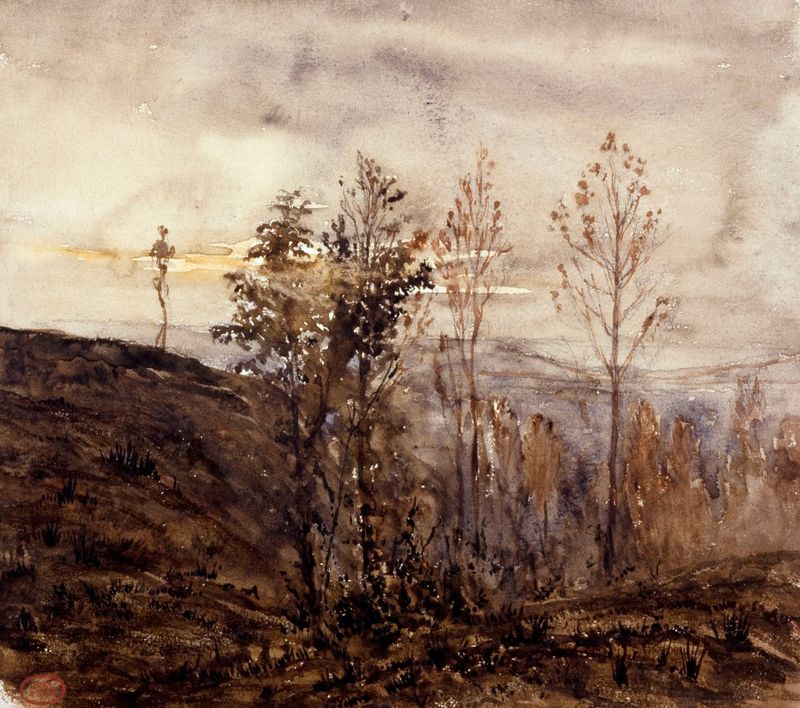
Les bois de Sèvres
Paul Huet

An Abbey by a Wooded Lake at Twilight
Paul Huet

Woodland Stream
Paul Huet
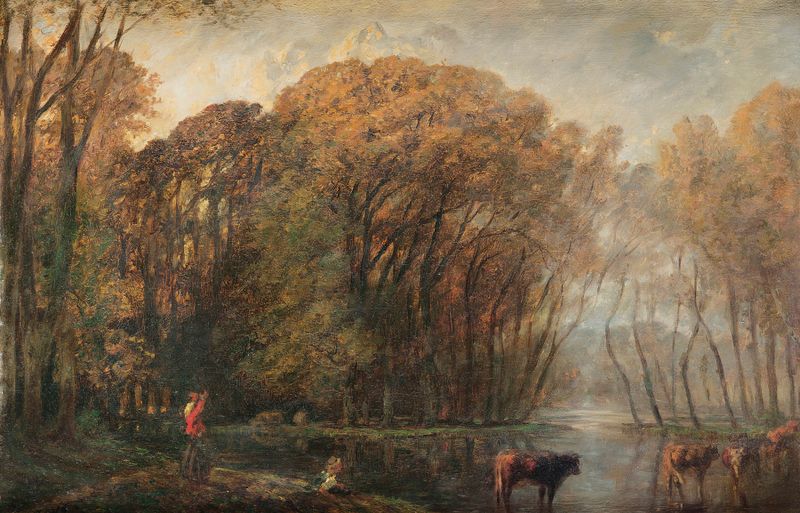
The Laïta in high tide, Brittany
Paul Huet
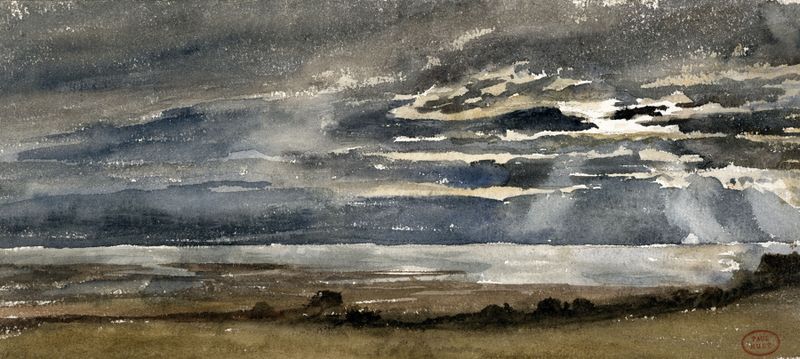
Soleil couchant
Paul Huet

A Wild Beech in Full Leaf
Paul Huet

Les Roches noirs, bij Villers
Paul Huet

Cannes
Paul Huet

Mountain View at Oisans (Isère)
Paul Huet

Mountains of Auvergne
Paul Huet





