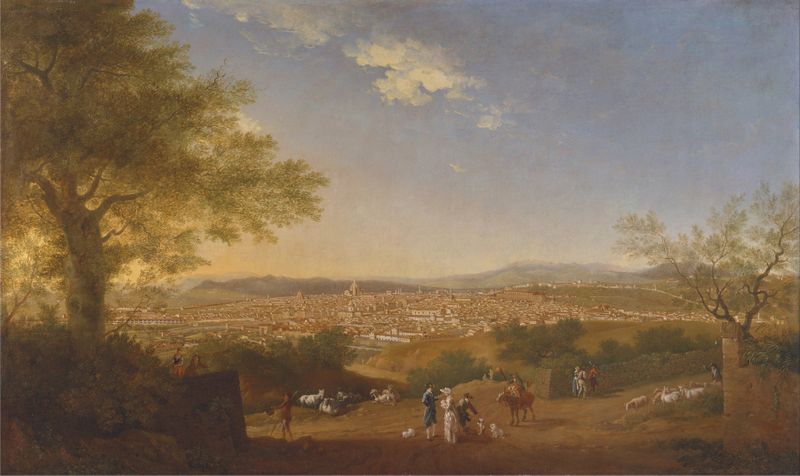
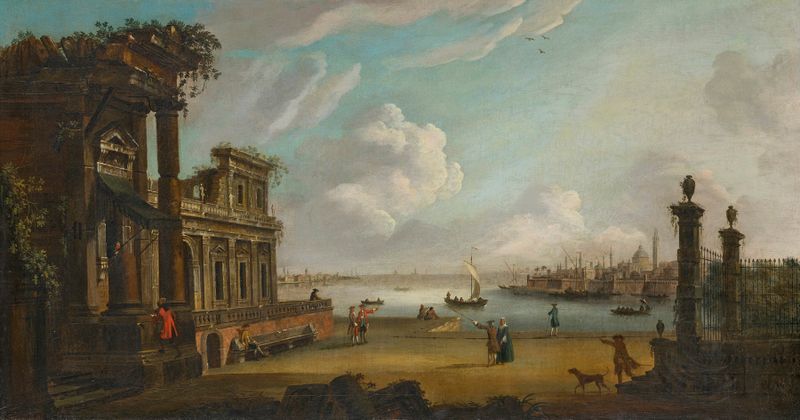
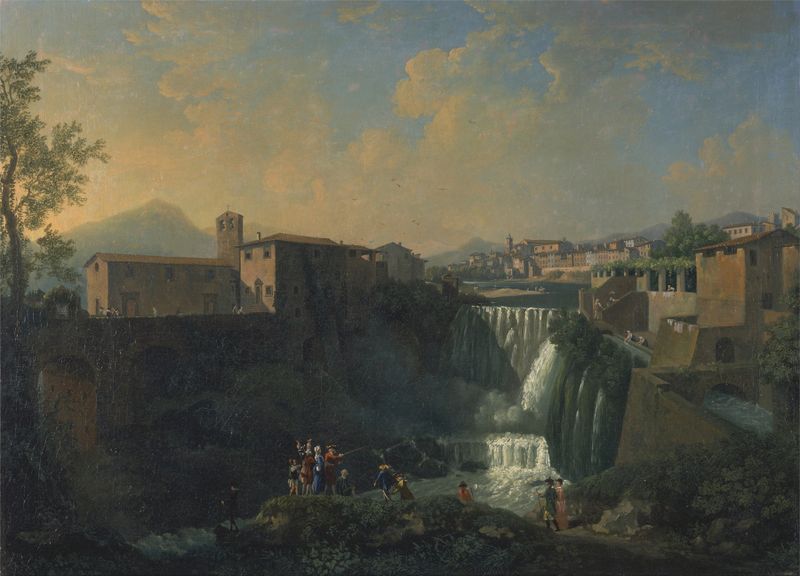
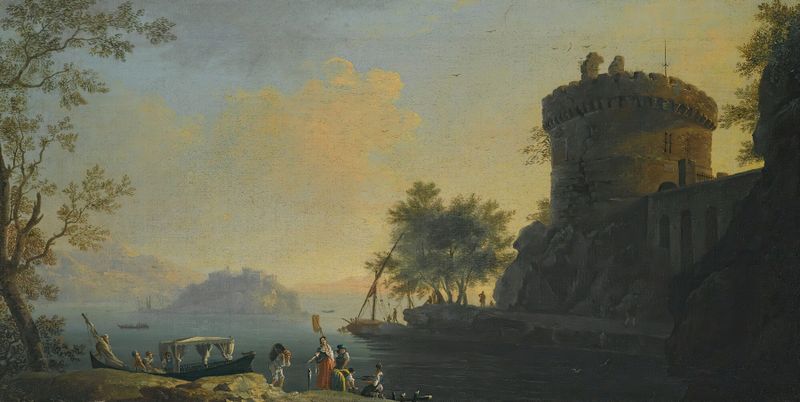
A Mediterranean seaport with fisherfolk in the foreground — History & Facts
Can paint confess what words never could? In the tranquil embrace of a Mediterranean seaport, a world teeters on the edge of decay and resilience, where time washes over every surface like the gentle tide. Look to the right at the worn hull of a fishing boat, its faded colors whispering stories of countless sea voyages. Notice how the light falls upon the weathered fishermen in the foreground, their weathered faces etched with lines of labor and hope, illuminated by the soft golden hues of the setting sun. The rich blues and greens of the water create a vivid contrast against the sandy shores, drawing the viewer's eye deeper into the bustling scene, where life ebbs and flows with the rhythm of the sea. Within this lively tableau lies a poignant tension between vitality and decline.
The vibrant life of the fishermen, engaged in their daily toil, counters the slow decay of their vessels, suggesting a deeper narrative of struggle against the relentless passage of time. In the distance, a decaying architecture stands, hinting at the fragility of human endeavors amidst the natural world, an echo of what once was, and what might soon fade away. In 1766, Thomas Patch painted this scene during his time in Italy, a period marked by his exploration of Neoclassical themes intertwined with vivid naturalism. Amidst a flourishing artistic climate, Patch captured the essence of Mediterranean life while reflecting the broader human experience of impermanence, a theme that resonates across the ages.
This painting stands not only as a testament to his skill but also as a meditation on the fragile beauty of existence.