
A Merchant Ship Signaling For A Pilot Off The Cliffs Of Dover — History & Facts
Can beauty exist without sorrow? In the seascape of the late 18th century, waves crash against rugged cliffs, while a merchant ship, a harbinger of commerce and hope, signals for a pilot amid turbulent waters. Look to the left at the turbulent sea, where frothy white caps dance as if in frantic conversation with the ship’s sails. Notice how the light sparkles upon the water, creating a shimmering path that draws the eye toward the horizon. The somber grey of the cliffs looms in contrast, grounding the scene with an ominous presence.
The delicate strokes and precise detailing of the ship, combined with the palette of blues and grays, creates a tension between man and nature, urgency and stillness. Delve deeper and you’ll find layers of meaning beneath the surface. The ship, seeking guidance, echoes the theme of reliance—perhaps signifying the vulnerability of human ambition faced with nature’s might. The cliffs stand as silent guardians, ominous yet majestic, reminding us of our insignificance against the backdrop of vastness.
There’s a subtle hint of betrayal in this interplay; the merchant’s hope for safe passage is countered by the treachery of the sea, a constant reminder that beauty can mask peril. In 1793, Luny painted this scene during a time when maritime trade was flourishing yet perilous. Living in England amidst the backdrop of the Napoleonic Wars, he captured the essence of a nation reliant on its ships and the dangers that lurked in the waters. This work, infused with both reverence and caution, reflects an artist attuned to the complexities of life, where beauty often walks hand in hand with risk.
More Artworks by Thomas Luny
Browse all →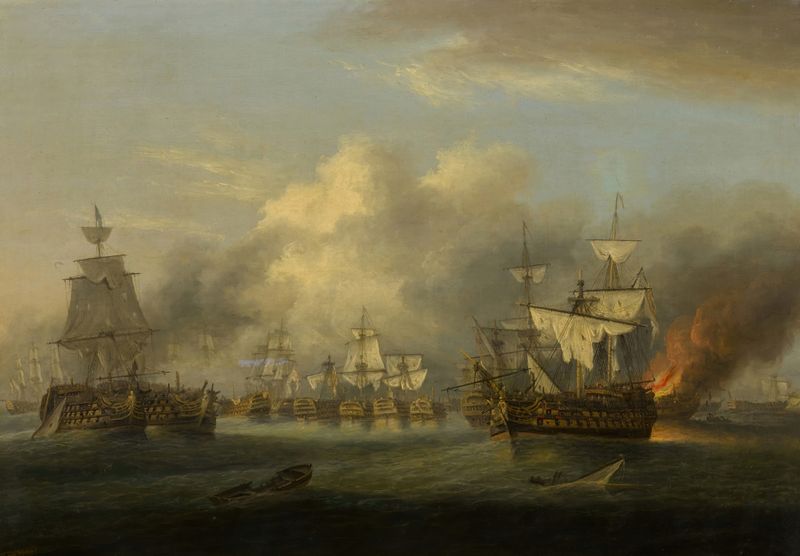
End of the Battle of Trafalgar, 1805
Thomas Luny
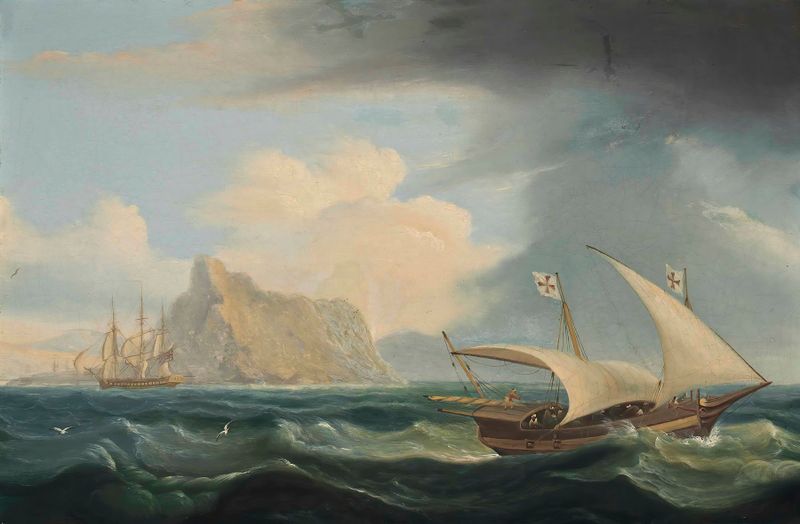
A British Warship And A Maltese Xebec In The Straits Of Gibraltar
Thomas Luny
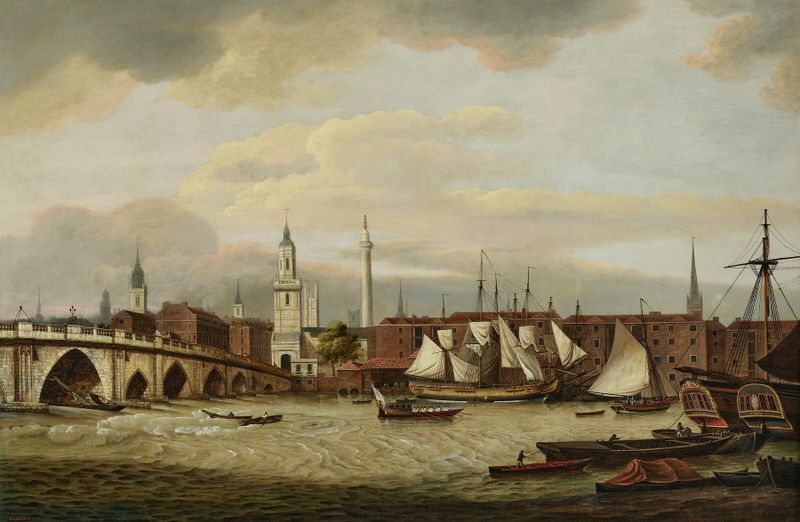
Merchant shipping at the wharfside below Old London Bridge, with the Church of St. Magnus the Martyr and Wren’s ‘Monument’
Thomas Luny
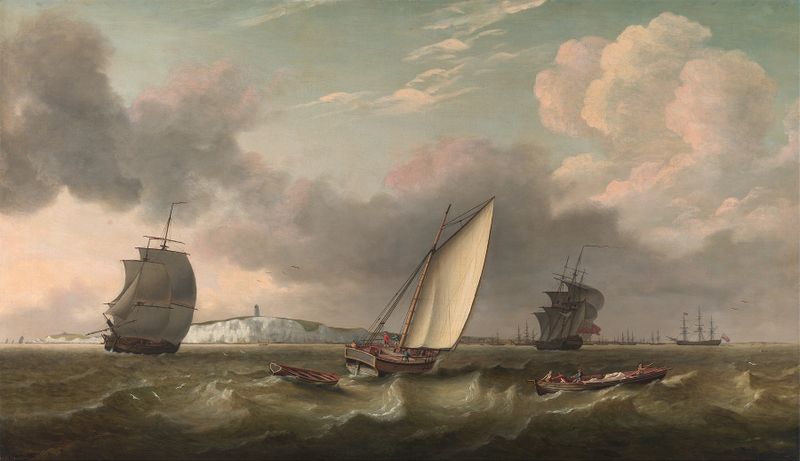
Packet Boat Under Sail in a Breeze off the South Foreland
Thomas Luny
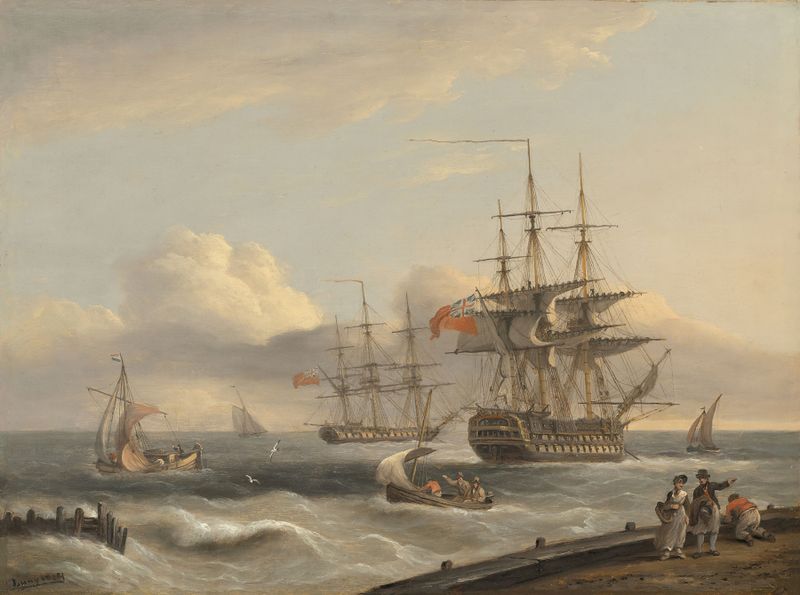
A British ’74’ unfurling its sails as it prepares to leave the anchorage with a frigate and various coastal craft beyond
Thomas Luny
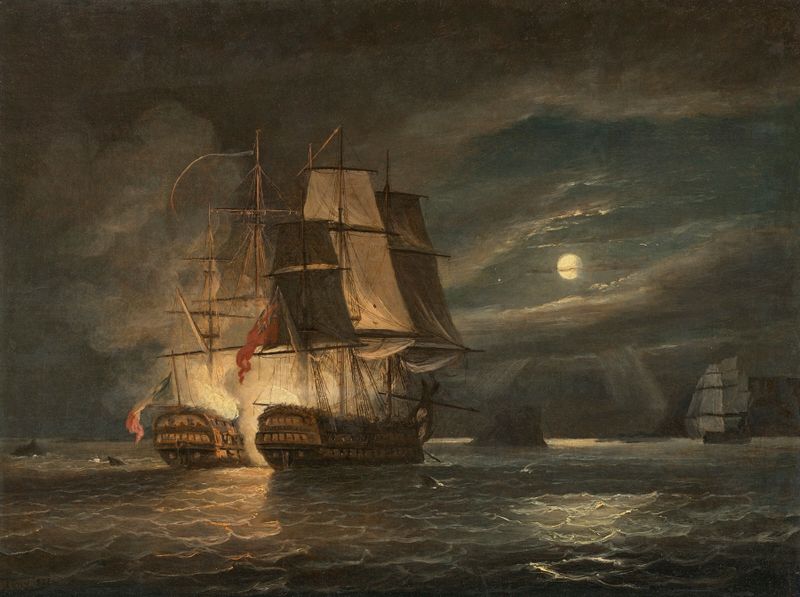
The French ’74 Hercule surrendering to H.M.S. Mars off Brest, 21 April 1798
Thomas Luny
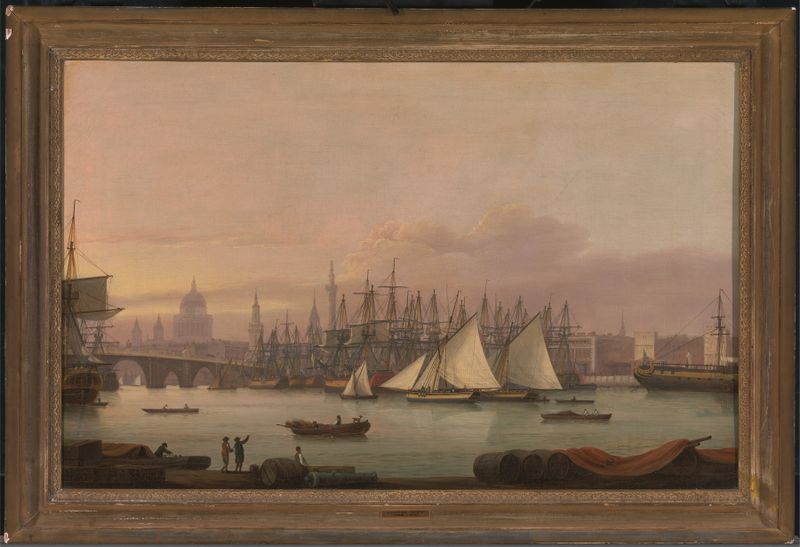
The Port of London
Thomas Luny
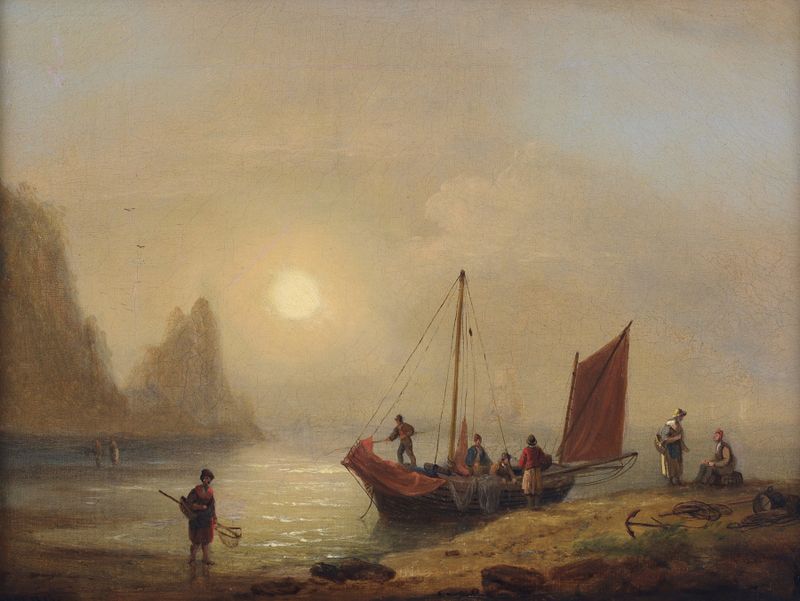
Fisherfolk on the Coast
Thomas Luny
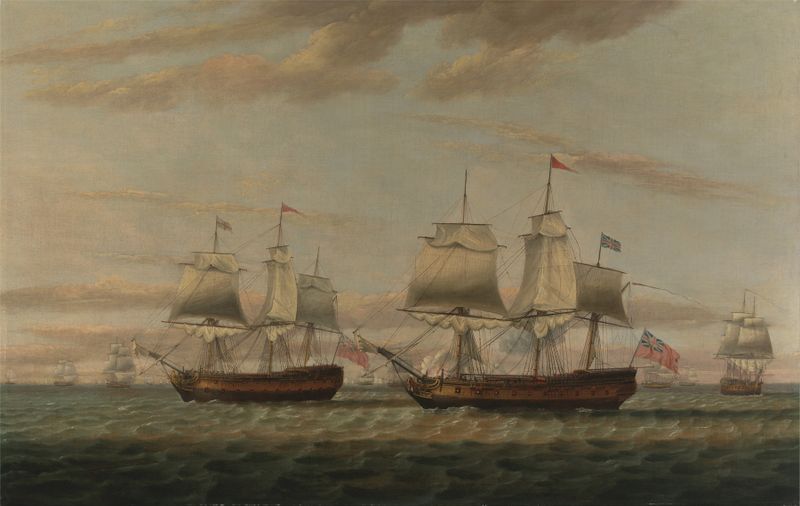
An Indiaman and a Two Decker Hove to, Said to be Thomas Dumar, Esq. in H.M. Ship ‘Portland’ Deliveri…
Thomas Luny
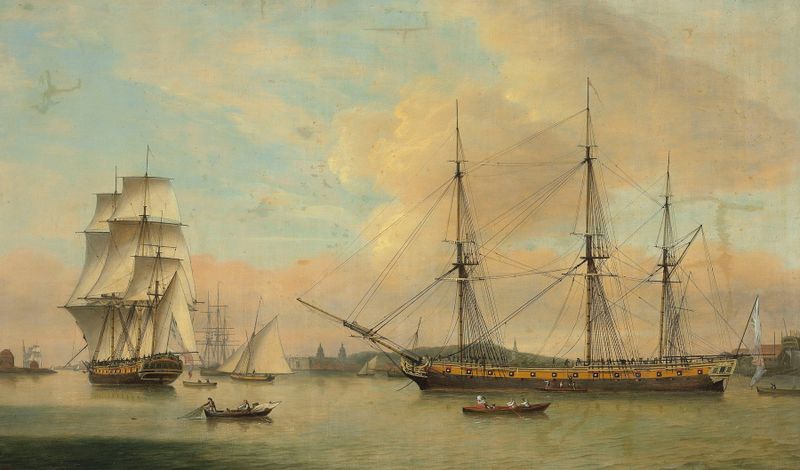
The Monsieur in two positions off Deptford dockyard, with Greenwich beyond
Thomas Luny





