
An Indiaman and a Two Decker Hove to, Said to be Thomas Dumar, Esq. in H.M. Ship ‘Portland’ Deliveri… — History & Facts
What if beauty was never meant to be finished? In the swirling chaos of maritime life, both the calm and the tumultuous coexist, revealing the violence hidden beneath this delicate beauty. Look closely at the center of the canvas, where two majestic ships, their sails taut against the wind, dominate the turbulent waters. The vessel on the left, with its intricate rigging stretching toward the sky, contrasts against the sturdy, confident form of the two-decker. The artist employs a rich palette of blues and greens, evoking the depths of the sea, while warm strokes of ochre and gold suggest the sun breaking through the clouds, illuminating the scene.
The meticulous details of the ships’ hulls and the shimmer of the water draw the viewer’s eye, creating a sense of motion and urgency. Yet, beneath this serene exterior lies a narrative of conflict and struggle. The ships, though graceful, are caught in the throes of nature's wrath—a reflection of humanity's own turbulent history. The waves crash violently against the hulls, symbolizing the constant battle between man and the elements, between beauty and destruction.
Luny captures not just the vessels but the very essence of maritime existence, where every journey holds the potential for both discovery and disaster. This work emerged during a time of significant transition for Thomas Luny, who painted it amidst the British naval landscape of the late 18th century. The artist, residing in London, was deeply influenced by the rise of maritime trade and naval warfare. This period saw an increasing interest in the sublime beauty of the sea, while Luny sought to balance this with the underlying tensions that characterized his subjects, reflecting the duality of exploration and conflict that defined his era.
More Artworks by Thomas Luny
Browse all →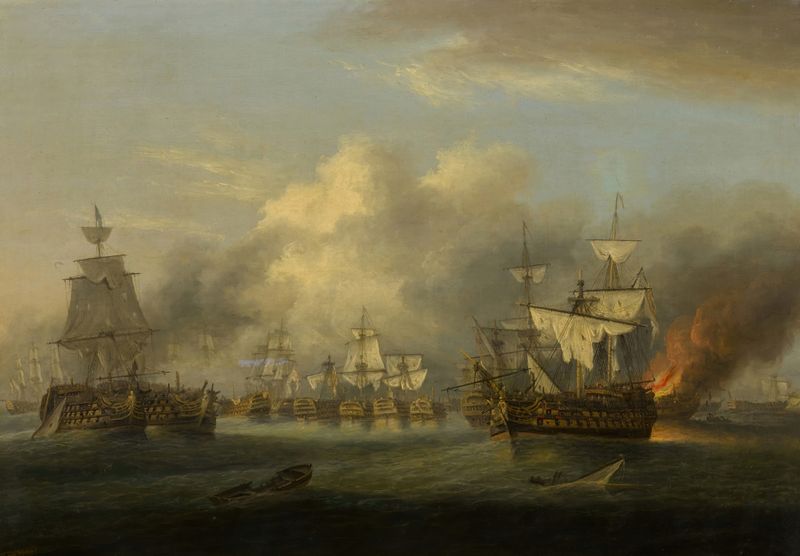
End of the Battle of Trafalgar, 1805
Thomas Luny
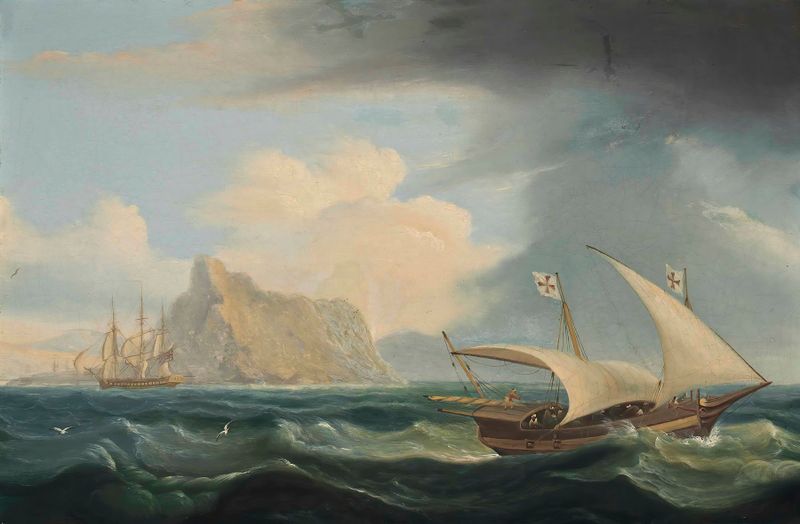
A British Warship And A Maltese Xebec In The Straits Of Gibraltar
Thomas Luny
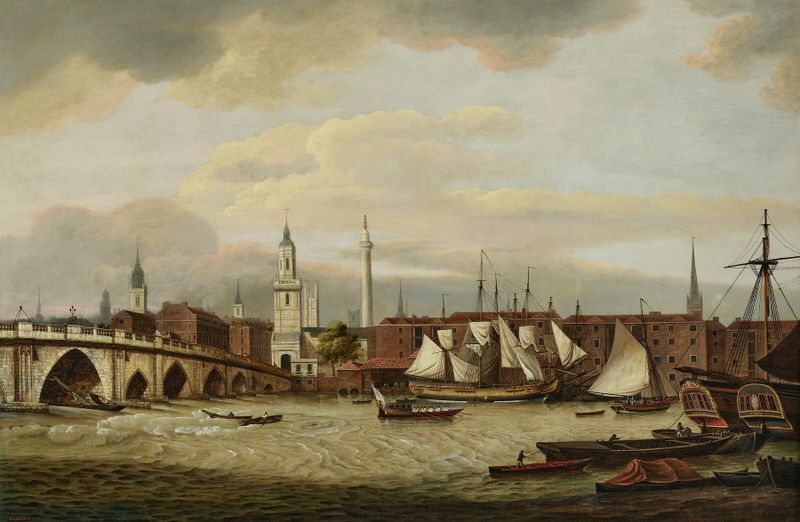
Merchant shipping at the wharfside below Old London Bridge, with the Church of St. Magnus the Martyr and Wren’s ‘Monument’
Thomas Luny
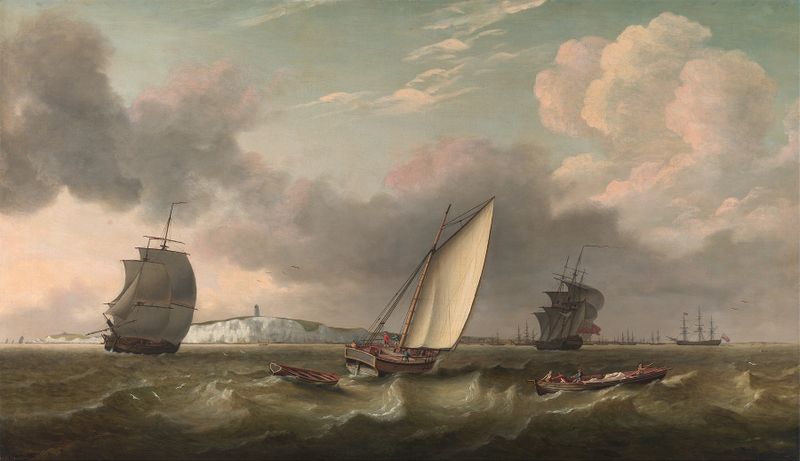
Packet Boat Under Sail in a Breeze off the South Foreland
Thomas Luny
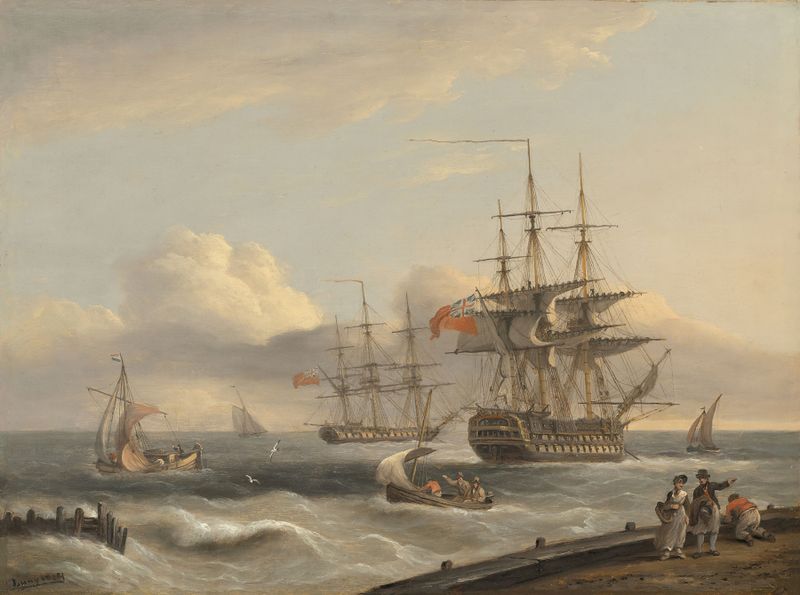
A British ’74’ unfurling its sails as it prepares to leave the anchorage with a frigate and various coastal craft beyond
Thomas Luny
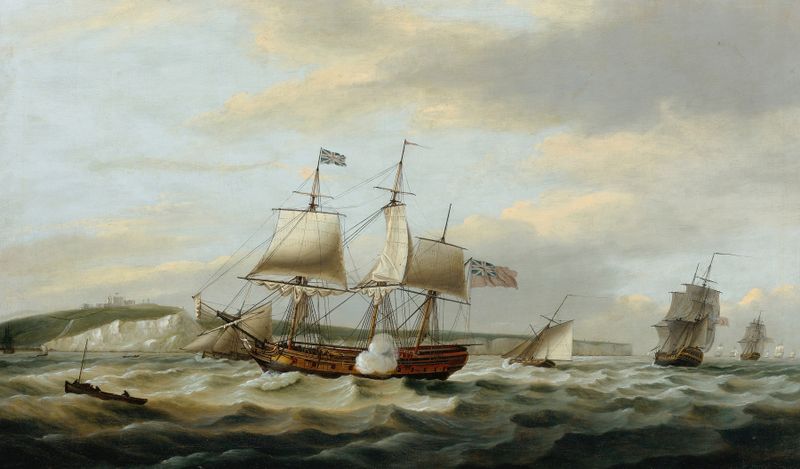
A Merchant Ship Signaling For A Pilot Off The Cliffs Of Dover
Thomas Luny
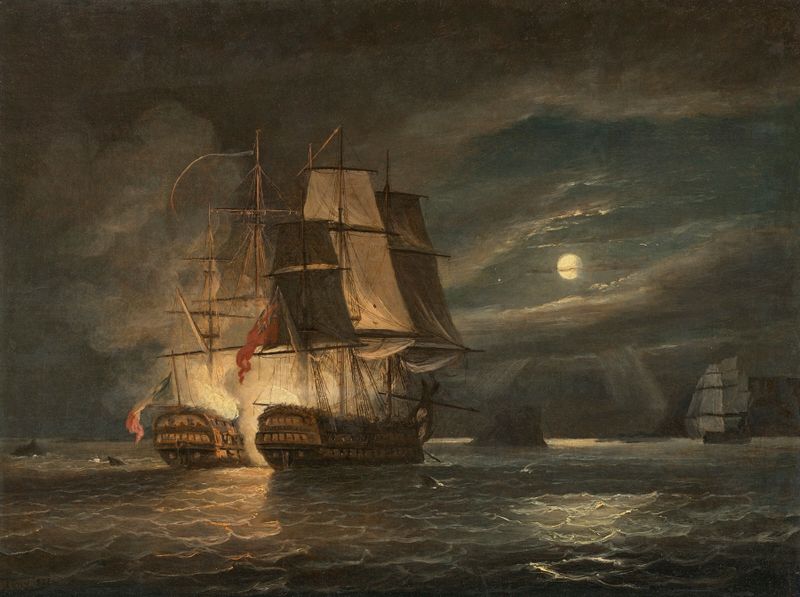
The French ’74 Hercule surrendering to H.M.S. Mars off Brest, 21 April 1798
Thomas Luny
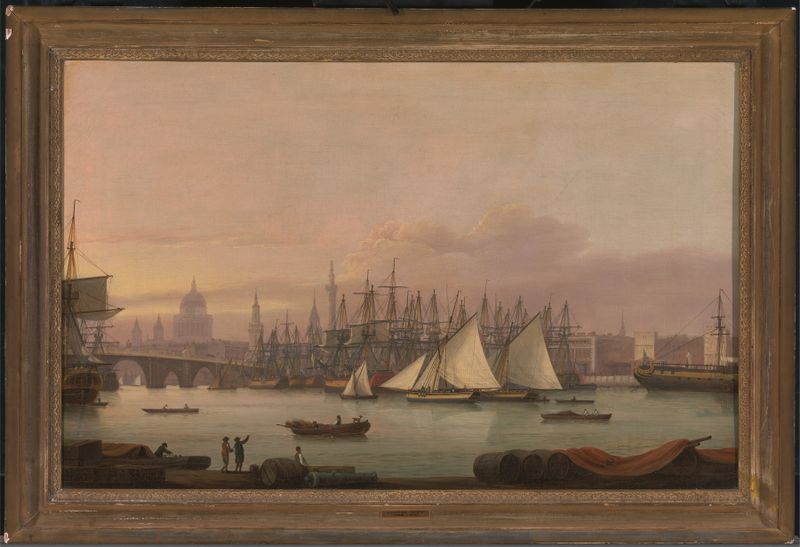
The Port of London
Thomas Luny
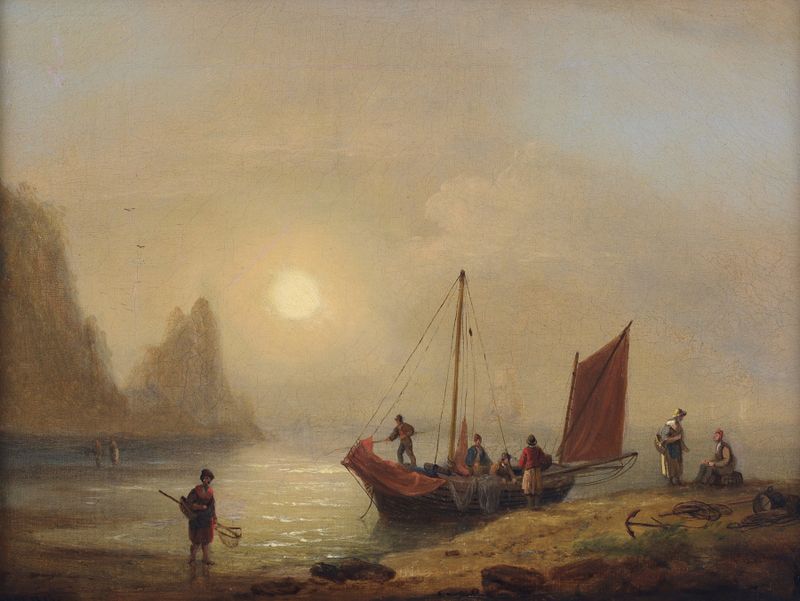
Fisherfolk on the Coast
Thomas Luny
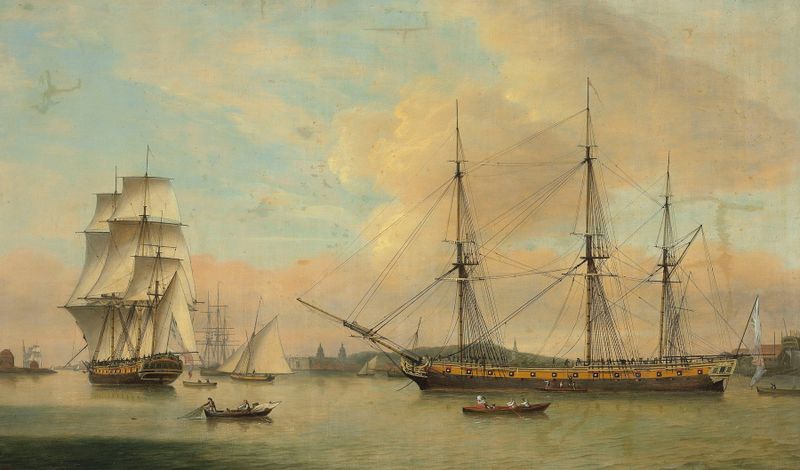
The Monsieur in two positions off Deptford dockyard, with Greenwich beyond
Thomas Luny





