
A Moonlit Scene — History & Facts
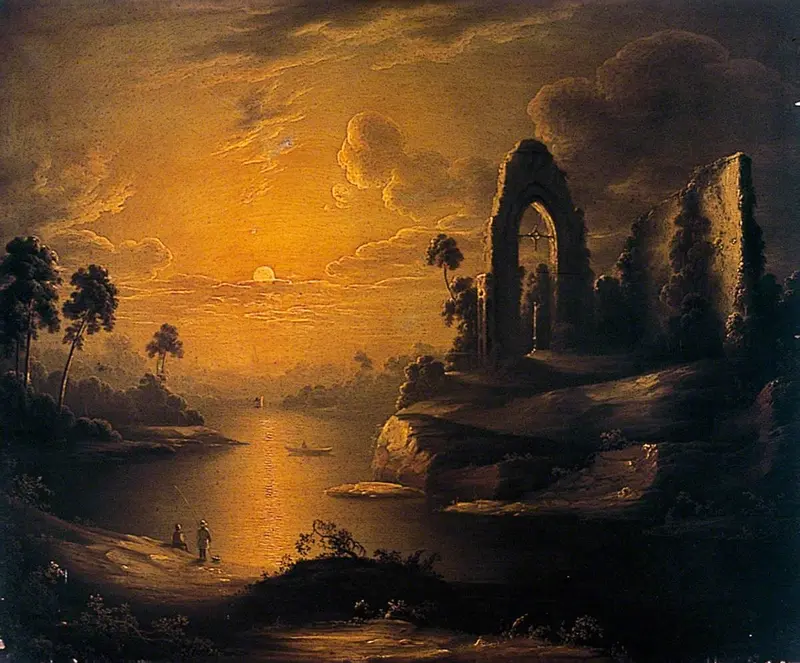
What first catches the eye in A Moonlit Scene by Abraham Pether is the way the moon’s glow seems to spill across the water, pulling the viewer into a world balanced between mystery and calm. The artist guides us from the shadowed foreground, where two figures prepare a boat at the water’s edge, up to the ruined castle perched on the left—a silent witness to the night. The light is not simply an effect, but a signal: it draws a path from the boat to the distant sail, suggesting a journey about to begin or a story just missed.
The stillness of the water reflects not only the moon but also the hush of anticipation, every detail arranged to heighten the sense of pause before movement. Works like this belong to a tradition of British landscape painting in the late eighteenth and early nineteenth centuries, when artists such as Abraham Pether became known for their fascination with moonlight and the play of night. These scenes were often collected by patrons eager for images that combined the drama of nature with the romance of ruins and travel. Pether, sometimes called “Moonlight Pether,” was celebrated in his day for these atmospheric nocturnes, though history has left few traces of the journeys of individual works like this one.
Now in the Art UK collection, A Moonlit Scene invites us to linger in its quiet world, letting our eyes adjust to the secrets hidden in its shadows.
More Artworks by Abraham Pether

Sunset over a rural landscape
Abraham Pether
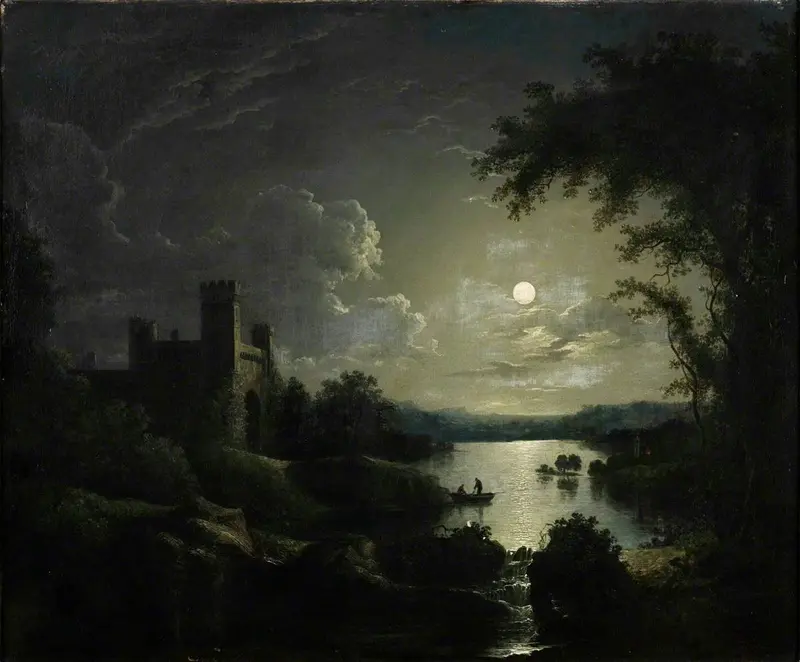
A Castle and Lake by Moonlight
Abraham Pether
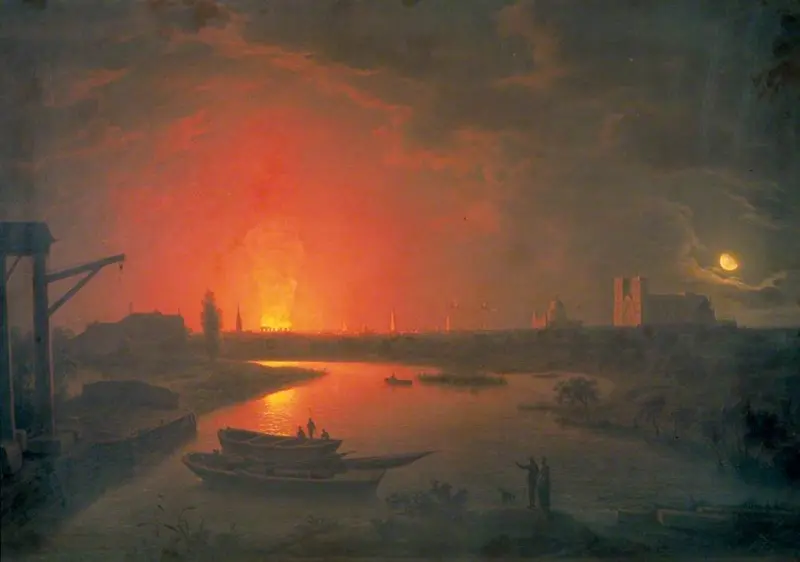
Old Drury Lane Theatre on Fire, London, 24 February
Abraham Pether
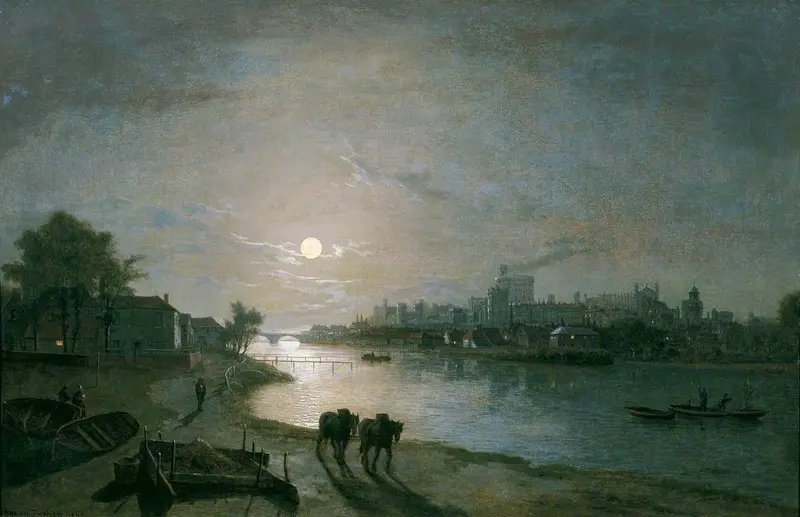
Windsor Castle by Moonlight
Abraham Pether
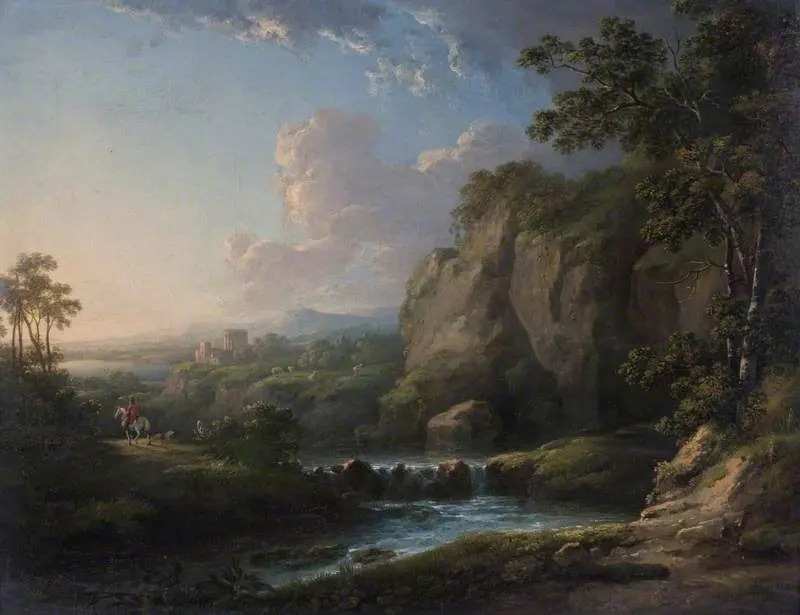
Wooded Landscape
Abraham Pether
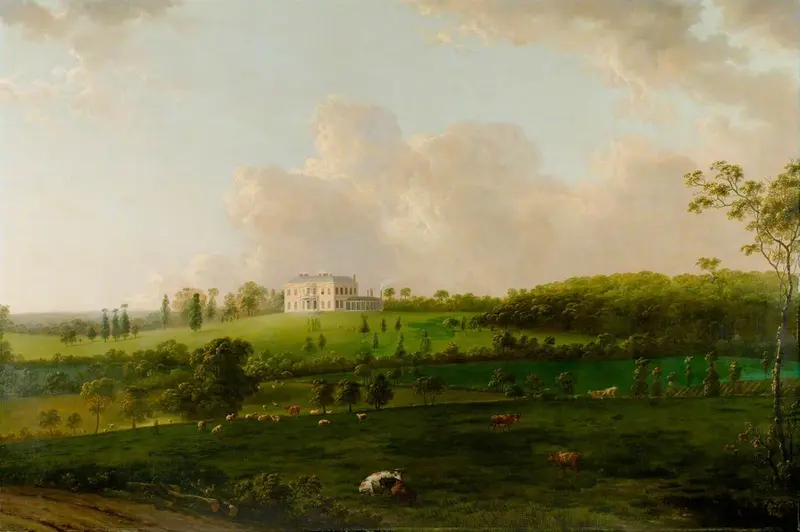
Claybury Hall, Essex
Abraham Pether
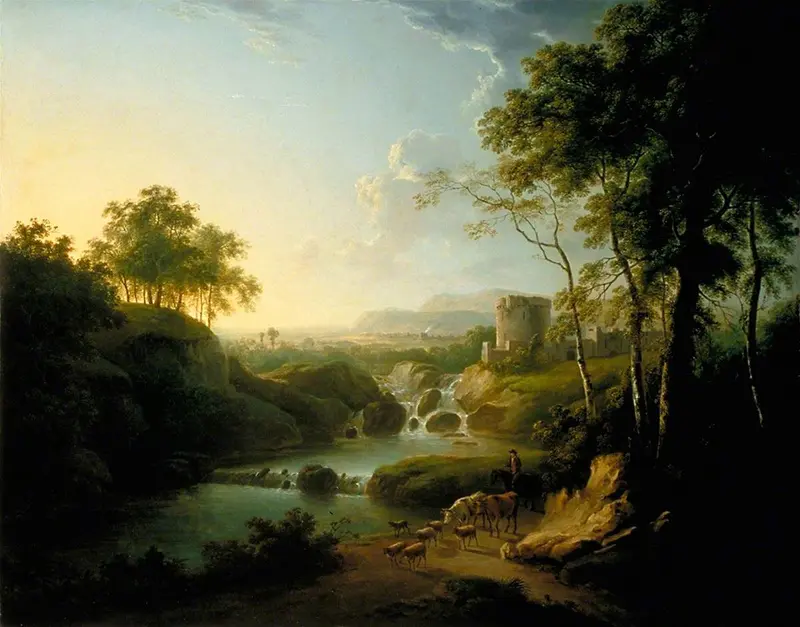
Landscape
Abraham Pether
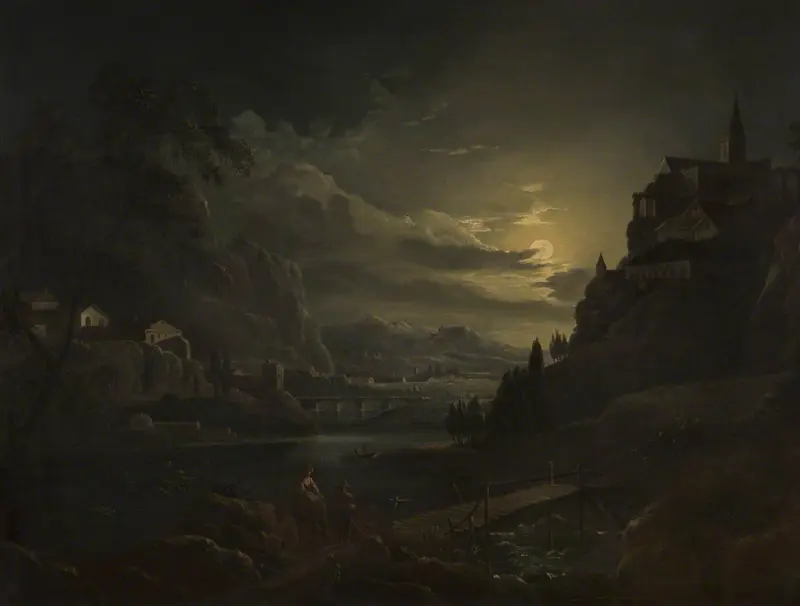
Classical Landscape by Moonlight
Abraham Pether
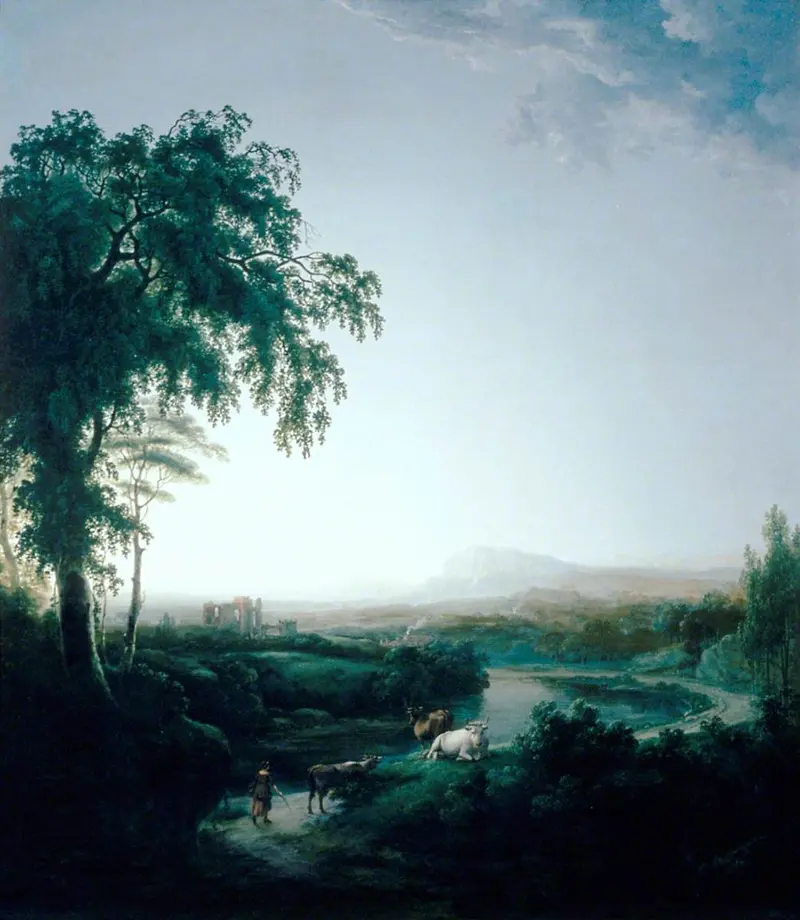
Landscape with River and Cows at Dusk
Abraham Pether
Moonlit Landscape with Lake and Ruined Abbey
Abraham Pether
More Landscape Art

The Starry Night
Vincent van Gogh

View of Delft
Johannes Vermeer

Water Lilies
Claude Monet

The Grand Canal, Venice, looking north-west from the Ca' Corner to the Ca' Contarini degli Scrigni, with the campanile of Santa Maria della Carità
Canaletto

Windsor Castle
Canaletto

The Grand Canal looking North-East from the Palazzo Dolfin-Manin to the Rialto Bridge
Canaletto