
A motif from Steyr — History & Facts
In the quietude of a moment captured on canvas, the viewer is invited to peel back layers—revealing the essence of both the artist and the society he inhabited. Look to the center of the piece where vibrant blues and greens swirl together, creating a sense of movement that almost breathes. Notice how the meticulous brushwork invites your eye to traverse the landscape, the rhythm of the strokes echoing nature’s pulse. The careful play of light illuminates the foreground, contrasting with the darker hues that loom in the background, a visual representation of hope amidst uncertainty. Within the intricate details lies a deeper narrative; the interplay of color suggests a duality of emotion—serenity juxtaposed with an undercurrent of turmoil.
The motif itself, inspired by Steyr, evokes a sense of home and nostalgia, yet hints at the broader horror of the time: the shadows of World War I loom, curtailing joy and peace. Each brushstroke not only celebrates the beauty of the landscape but also serves as a quiet protest against the war's relentless advance. Painted in 1916, this work emerged from a period of deep personal and global strife for the artist. Living in an Austria engulfed in the chaos of war, Fritz Lach sought solace in the natural world, pouring his emotions into this canvas as a refuge.
This piece stands as a testament to the resilience of creativity, a moment of clarity amid the clamor of a disintegrating world.
More Artworks by Fritz Lach
Browse all →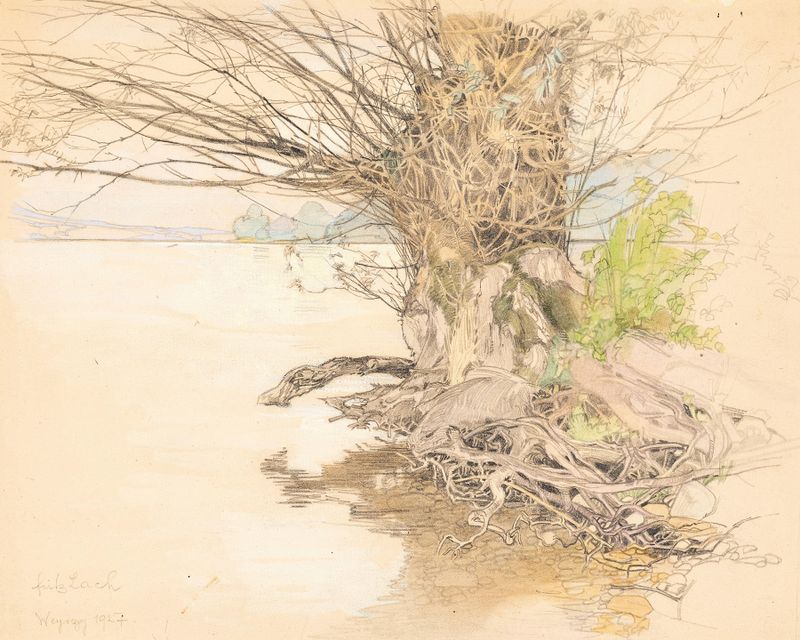
A willow tree at the lake shore
Fritz Lach
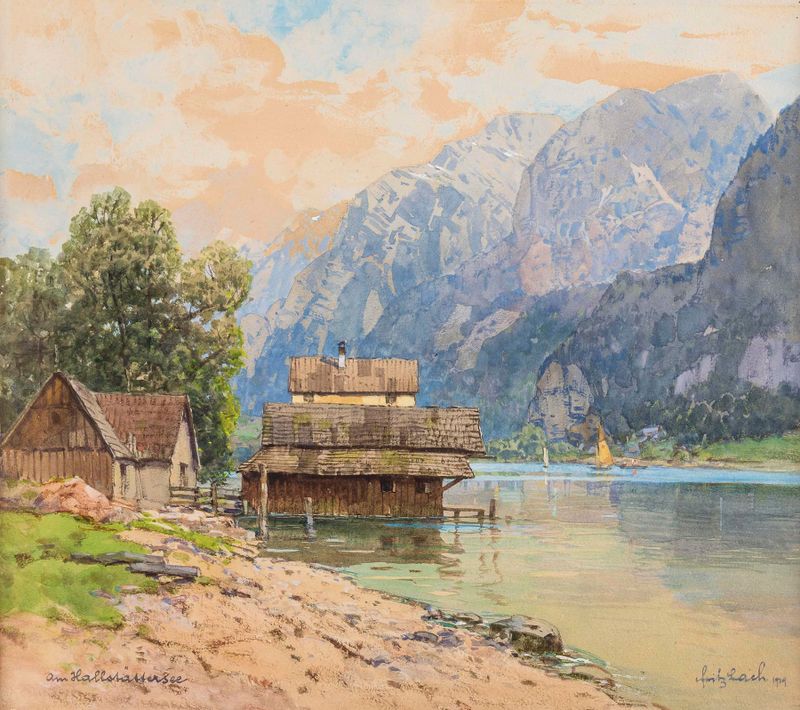
Bootshäuser am Hallstätter See
Fritz Lach
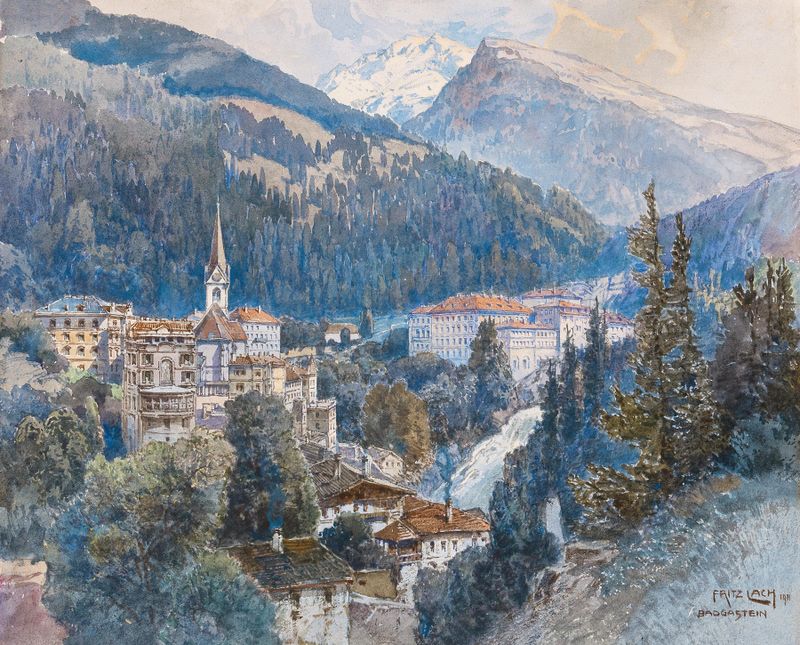
A view of Bad Gastein and the waterfall
Fritz Lach
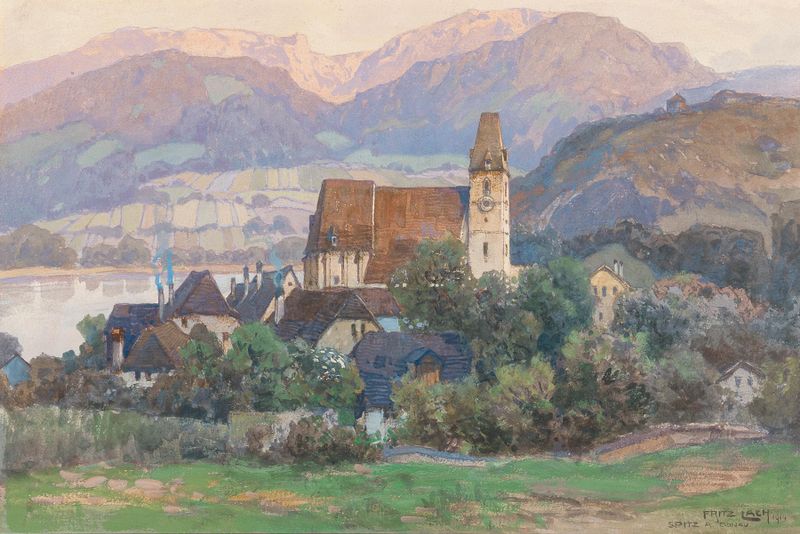
A view of Spitz in the Wachau valley
Fritz Lach
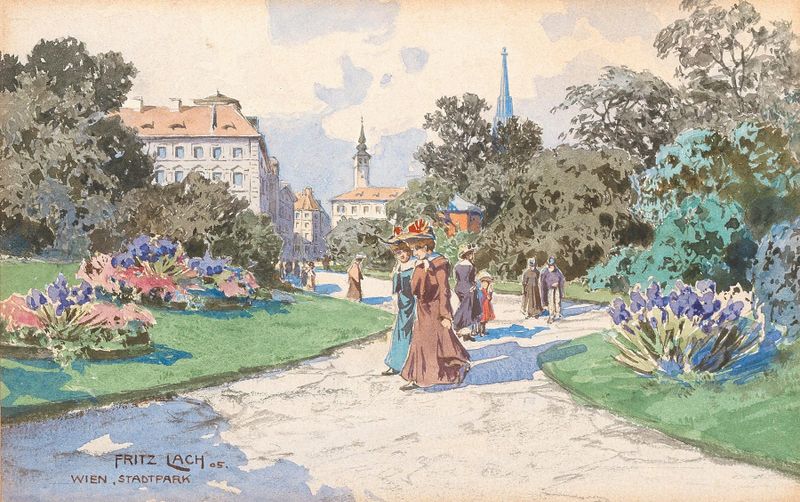
A walk in Vienna’s Stadtpark
Fritz Lach
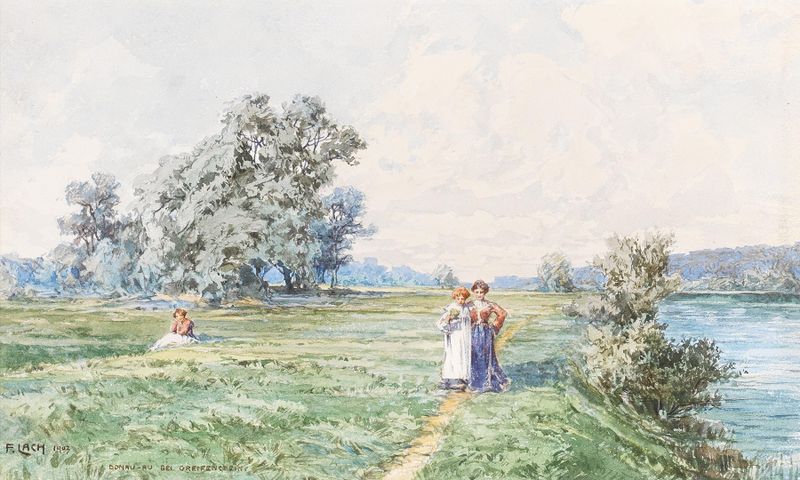
At the Danube near Greifenstein
Fritz Lach
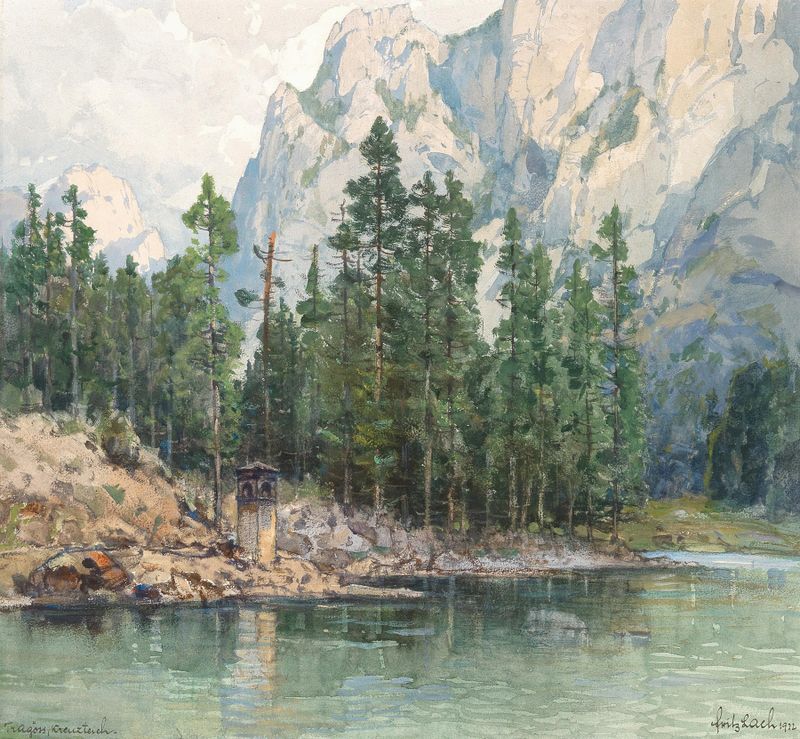
Kreuzteich near Tragöss
Fritz Lach
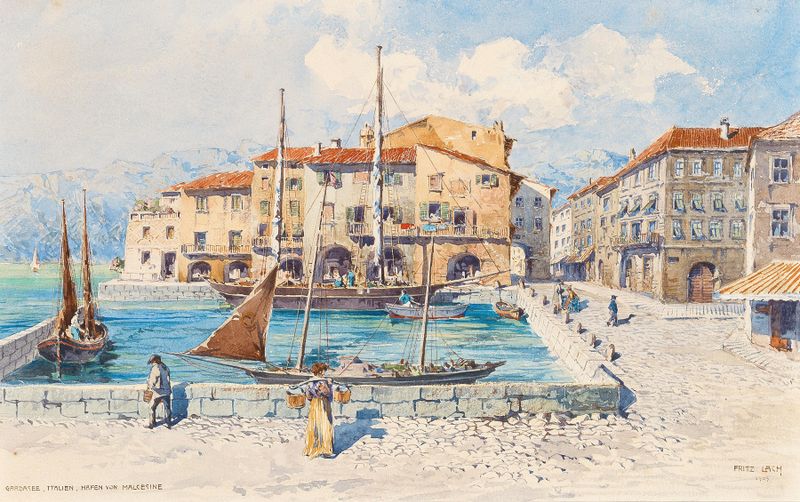
Malcesine near Gardasee
Fritz Lach
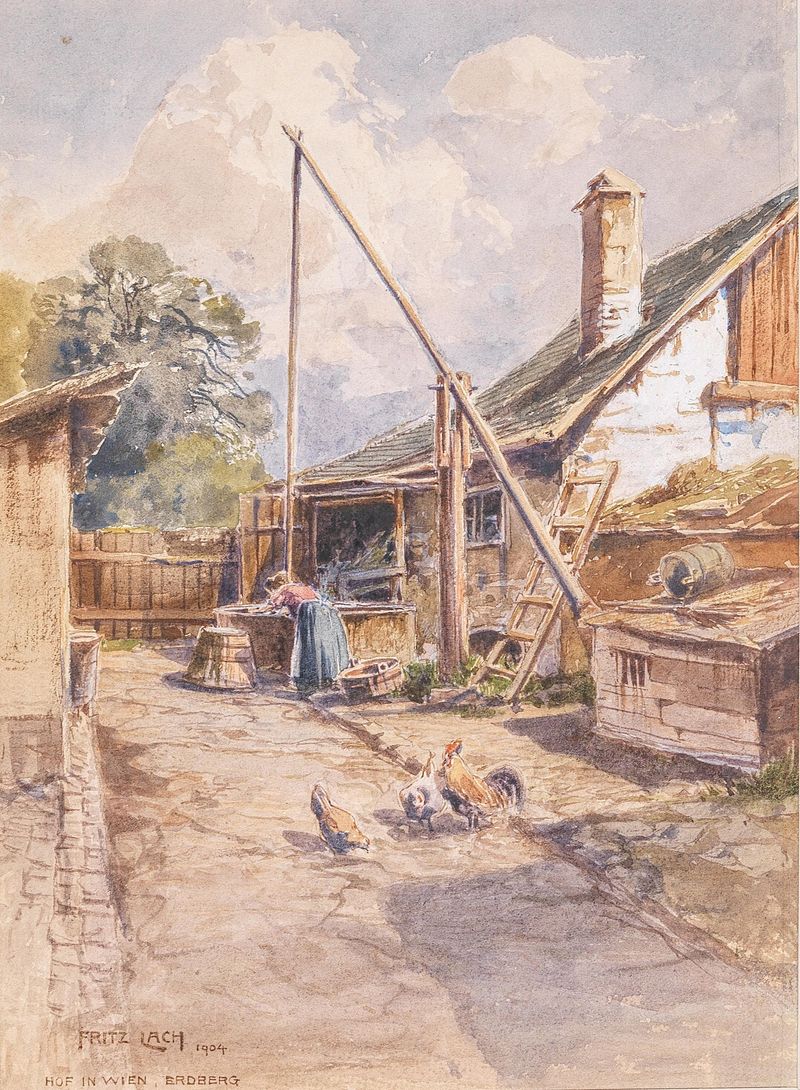
Hof in Wien Erdberg
Fritz Lach
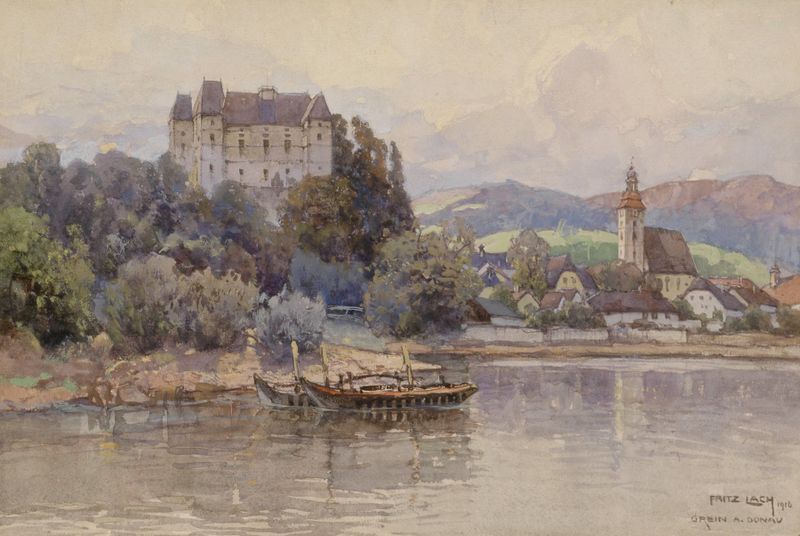
Blick auf Grein an der Donau
Fritz Lach





