A river landscape with a sluice gate and boats — History & Facts
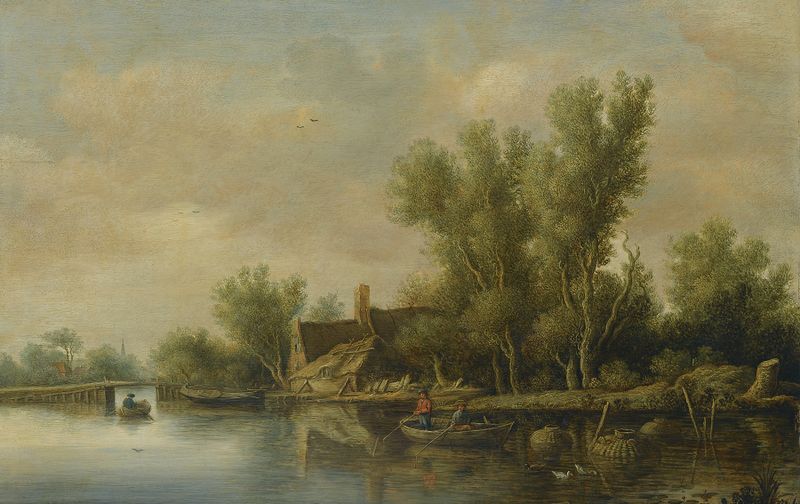
Is this a mirror — or a memory? The boundaries between reflection and reality blur in a world awash with hues, where every brushstroke vibrates with emotion. Focus on the vibrant blues and greens that dominate the canvas. Notice how the light dances upon the water's surface, creating a shimmering play of color that invites your gaze to drift along its fluid path. The sluice gate stands sturdy to the left, a silent guardian overseeing the movement of boats, while the gentle curve of the river beckons the eye deeper into the scene.
Each vessel, painted with meticulous detail, seems to float effortlessly, their sails catching a breeze that remains unspoken. Digging deeper, one finds contrasts nestled within the tranquility. The warm earth tones of the riverbank juxtapose the cool tranquility of the water, evoking a sense of harmony amid the chaos of nature. The sluice gate, a man-made structure, symbolizes the intersection of human intervention and natural beauty, forcing a reflection on our relationship with the environment.
Subtle shadows cast by the clouds add layers of depth, suggesting an impending change in weather — or perhaps a shift in the viewer’s emotions, as the scene captures both stillness and the potential for movement. Pieter de Neyn painted this landscape during a time in which European art was transitioning towards more naturalistic depictions. Operating mainly in the late 17th century, he was influenced by the burgeoning interest in capturing the essence of light and atmosphere in landscapes. Amidst a period marked by exploration and the evolving understanding of nature, his work embodies a moment where art began to embrace the complexities of both reality and emotion.