Dutch landscape — History & Facts
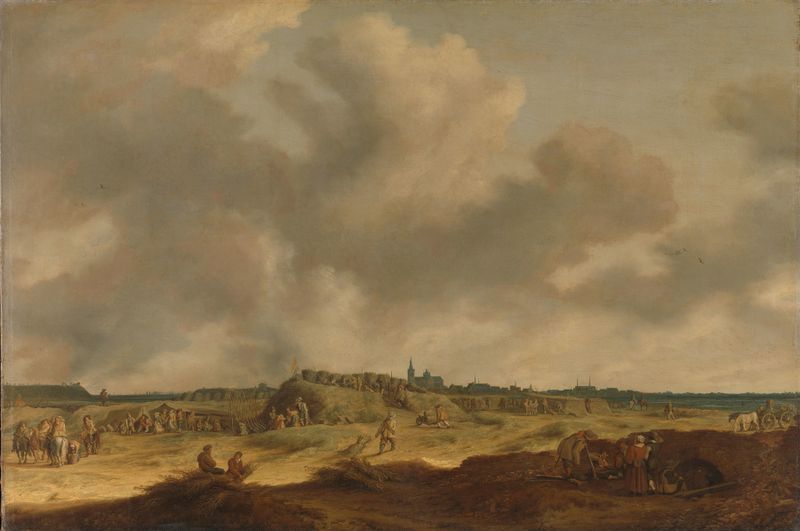
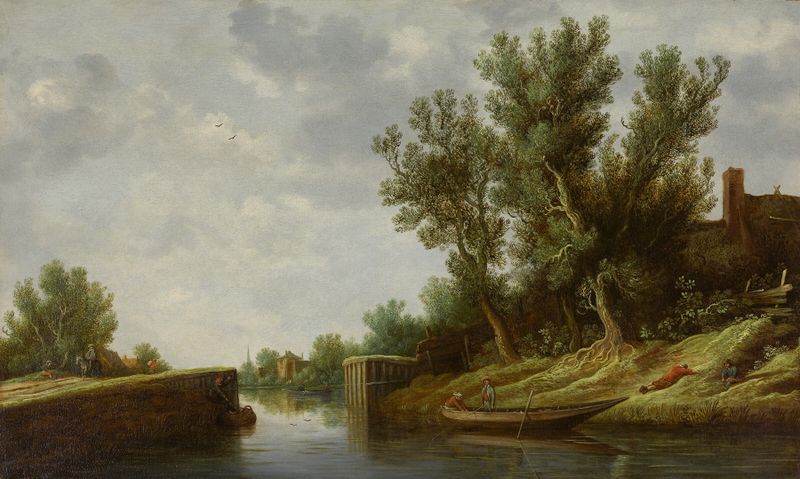
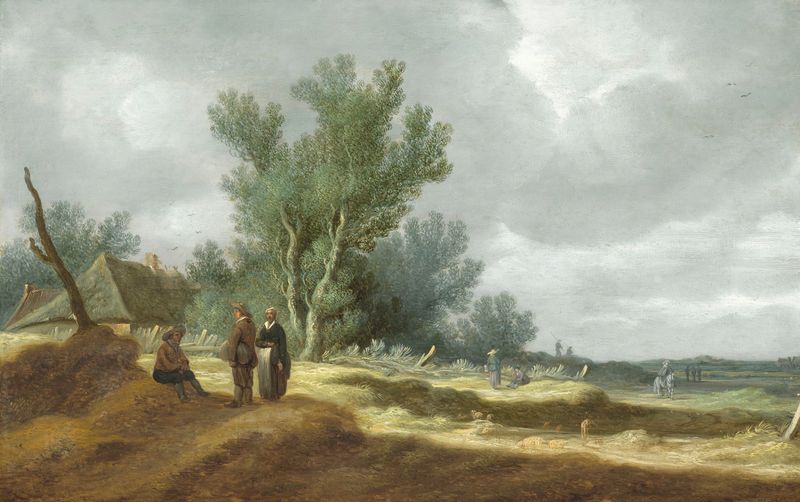
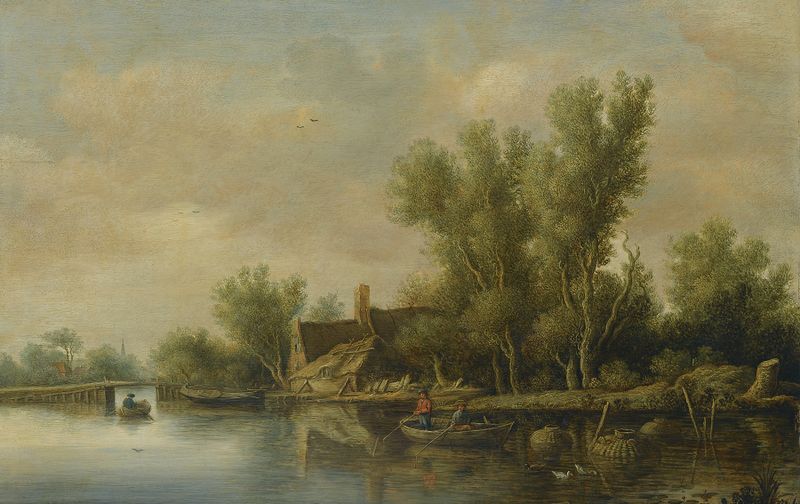
This moment captures the essence of transformation, where the raw energy of nature is distilled into beauty and meaning. In Dutch Landscape, the viewer's gaze is drawn first to the sweeping horizon, where soft, muted greens and browns intertwine with delicate strokes of blue sky. Notice how the light gently illuminates the fields, creating a harmonious interplay of shadow and brightness that seems to breathe life into the scene. The careful placement of trees and the subtle curves of the land guide the eye through a tranquil journey, inviting contemplation of both nature's serenity and its wildness. Delve deeper into the painting, and you'll uncover a subtle tension between man and nature.
The expansive landscape suggests both freedom and isolation, as the distant figures traverse the vastness, dwarfed by the grandeur surrounding them. The fleeting clouds above, tinged with hints of impending rain, echo the unpredictable essence of life itself—reminding us that within peace lies the potential for turbulence. This duality of calm and chaos speaks to the broader experience of existence, transcending the scene itself. Pieter de Neyn painted this piece in 1626, during a time when Dutch art was flourishing, marked by meticulous attention to detail and an emerging appreciation for landscapes.
Living in the Netherlands, he was part of a vibrant artistic community that celebrated the natural world as a subject worthy of exploration. This period was significant as artists sought to capture not just the visible, but also the emotional resonance of their surroundings, paving the way for future explorations into the connection between humanity and the environment.