A river landscape with a windmill — History & Facts
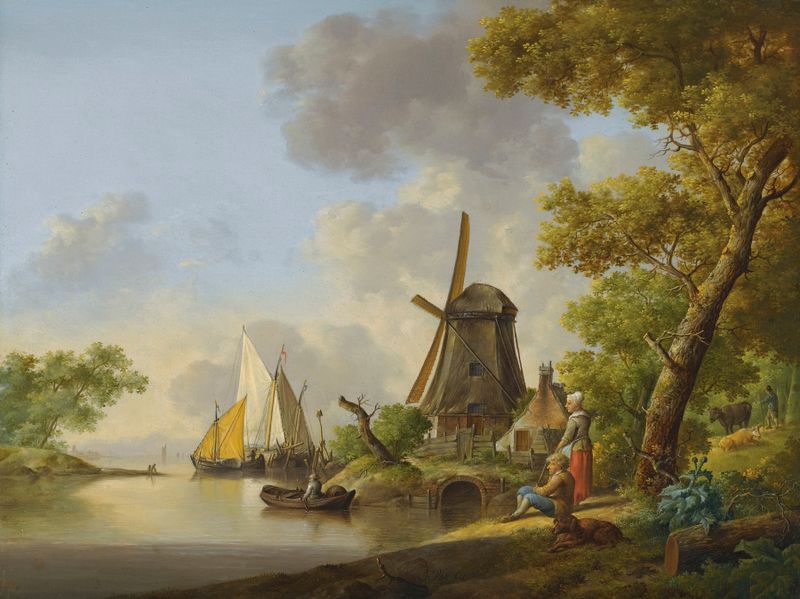
Can beauty exist without sorrow? The delicate interplay between joy and melancholy seems to echo through the tranquil scene of a river landscape, whispering the stories held within its serene banks. Look to the left at the sweeping curves of the river, where its gentle flow mirrors the soft hues of dawn. The windmill stands proud against the horizon, its blades poised for movement, while dappled sunlight spills across the water’s surface, creating diamonds of light that dance in the breeze. The artist’s choice of muted greens and warm ochres invites viewers to linger, evoking a sense of nostalgia and calm, and drawing attention to the harmony between nature and man-made structures. Yet, within this idyllic portrayal lies an emotional tension.
The stillness of the river contrasts sharply with the implied motion of the windmill, suggesting the passage of time and the inevitability of change. The soft clouds overhead hint at a gathering storm, perhaps a reminder of nature's darker aspects. Such details resonate with the viewer's understanding of legacy, where beauty can both uplift and weigh heavily on the soul. During the time this work was created, Jan Van Os was navigating the complexities of life in 18th-century Holland, a period rich with artistic exploration.
It is believed to have been painted in a time of personal reflection, as he sought to capture the pastoral beauty that surrounded him while also grappling with the transience of life. In an era marked by both artistic innovation and societal change, his work reflects a deep connection to the natural world and the fleeting moments that define it.