A Summer Landscape — History & Facts
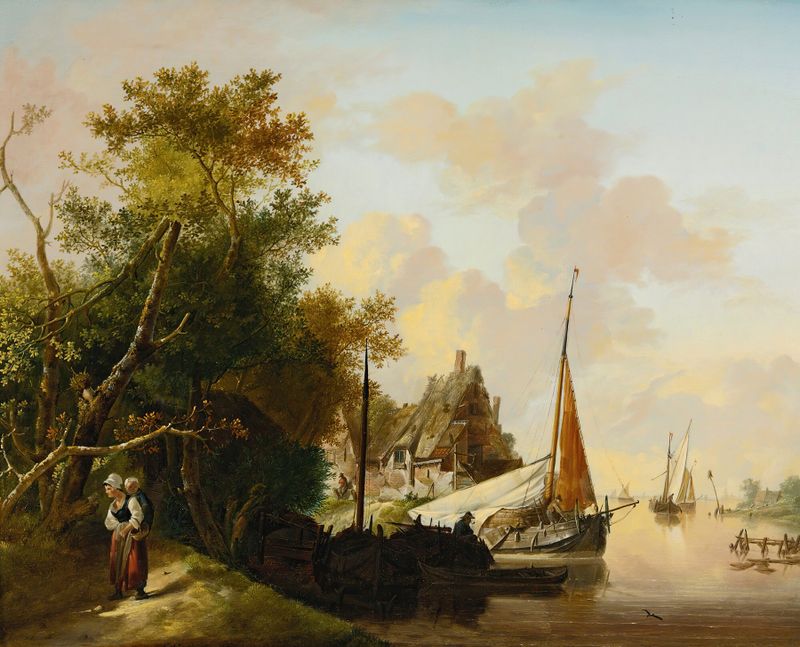
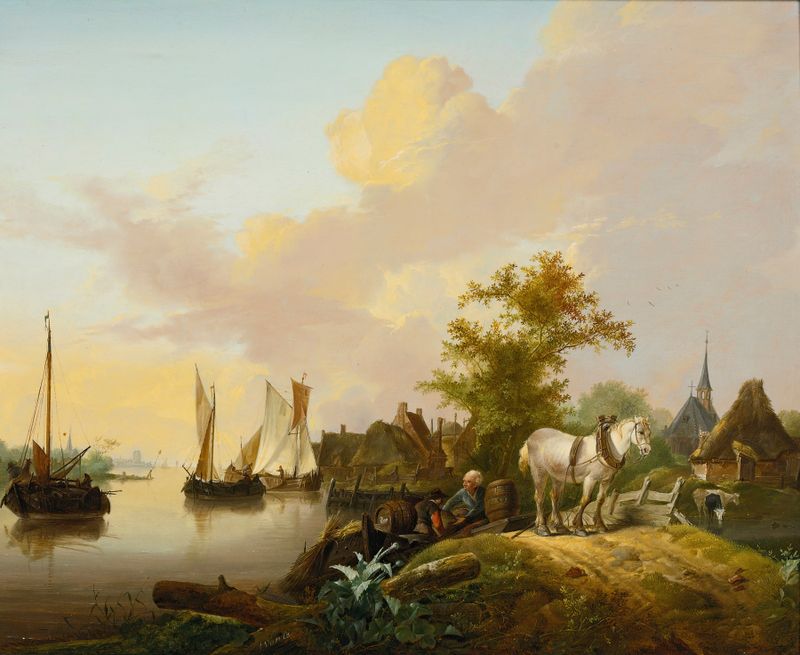
When did color learn to lie? In the vibrant hues of nature, faith dances between reality and illusion, inviting us to question the world we perceive. Focus on the interplay of emerald greens and sun-kissed yellows, where the foliage seems to sway beneath a gentle breeze. Notice how the trees, adorned with delicate blossoms, create a canopy that filters the light into soft, diffused patches across the lush meadow. A serene river flows through the scene, its shimmering surface mirroring the sky's azure—a seamless blend of the earthly and the ethereal. Hidden within the layers of paint are echoes of transience and permanence.
The vibrant blooms symbolize the fleeting moments of summer, while the majestic trees stand as silent witnesses to time’s passing. Each brushstroke narrates a contrast between the vibrancy of life and the inevitable decay that follows. This duality fosters a sense of longing, as the observer is drawn into a world where faith in beauty wrestles with the knowledge of its impermanence. During an era marked by evolving styles, the artist created this work amid the burgeoning Romantic movement in the late 18th century.
Jan Van Os was known for his ability to infuse landscapes with emotional depth, capturing the harmony between nature and human experience. This piece reflects his dedication to translating the essence of the natural world, even as the art world began to shift toward more expressive forms.