Peasants Unloading Cargo — History & Facts
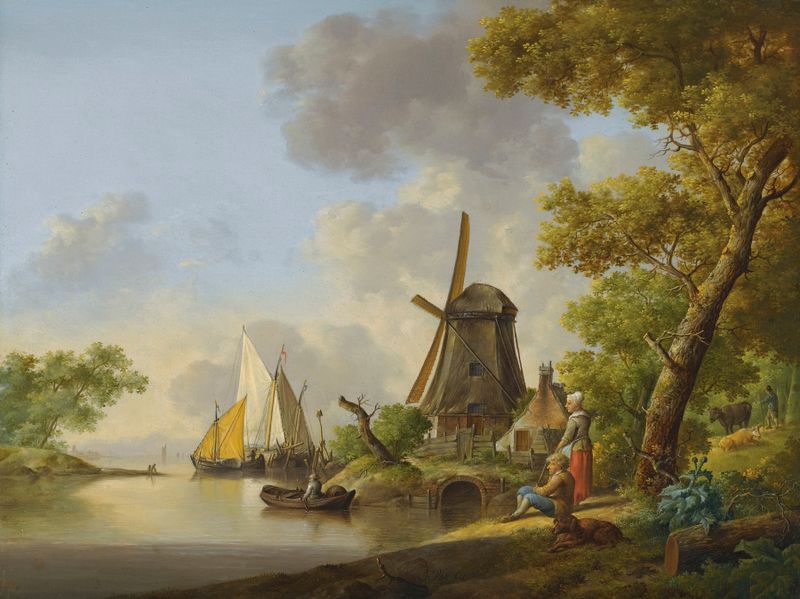
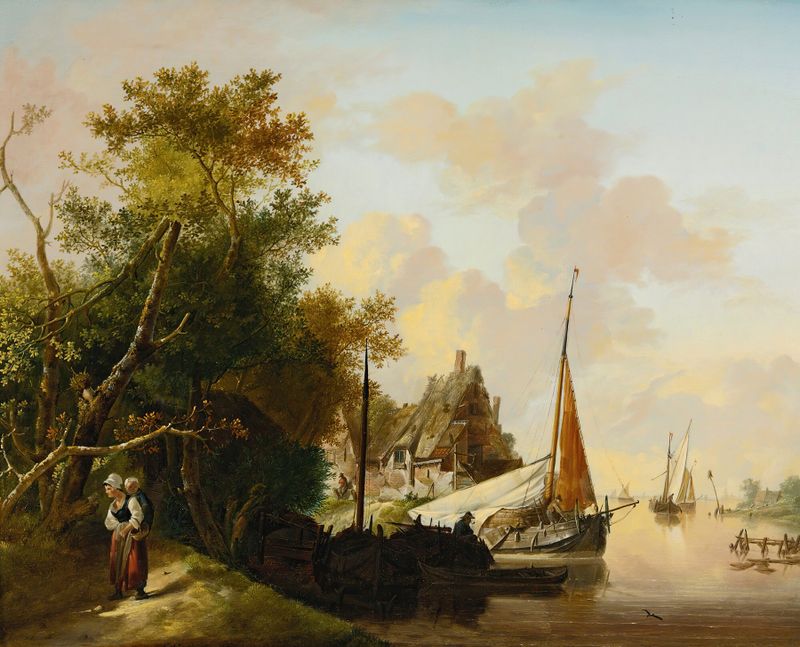
Can paint confess what words never could? Within the delicate strokes of Jan Van Os lies a poignant exploration of fragility, revealing the human condition in a realm where silence speaks volumes. Look to the center of the canvas, where the figures congregate, their bodies bent under the weight of heavy cargo. Notice how the play of light emphasizes their toil; the warm hues against the cool shadows draw your eye, creating a palpable sense of effort and exhaustion. The meticulous attention to detail in the textures of their clothing and the cargo itself speaks to a world grounded in labor, while the soft gradient of the background suggests an expansive horizon that remains just out of reach. Yet, beneath this toil lies a deeper narrative of resilience and vulnerability.
The contrasts between the workers’ physical strength and their weary expressions reflect a profound emotional tension, hinting at lives intertwined with hardship and hope. The cargo itself—an assortment of fruits and goods—serves as a metaphor for the burdens we carry, both seen and unseen, echoing the fragility of existence amidst their daily grind. Created in an era when Van Os was immersed in the intricate world of still life and genre painting, this work captures a moment reflective of the late 18th century. The artist's deep engagement with nature and the human experience was thriving during this period, as he sought to elevate mundane scenes into expressions of universal significance, all while navigating the vibrant art scene of the Netherlands.